

Jennifer Whitmire , MS, MEd, MH, CHES, NEP
What we traditionally call “Treats” are wonderful for the taste buds but are not treats to our body. Most treats are full of added sugars and inflammatory ingredients. When you have an autoimmune disease, your body is already inflamed. What sounds like a Treat could set you back up to 6 months. Our bodies are wonderfully made and do an excellent job at protecting us, but if we keep throwing more and more harmful things at it, it will begin to reject us.
If you are healthy physically, emotionally, and spiritually, you can handle these “treats.” This is why we hear, “But I have always been able to eat this before. Why is it affecting me now?” And, we see kids eating sugar all day long and fast food, and they do fine until they hit their mid 30s. It starts to build up until the body can’t take it anymore.
Sugar, granulated sugar, date sugar, coconut sugar, even organic coconut sugar is still sugar. Glutenfree flour, glutenfree pasta, even glutenfree bean pasta is sugar to your body. Sugar is highly inflammatory. “About 15% of the calories in the American adult diet come from added sugars. That’s about 22 teaspoons of added sugar a day.” That’s the equivalent of 7 1/3 tablespoons or just shy of ½ a cup of JUST sugar a day!
How Do We Find These Sugars?
As we indulge in the flavors of the season, it becomes imperative to recognize the hidden sugars within our favorite treats. Added sugars, often camouflaged under various names on ingredient lists, have been linked to numerous health concerns, from obesity to cardiovascular problems. This is particularly important for individuals with autoimmune diseases, where the body’s inflammatory response is already heightened.
MY #1 RULE: READ THE LABEL
Before you buy ANYTHING in a box, bag, can, any type of packaging, you have to investigate the INGREDIENTS. I DON’T CARE WHAT THE FRONT OF THE PACKAGE SAYS! Front of the box labeling is created by a marketing team whose job is to make you want to buy the product.
When examining food labels for added sugars, you must look for terms that may disguise the sweeteners. Common indicators include sucrose (table sugar), corn sweetener, high-fructose corn syrup, fruit-juice concentrates, nectars, raw sugar, malt syrup, maple syrup, fructose sweeteners, liquid fructose, honey, molasses, dextrose, or any words ending in “-ose,” which is the chemical suffix for sugars.
These terms, when listed among the first few ingredients on a food label, signify a high sugar content. Additionally, the total amount of sugar in a food item is typically disclosed under “Total Carbohydrate” on the Nutrition Facts label. Being mindful of these terms helps you make better choices and avoid excessive sugar consumption.
You also have to look at sneaky ways sugar is hidden in a product. Some products are so high in sugar that they use 3 forms to keep them lower on the ingredient list. The items are listed in order of quantity. My husband used to buy dry roasted peanuts that had Sugar, Maltodextrin, and Syrup Solids listed in the ingredients. If it only had that as 1 form of sugar it may have been more sugar than peanuts. Who would have thought Dry Roasted Peanuts even had sugar?
How is Sugar Related to Autoimmune Flares?
Sugar is an inflammatory ingredient, and inflammation triggers autoimmune flares. Ingredients that often grace our holiday tables may serve as catalysts, fueling the flames of inflammation within our bodies. Doing your best to avoid sugar can be SO challenging and yet so important to protect your health.
It’s best to bring your own “treat” and only indulge in what you know is safe.
When you have an underlying autoimmune disease, the body’s immune system becomes a double-edged sword, it wants to protect you, but it can’t figure out who’s the enemy. It starts to totally freak out. This heightened state of immune activity creates an environment already predisposed to inflammation. This leads to an amplified inflammatory response.
The inflammation creates more and more confusion which leads to more damage and more inflammation. This heightened sensitivity makes the impact of dietary choices, especially those laden with added sugars, gluten, and even dairy even more harsh. A few wrong steps can trigger a crescendo of autoimmune flares.
Do Sweet Treats Really Have an Affect on Autoimmune Health?
After those few delicious bites of sugar, gluten, and/or dairy, an immune response occurs. Consider yourself lucky if you feel it right away. It’s much easier to stay away from Treats when you know you are going to have a problem right away. Sometimes we don’t feel the inflammation until later. The aftermath of consuming sugars extends far beyond that one moment, triggering a response that may linger for up to six months. I am one of those people. I cannot feel the inflammation, but it always shows up a few days later as swollen eyes, heavy legs, or itchy skin.

I Want Our Traditional Sweets. What’s Hidden in there?
As we analyze the ingredients of these seasonal foods, we’ve talked about the hidden sugars that may masquerade under various names, such as sucrose, organic coconut sugar, or fruit-juice concentrates. The sounds healthier, but they are not healthy at all. Likewise, inflammatory additives, often overlooked, may play a role in intensifying the body’s inflammatory response.
Gluten can show up in numerous ways! As a matter of fact, I thought I was completely gluten free for years until I discovered the hidden gluten in many of my sauces and condiments. I hear this from people all the time. They didn’t read the ingredients and never knew their crackers, wraps, dressings, soy sauce, etc. contained gluten. Celiac Mama has a whole list of names, so check out her post here: https://celiacmama.com/learn-different-names-for-gluten/
And… I argue with clients daily on the inflammatory affects of dairy. “But it doesn’t affect me.” How do you know unless you completely remove it for a while and test it? That half and half in your morning beverage may be the 1 thing holding you back from weight loss! It could be the one thing literally weighing you down. You don’t know until you really test it.
And Cheese and Yogurt are dairy. These are everywhere this time of year. And I get it! My husband, aka former King Cheese, felt seriously threatened when I told him we were getting rid of dairy. He did his own research and thankfully agreed, and he and I both think that giving up dairy has saved his life. He doesn’t have an autoimmune disease but he does have a strong family history of family members found dead after a heart attack (this is a topic for another blog post).
We had NO idea how to live without dairy. We had it at breakfast, lunch, and dinner in some form. Cheese toast, cheeseburgers, tacos with cheese, spaghetti with parm, pizza?!! But guess what. We got over it, and cheese totally grosses us out, even King Cheese.

How “Treats” Can Impact Autoimmune Health
Beyond the initial pleasure from indulging in holiday treats lies something deeper—the potential setbacks that these may create. The aftermath of eating these treats can last anywhere from a day or so to 6 whole months.
It all depends on your health and where the inflammation is occurring. One ingredient may be scraping something on your insides every day without you knowing, much like banging your knee on the dresser every morning. It will heal right away the first few days, but after a while, it won’t heal anymore.
This one bite may be just the thing that keeps you from recovering and create flare for you.
Do I Have to Skip The Sweets?
I have been glutenfree and dairy free for 8 years, and yes, the smell of real fresh cinnamon rolls gets me every time, BUT I have found ways to enjoy “My” Cinnamon Rolls, and my family even eats “My” cinnamon rolls, too. We can enjoy the same tastes and scents that bring back wonderful memories without compromising our health. Maybe it’s not Grandmother’s pie, but it can be a revised pie that doesn’t hurt later.
A quick google search can usually bring up many traditional-style recipes and you can choose the one that fits your needs.
Incorporating Anti-Inflammatory Ingredients into Holiday Desserts
Another approach to holiday desserts involves not only redefining sweeteners but also integrating anti-inflammatory ingredients. The choice of ingredients becomes a conscious act.

Everything You Eat Is Either Nourishing OR Harming Your Body! You are blessed to be able to make the choice!
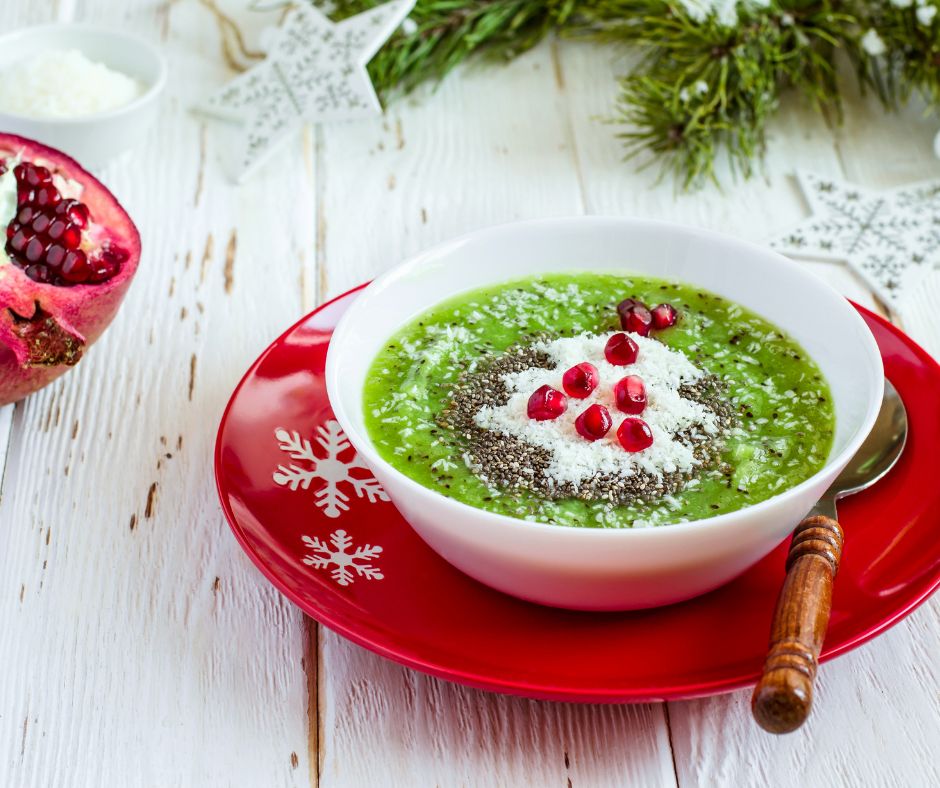
Choose functional foods such as turmeric, ginger, and antioxidant-rich berries to enhance your holiday dishes and desserts. These ingredients not only enhance the flavors of festive treats but also contribute to a healing approach. Add Mushroom powders to melted chocolate before forming into truffles. Add Maca root powder to almond flour when making a cracker. Top your roasted vegetables with pomegranate seeds to nourish your heart, etc….
Who doesn’t like chocolate covered pecans or berries? You can get dairyfree, dark chocolate almost anywhere these days, just READ THE INGREDIENTS. Make a bark out of yogurt and berries. Make cinnamon rolls out of almond flour and flax seeds and use Lou han to sweeten. Have fruit kabobs with chocolate hummus. All of these have ingredients that fuel our body.
Be Prepared.
It is no surprise that the holiday season is full of people overindulging. You know that if you go to a gathering, there is going to be a lot of sweets, gluten, and dairy, and probably alcohol which I haven’t even mentioned. If you didn’t know that alcohol is inflammatory, well it is.
Setting realistic expectations involves acknowledging the presence of these indulgences while aligning them with personal health goals. Plan ahead. If you can bring a dish, do it. If you’re meeting at a restaurant, google the menu. I usually google, “Gluten free [name of the restaurant].” Bloggers usually have comments somewhere about what you can eat if the restaurant doesn’t have GF, DF marked or a GF/DF menu.
If you are lucky enough to be the one to choose the restaurant, I find Happy Cow and Find Me Glutenfree to be very helpful websites.

How Can I Get Through the Evening Without Drawing Too Much Attention?
First, by planning ahead. If you do draw attention, just say you have an allergy or something. You don’t have to make it big deal. OR use it as a teaching moment. You never know who else at the table needs to know what you know. Remember, this can be an invisible illness, and it can take years to get a diagnosis. Someone may be suffering in silence while they are searching for answers.
Setting Personal Boundaries for a Health-Conscious Celebration
Setting boundaries becomes an act of self-care. This intentional approach empowers you to navigate social settings with confidence and resilience. Personal boundaries may involve decisions regarding what you are willing to eat, how long or even if you’ll even go to the party. You can decide that this even is just not right for you today. You can create an environment that supports your health during the holiday season. The balance between festive sociability and personal boundaries paves the way for an empowered and health-conscious celebration.
Embracing a healthier holiday season becomes an act of treating our bodies with care, acknowledging the relationship between indulging and treating ourselves with love and kindness. Being aware of your food choices, effectively communicating your needs, and setting personal boundaries will lead to a healthy, successful season.
Have you checked out our new eBook: Savor the Flavor of Festive Low Glycemic Plant-Based Recipes?
We have 42 recipes that are family-friendly and even include “treats” that the whole family will enjoy. Click [here] to find out more and embark on a journey of flavorful and health-conscious culinary creations. Let this season be not just a celebration but a testament to the care and consideration you extend to your body.
Wishing you a joyous and health-conscious holiday season!
To your health!
Jen

#HolidayWellness, #AutoimmuneHealth, #MindfulIndulgence, #HealthyCelebration, #SweetsAlternatives, #CommunicationInFestivities, #PersonalBoundaries, #NourishingTreats, #HealthJourneyEmpowerment, #FestiveEatingAwareness
Sweet Stuff: How Sugars and Sweeteners Affect Your Health https://newsinhealth.nih.gov/2014/10/sweet-stuff
Excessive intake of sugar: An accomplice of inflammation
https://www.ncbi.nlm.nih.gov/pmc/articles/PMC9471313/
High sugar intake worsens autoimmune disease in mice https://www.nih.gov/news-events/nih-research-matters/high-sugar-intake-worsens-autoimmune-disease-mice
 Wholistic Jen
Leave a comment