


By Jennifer Whitmire, MS, MEd, MH, CHES, NEP
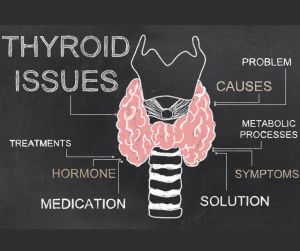
When you first find out you have a thyroid problem, you are usually told no one know why this happens. Unfortunately, in our outdated medical system, doctors are not taught what causes “thyroid” problems. I’m using quotes because most of the time it’s not even a problem with the thyroid. The marker used is a warning sign that something is out of balance.
In most cases, the only test used to diagnose a thyroid “problem” ( hyperthyroidism, hypothyroidism, Graves Disease, or Hashimoto’s), is TSH, thyroid stimulating hormone. This marker measures a hormone released by the pituitary gland. The brain tells the pituitary gland to produce more or less stimulating hormone depending on how much thyroid hormone is circulating in the body. As you can tell, that doesn’t really tell us anything about the thyroid other than there may or may not be the right amount of thyroid hormone circulating.
What Could Affect The Amount Of Thyroid Hormone Circulating?
#1 Stress! Chronic Stress
When we are under too much stress from the basic needs of the day, home stress, work stress, traffic stress, inflammatory food stress, overexercising or under exercising stress, lack of sleep stress, lack of nutrient stress, over eating stress, exposure to viruses, bacteria, parasites stress, … our body easily gets overwhelmed.
If you’ve ever had a sense of overwhelm, how does that feel? What is your first reaction?
For me, I immediately tense up and usually raise my hands towards my chest or grab my face. I get all constricted and freeze. I stop everything! Then, I think about what’s going on. What can I stop or quit or put aside for later?
Our body does this same exact thing. It decides what to speed up and what to slow down. It chooses to put some things aside and stuff others out of the way. This can lead to temperature fluctuations, weight changes, and even bowel changes.
#2 Nutrient Imbalance
-Too much of a good thing
I oftentimes hear people tell me they are taking loads of a certain supplement. The latest popular video cheers on the latest and greatest supplement. The Magic Pill! Sometimes it’s vitamin D, sometimes it’s selenium, or iodine, or zinc. These can be very helpful when needed, but taking too much isn’t any better than not having enough.
Take vitamin D. It’s necessary! And it is very frequently low in those of us with an autoimmune diagnosis. BUT, vitamin D affects the other minerals in your body, too. Too much vitamin D can lead to a build up of calcium in the blood. That’s what plaque is made of! AND that can also lead to slow motility, aka constipation. This is only 1 supplement. What if you are taking too many of others, too?
-Too little of a good thing
Let’s talk fiber. The average American doesn’t get HALF the recommended 28 grams of fiber needed (or 14 grams per 1000 calories of food). Why do we care about fiber? First, “For every additional 8 grams of dietary fiber a person consumed, the risk for each of the diseases fell by another 5% to 27%.”
Fiber is ONLY found in plant foods, so for people following a traditional Keto or Low Carb diet are severely cutting back on fiber. Meat may be chewy and feel fibrous but that is NOT fiber.
Fiber doesn’t just form poop. Fiber feeds the microbes in your intestinal lining to help your body produce vitamins, heal and maintain the intestinal lining, and it affects cholesterol levels and blood sugar and more!!
And Water! Your body is made of mostly water and microbes. Eat raw fruits and vegetables and fermented foods for the microbes and drink WATER, pure water, to stay hydrated. Lack of water adds stress to the body. The body requires water for over 1000 reactions. Don’t skimp on water.

#3 Blood Sugar
It’s NOT JUST THE FOOD!
When we think of blood sugar problems, we usually think of sweets, candy, dessert, pancakes with syrup, some people think of bread, and some think of fruit and sweet vegetables like carrots. All of these can influence your blood sugar, but there is so much more involved.
How well you slept last night can affect your blood sugar today.
Just one night of poor sleep can increase insulin resistance and leave you with strong cravings for carbohydrates.
What you ate last night and how late you ate last night, can affect your blood sugar today.
Last night’s dinner and/or late night snacking can also increase carbohydrate cravings the next day. I have clients who tell me, “But I only ate nuts?!” Even nuts if eaten too late can raise blood sugar the next morning.
What you ate at breakfast, can affect your blood sugar at dinner.
If you’ve ever tracked your blood sugar or worn a CGM (You can get one here), you’ve seen how your breakfast can affect your lunch. Having a typical American sweet breakfast can set you up for elevated blood sugar and bigger blood spikes all day.
How you exercise…
Remember, stress affects blood sugar. If you are stressed, your body will work to keep sugar in your blood. You see, your body sees stress as a danger. Your body works to keep you safe, so when it suspects you are in danger, it works at keeping sugar in the blood so it can be used right away to fight or run. Exercise can add stress to the body. YES, please exercise, but use forms of exercise that do not add too much stress AND be sure to incorporate recovery time. A heavy workout today requires more rest and recovery tomorrow.
Or choose exercises like yoga or Qigong which focus on movement and breathwork without too much stress.
Choose the form of exercise that is right for you today. I used to think, “I’ve got to go run 5 miles! I am so stressed out that I need to burn this off.” And that was actually the opposite of what I needed.
Your mindset…
A positive mindset is much better for you blood sugar than a stressed out one. Focus on gratitude. When you find yourself stressed out, stop and look around. What are 3 things you are grateful for in this moment.
It’s so easy to spiral down into doom and gloom. Just pick up the phone and vent for a minute, and you’ll notice right away how easy it is to make it sound worse. If the person on the other end understands the stress, they may agree with you and the two of you just make the stress, anger, frustration build and build. I’m not saying don’t talk to someone but be sure to recognize when it’s time to pull back and get grounded.
Balancing blood sugar can really be quite a game.
93% of Americans are metabolically unwell. That means just about everyone you know is struggling with their metabolic health which means their heart, liver, and or blood sugar. We are in a crisis here!
Please stop eating the sugar, cakes, cookies, pies, pastries, etc. Or, better yet, find ways to make them healthier! Sugar and flour are slowly killing us!
BUT, if it was just the food, the problem could be fixed right away. Cut the C.R.A.P., chemicals, refined sugars, processed foods, and preservatives TODAY. AND get good quality sleep, exercise, ….

What Does SUGAR Have To Do With The Thyroid?
Fluctuations in blood sugar, especially chronic high levels, affect the liver from adding stress, inflammation, and altering hormones. The liver is needed to help process thyroid hormones, old hormones broken down to leave the body and the thyroid regulates liver cells. They have to be in balance. The liver regulates the uptake and storage of glucose, but it also releases glucose in times of stress.
Insulin Resistance
When we consistently consume foods that raise our blood sugar, our cells can become resistant to insulin. Insulin resistance doesn’t just affect blood sugar; it can also disrupt thyroid function. It’s a cycle, when thyroid hormones are out of balance, it gets more and more difficult to keep blood sugar in balance, and vice versa.
Inflammation
Elevated blood sugar levels contribute to systemic inflammation. Inflammation can compromise the thyroid’s ability to produce and regulate hormones effectively and damage cells. Inflammation can damage the insulin receptors and the thyroid receptors.
Hormonal Imbalance
Imbalances in insulin and other hormones can disrupt the balance of thyroid hormones. High insulin levels, for instance, may interfere with the conversion of thyroid hormones, affecting their availability for use in the body.

How Do We Get Blood Sugar Under Control?
NUTRIENTS
Adopt a nutrient-rich, balanced diet that emphasizes vegetables, nuts and seeds, legumes, and intact whole grains. Prioritize fiber-rich foods to support stable blood sugar levels. Choose all of the foods from the rainbow to ensure all of the vitamin and mineral needs are met.
Opt for complex carbohydrates with a lower glycemic index to prevent rapid spikes in blood sugar. Whole grains, legumes, and vegetables are excellent choices.
Regular Physical Activity
Engage in regular exercise to move the body and the lymphatic system to enhance insulin sensitivity and promote overall metabolic health. Even moderate activity can have significant benefits. Yoga, stretching, walking, and strengthtraining.
Stress Management
Chronic stress can contribute to blood sugar imbalances. Incorporate stress-reducing practices such as meditation, deep breathing, journaling, or even puzzles into your routine. Find ways to take breaks throughout the day every day.
Regular Monitoring
Periodic monitoring of blood sugar levels, especially if you have risk factors or a family history, can provide valuable insights into your metabolic health. Most people have no idea that their blood sugar is out of balance. The only test most people see is a Fasting Glucose at their annual physical. If it’s less than 126, your doctor may not even mention it or let you know that they will be watching it again next year.
Unfortunately, a fasting glucose over 100 should be an alarm to everyone. Get a glucose monitor or a CGM and take your health into your own hands. You can get a glucose meter for $15-$25 at your local drug store or even Walmart. Some doctors will prescribe a CGM, which is what I prefer to track my blood sugar. A CGM, continuous glucose meter, is a wearable device that connects to an app on your phone. You can see how food, sleep, and activities influence your blood sugar in real time. (If your doctor won’t prescribe a CGM for you, you can get one here.)
Ask your doctor to check your Hemoglobin A1C and Fasting Insulin. The A1C gives a better picture of how well you have been handling blood sugar for the past 3 months, while the fasting insulin is a better indicator for insulin resistance.
Do you want to better understand your blood work?
The Jen Twins can help! Join our Free Masterclass TBA Late January. Click here to find out more.


 Wholistic Jen
Leave a comment