


By Jennifer Whitmire, MS, MEd, MH, CHES, NEP
EVERYTHING YOU PUT IN YOUR MOUTH IS EITHER NOURISHING YOU OR HARMING YOU.
What does it mean to have a Leaky Gut?
Digestive issues are just too common these days! AND many issues are related to a Leaky Gut. (Leaky Gut is also called Intestinal Permeability). A leaky gut means that the intestinal lining has been so worn down, that sores have formed. Those sores allow substances to pass through that should not move from the intestine into the blood. Think of a cheesecloth or strainer. If it has a tear in it, whatever you are trying to strain is not going to be blocked properly. The same thing happens in a leaky gut. We need some nutrients to get through, but some food particles should not pass through. When these food particles that don’t belong get through, they create inflammation and alert the body’s immune system that something is wrong and is initiating an attack.
But, how do you know if your issues are related to a leaky gut?
Many symptoms of intestinal permeability are similar to other issues. Many people with a chronic illness have intestinal permeability, and their symptoms are resolved once they find out what caused the permeability, remove it, and repair the damage. Many of these illnesses are not what you think of when you think of the gut. High cholesterol, cancer, diabetes, autoimmune illnesses, and even Parkinson’s and Alzheimer’s are now showing ties to intestinal permeability; as a matter of fact, in my recent courses, I was taught that anyone with an active autoimmune illness does have a leaky gut.
Symptoms of intestinal permeability include:
- Constipation and/or diarrhea
- Abdominal pain
Bloating
Joint pain and swelling - Chronic fatigue
- Food allergies and sensitivities
- Sinus congestion
Skin issues
Asthma - Confusion, poor memory
Having symptoms isn’t a diagnosis but learning what causes it and making lifestyle changes that help reverse intestinal permeability are easy enough to try. If it will help you feel better and more like YOU again, I say try it. For me, if I had those symptoms, I would go through the steps below and make changes to see if they work.

So… what causes a leaky gut?
Inflammation, poor nutrition, malabsorption, microbial imbalance and/or overgrowth, environmental toxins, stress, and over-exercising can lead to a leaky gut. BUT none of these happen overnight. A meal that is low in nutrients is not going to cause a leaky gut, but a meal every day or every few days for years can create an environment for a leaky gut. And, if you have several meals a day of poor nutrition it will develop even faster.
Inflammation can be caused by food, stress, and environmental factors. Foods like allergens, artificial colorings and flavorings, artificial sweeteners, caffeine, dairy, gluten, processed meats, fried foods, processed flours, sweets, heated oils/cooking in oil, alcohol and sweetened beverages create inflammation. Stress causes blood sugar to increase and overtime can lead to inflammation and poor digestion leading to a leaky gut.
Environmental factors from chemicals in the air, chemicals in the food, chemicals in cleaning products and self-care products, chemicals in the water, in couch cushions, and even in our countertops can lead to a leaky gut.
Mold in the home can lead to a leaky gut. Medicines like steroids, antibiotics, and hormone replacements like birth control pills, and even pain relievers like NSAIDS and aspirin. None of these things are meant to be in our body for an extended period of time.
Even eating too fast and/or eating while under stress like while driving in traffic, can create inflammation and lead to leaky gut over time. If you eat in the car on the way to work every day, you aren’t eating in a relaxed state and enjoying your meal, and you probably aren’t chewing slowly.
If you have several of the symptoms listed above or have been diagnosed with a chronic illness, diet, lifestyle, and environment can easily be evaluated and tweaked.
Stressed?
Are you under a lot of stress? Find ways to incorporate fun into your day. Find ways to relax. We all have different methods that work for us. Work with someone to get it managed.
A mini-break could be as simple as setting a timer on your phone to take a time out. Close your eyes, put one hand on your chest and another on your belly and take 3-4 long breaths. I love Dr. Weil’s 4-7-8 breathing technique. My daily ritual is to do “Legs up the Wall” while listening to a Body Scan meditation on Insight Timer and putting a hot, wet compress over my eyes before dinner every night. I’ve been doing this for years now, and it not only helps me to relax, but it signals my body that work is over for the day. It gives my eyes a rest from all of the computer screens, relaxes me, and helps me better digest my meal. My body knows it’s time to spend time with my family and relax. I even sleep better now.

How’s your diet?
Do you eat inflammatory foods?
Alcohol, artificial anything, caffeine, sodas, dairy products, gluten, processed meats (hot dogs, sausages, and deli meats), refined flours, processed foods, breads, cakes, cookies, pastas, crackers, candy, candy bars, sweeteners and artificial sweeteners, heated oils and fried foods, and some peanuts and peanut butter.
Remove all of these that you can. Use my recipes that you get each week in your inbox to help you with replacements.
Check your environment.
Is there visible mold anywhere in your home? If so, find someone to get rid of it for you. Start checking ingredients in EVERYTHING! All of the chemicals in your home that you use for cleaning, pest control products, laundry products, personal care products, soap, toothpaste, shampoo, conditioner, …. I LOVE to use the Think Dirty App to help with checking ingredients and finding options.
ALSO, check your foods. If you have an item in your pantry with a label, turn it over and see what is in your food. Artificial colors or flavors? Toss it! Processed flours? Known allergens?
If you are unsure about a food, whether or not it affects you, remove it for at least 4 days. Then add it back and see if you notice a difference. Now some foods take months to clear out of your system. A leaky gut doesn’t happen overnight, AND it doesn’t heal overnight either.
How do you repair a leaky gut?
First, you need to stop eating certain foods and being exposed to things that cause a leaky gut. Throw out the toxins, cut the inflammatory foods, and work on stress management.
To help your leaky gut, choose real, whole foods. The cashier at the grocery store asked my husband why he always buys so many ingredients. LOL! That’s what you should be buying, ingredients. Find ways to incorporate as many whole foods as possible into your day, AND use the upcoming free challenge to help. If you keep adding whole foods, you won’t have room for the “other” foods.
Swap zoodles for pasta, or make carrot noodles, sweet potato noodles, cucumber noodles. Make Nice cream from frozen fruit(s) instead of eating ice cream. Use large romaine leaves, nori sheets, or collard leaves for wraps, burritos, or tacos. Roast a bunch of different vegetables on the weekend for quick grab and go lunches and dinners. Roasted veggies on a salad, roasted veggies on zoodles, roasted veggies in a Buddha bowl, roasted veggies in a blended soup.
Second, add in foods and herbs to increase your nutrients and provide variety for all of the “gut bugs” what you want. Your body needs a large diverse group of microbes to help you break down foods, create certain nutrients, absorb nutrients, and use them. To get that diversity, you need to eat a large variety of fresh foods and some of them (most of them) need to be raw. Raw fruits and vegetables contain enzymes that are needed to make specific actions occur in the body. This is why we soak nuts, seeds, and beans before we eat them. We need to activate the enzymes to get the most nutrition.
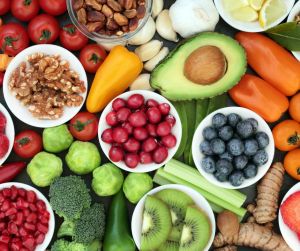
Aim for every meal to contain all of the colors of the rainbow!
Not only will you have a beautiful dish, it will have many different textures and flavors and loads of nutrients. Go back to your ebook from the Rainbow Challenge and create some beautiful dishes.
Third, add in foods that help with reducing inflammation.
Remember the Omega-3 fats we talked about a few weeks ago? Add foods like walnuts, hemp seeds, ground flax seeds, and chia seeds to your breakfasts, smoothies, salads, soups, wraps. Focus on raw foods that are high in antioxidants like citrus fruits, brightly colored peppers, kiwi fruits, and lot of leafy greens. Choose cruciferous veggies like kale, broccoli, cauliflower, Brussels sprouts, bok choy, …. Find ways to add turmeric and ginger to your meals.
In my CREATE A Healthier You program, I challenge the participants to get in their greens three times day! Sounds nuts, but it is actually pretty easy: greens in your smoothie (spinach, bok choy, and napa cabbage are so mild that you won’t know they are in there), salad greens with lunch, and steamed cabbage, broccoli, or kale are great with dinner. OR add some greens to your soup or pasta sauce.
Fourth, add foods and herbs that soothe and protect the intestinal lining.
Foods like chia seeds, flax seeds, okra, cruciferous veggies, garlic, ginger, turmeric, pomegranate, pumpkin seeds, are soothing and anti- inflammatory, and some even help to repair the mucosal lining.
Herbs like slippery elm, licorice root (In DGL form if you have high blood pressure), marshmallow root, aloe vera juice are all very soothing. Calendula, chamomile, dandelion, fennel, oregano, basil, chicory, plaintain, rosemary, and thyme all aid the gut, as well.
Start where you are and take 1 step at a time. If all you can do is swap out some of the refined foods, then do it. Start reading labels. Look at the foods you have in your home and decide, “Is this helping me or hurting me?” Once you have better choices at home, move to step 2 and add new foods that help your gut. Google some recipes to help you incorporate these new foods. You can do this!

YOU GET A CHOICE EVERY TIME YOU RAISE YOUR FORK OR GLASS.
The Jen Twins, Jennifer Whitmire and Jennifer Swank, LOVE working with clients to help them get to the root and restore their gut. This is our passion AND purpose. If you would like to connect with us to see if we should work together, please click here and choose a time.

 Wholistic Jen
Leave a comment