

By Jennifer Whitmire, MS, MEd, MH, CHES, NEP
When I first started looking into my health years ago, I never imagined just how many layers there could be. Recently, my inflammatory markers had been hovering a little higher than I’d like, so, I went back to testing.
I repeated a Gut Zoomer that I took back in December 2022. If you don’t know, a Gut Zoomer is a stool test that gives you a report on your microbiome and many different markers that show leaky gut, malabsorption, etc. (If you want to do this test, let me know! I can help you.)
When I had the 1st Gut Zoomer, I was probably the sickest I have been on this journey. My doctor had retired, and I had run out of thyroid meds, AND every MD I saw for meds kept referring me to another MD. I was lost, depressed, and super sick!
Luckily the functional medicine doctor I found that December, helped me get back on my compounded T4 and T3. You may remember that I flew to Europe that December (the day after that test) and came back even sicker! After 6 more months of something horrible, I finally got my energy back.
My repeat Gut Zoomer this September still showed high zonulin—meaning leaky gut is still there. That means it is time to dig deeper. Here is where we really have to personalize our foods and lifestyle plan! I have been 100% gluten free for many years, and that helped me bring down my anti-bodies.
Either I never healed my leaky gut even though I drank the gut healing teas religiously, I avoided all of the inflammatory foods that I knew were an issue for me, I started meditating every single day (11 months, now). I took probiotics, made my own ferments, and focused on adding pre-biotics to my daily breakfast. But the test showed I am still very low in beneficial bacteria, too. I’ll share more on reversing leaky gut in next week’s post.
I also ran a Grain Zoomer at the same time which showed that rice, quinoa, and buckwheat are triggering an inflammatory response in my body. These are foods that I don’t FEEL any reaction to, so I have been eating them here and there. Foods I once thought were “safe” and “healthy” are, right now, creating issues for me.
I also ran a Neuro Zoomer (the bundled price was worth getting all 3 tests). This is where things really got interesting: it showed I have an active Epstein-Barr Virus (EBV) infection.
What? I’ve never had mono. How can I have EBV?
That sent me on a deep dive. Because EBV is one of those viruses that shows up in conversations about autoimmunity.

What is EBV? And How Common Is It?
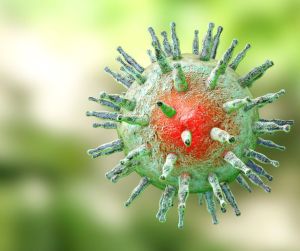
Epstein-Barr Virus (EBV), also called human herpesvirus 4, is part of the herpesvirus family. Once you’ve been infected, the virus never completely leaves your body. It lives inside certain immune cells (B lymphocytes) and can go dormant, then reactivate later under the right conditions. (Similar to Chickenpox and Shingles. Chickenpox can remain in nerve cells, but EBV can live in white blood cells).
And here’s the crazy thing I learned: by adulthood, over 90–95% of people worldwide have been infected with EBV. Most of us don’t even realize it, because childhood infections are usually mild or symptom-free. But when infection happens in adolescence or adulthood, it often shows up as infectious mononucleosis (“mono”) with fatigue, sore throat, fever, and swollen lymph nodes.
So yes, EBV is common. Nearly everyone carries it. But not everyone experiences problems from it.
The Symptoms of EBV
Do these sound familiar? For me, they’re the same symptoms I have during an autoimmune flare.
When EBV first infects someone, it may cause:
* Fatigue and exhaustion
* Fever
* Sore throat
* Swollen lymph nodes (especially in the neck)
* Enlarged spleen or liver in some cases
Most people recover from mono in 2–4 weeks, but fatigue can linger longer.
What makes EBV unique is its ability to stay dormant for years and then reactivate when your immune system is under stress. Most reactivations are silent, but for some people, especially those with autoimmunity, it may fan the flames of inflammation.

EBV and Autoimmune Thyroid Disease
This is where things get really relevant for me and maybe for you if you’ve been diagnosed with Hashimoto’s or Graves’.
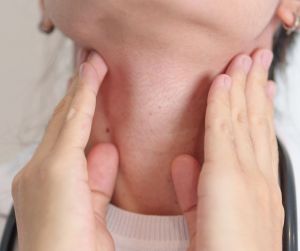
Several studies have shown that EBV proteins have actually been found inside thyroid tissue. In one study out of Poland, 81% of people with Hashimoto’s and 63% with Graves’ had EBV proteins in their thyroid glands. They didn’t show up in the thyroids of people without autoimmunity. That’s not a coincidence.
The theory is that EBV-infected immune cells migrate into the thyroid and start “camping out” there. Once they’re inside, they can cause trouble.
In people with certain genetics, this can confuse the immune system into attacking thyroid tissue. It’s a classic case of mistaken identity, the immune system thinks it’s fighting infection, but ends up attacking you instead.
Some researchers even believe EBV can trigger the onset of autoimmune thyroid disease. There are case reports of people developing hyperthyroidism shortly after recovering from mono. So while EBV may not be the only reason, it can certainly be a spark that lights the fire.
And remember, EBV doesn’t act alone. Genetics, environment, leaky gut, stress, diet, toxins, sleep, and even other infections all play a role. EBV is just one part of the bigger picture, but for many of us, it’s an important one.
How Epstein-Barr Virus Can Lead To Autoimmunity
So how does EBV actually play a role in autoimmunity? Here are a few ways researchers believe it happens:
· EBV lives inside B Lymphocytes. These are the same immune cells that make antibodies. When they’re infected, these B cells can start pumping out the wrong antibodies, including thyroid autoantibodies like TPO, Tg, and in Graves’, TRAb. That’s one way EBV can create thyroid autoimmunity from the inside out.
· EBV leaves genetic material in thyroid tissue. It marks small RNAs (called EBERs) and proteins (like LMP1) that are only made when the virus is “awake.” These viral pieces act like alarm bells inside the thyroid, activating local immune responses and keeping inflammation going.
· EBV proteins can “mimic” normal human proteins. These are close enough that the immune system gets confused and starts attacking both the virus and your thyroid tissue. This is called molecular mimicry, and it’s one of the main ways infections can turn into autoimmunity.
· EBV reactivates and stirs the immune pot. It can throw off immune regulation. Think of it as shouting into an already noisy crowd. Suddenly everyone’s on edge, and the thyroid ends up caught in the crossfire.
EBV doesn’t cause autoimmune thyroid disease on its own, but when it reactivates, it can push an already sensitive immune system further toward autoimmunity or make an existing condition harder to manage.
EBV and Other Autoimmune Diseases
Autoimmunity doesn’t stop at the thyroid, and neither does EBV.
· Multiple Sclerosis (MS): In one of the largest studies ever done, researchers found that people almost never developed MS unless they’d had EBV first. In fact, EBV infection increased MS risk more than thirty-fold. That’s one of the strongest connections we’ve ever seen between a virus and an autoimmune disease.
· Lupus and Rheumatoid Arthritis: Higher EBV antibody levels are often found in people with these conditions compared to healthy controls, suggesting that EBV reactivation plays a role in keeping the immune system on high alert.
· Sjögren’s Syndrome and Dermatomyositis: EBV is frequently implicated here too, again showing how this virus can weave its way into different autoimmune patterns depending on genetics and environment.
And it’s not just autoimmunity. EBV is linked to certain cancers as well, including Hodgkin lymphoma, Burkitt lymphoma, nasopharyngeal carcinoma, and some gastric cancers. That doesn’t mean EBV automatically leads to cancer. It simply shows the virus has the ability to change how the immune system behaves.
Why This Matters for Thyroid Health
When EBV reactivates, it may put your thyroid on the line. For me, with an autoimmune thyroid condition, this means:
- EBV reactivation could explain lingering inflammation despite my careful diet and lifestyle.
- It reminds me that food is only part of the picture—hidden infections, stress, sleep (or lack of sleep), appropriate exercise, … can play a big role.
- Testing and monitoring antibodies and thyroid markers becomes even more important if EBV is active.
It also gives me clues about where to focus my energy: immune balance, stress management, gut health, and reducing inflammatory triggers.
How EBV is Managed
There’s no official antiviral drug that “cures” EBV. There are no cures for viruses. Treatment is usually supportive
- Rest & recovery during acute infection
- Hydration and immune support
- Avoiding contact with others when active
For those of us dealing with reactivation in the context of autoimmunity, management often looks like:
- Nutrient support: Selenium, vitamin D, zinc, and antioxidants are often explored (some studies suggest selenium helps lower thyroid antibodies). These are important, but MORE IS NOT ALWAYS BETTER. My labs show too much selenium. When was the last time you checked yours?
- Gut support: Because leaky gut and EBV are connected, working on the microbiome is critical.
- Stress reduction: EBV reactivation often coincides with stress and adrenal imbalance.
- Testing: Keeping thyroid labs, inflammatory markers, and EBV antibodies checked when symptoms flare.
And research is ongoing. Scientists are actively working on potential antiviral therapies.
What to Watch For
If you’re living with autoimmune thyroid disease, here are things to be aware of when it comes to EBV:
- New or unexplained fatigue that doesn’t lift
- Sore throat or swollen glands outside of cold/flu season
- Autoimmune flare-ups without clear food triggers
- Lab markers like elevated EBV VCA IgM/IgG or EBNA antibodies
If these patterns show up, EBV could be part of the picture.

My Takeaway
When my Neuro Zoomer showed active EBV, it gave me clarity. It reminded me why I still need to dig deeper than just food sensitivities or leaky gut. This virus is part of my story, and it may be part of yours too.
The good news is that knowing about EBV helps me take more targeted steps. It means being vigilant about stress, continuing to refine my diet, supporting my gut and immune system, and working with my doctors to keep an eye on both thyroid and viral markers.
I share this not to alarm you but to empower you. When we understand the hidden drivers behind autoimmune disease, we can stop blaming ourselves and start creating a more complete healing plan.
If you’re reading this and wondering how to take back control of your health, you don’t have to do it alone. That’s why I created the Culinary Healing Circle—a supportive community where food truly becomes medicine.
Inside, you’ll learn how to:
- Make anti-inflammatory, family-friendly meals that everyone will enjoy
- Heal a leaky gut and use food strategically to help reverse disease
- Get your personal questions answered in our monthly Q\&A and open coaching sessions
- Practice stress management through Qigong, balancing both body and mind
- Connect with a family of like-minded people who are walking the same healing journey
Your body has incredible capacity to repair when you give it the right tools. Let’s do it together.
Check out the CulinaryHealingCircle.com today and start creating the health (and life) you deserve.
References
- Verywell Health. Epstein-Barr Virus: Symptoms, Causes, and Treatment. (https://www.verywellhealth.com/epstein-barr-virus-5069897)
- Paloma Health. Epstein-Barr Virus and Thyroid Disease. (https://www.palomahealth.com/learn/epstein-barr-virus-thyroid)
- BMC Research Notes. Possible role of EBV in autoimmune thyroiditis.(https://bmcresnotes.biomedcentral.com/articles/10.1186/s13104-023-06399-8)
- SHM Abstracts. A Case of New-Onset Autoimmune Thyroid Disease Following Acute Epstein-Barr Virus (EBV) Infection. (https://shmabstracts.mystagingwebsite.com/abstract/a-case-of-new-onset-autoimmune-thyroid-disease-following-acute-epstein-barr-virus-ebv-infection/)
- MDPI. EBV in Autoimmune Disease Pathogenesis. Medicina 2025; 61(7):1148. (https://www.mdpi.com/1648-9144/61/7/1148)
- Aversa, G., et al. A possible link between the Epstein-Barr virus infection and autoimmune thyroid disorders. Int J Endocrinol Metab. 2016;14(4)\:e36074. https://pmc.ncbi.nlm.nih.gov/articles/PMC5099387/)
- Ferrari, S.M., et al. The role of Epstein-Barr virus infection in the development of autoimmune thyroid diseases. Endocrine. 2015 Aug;49(3):429–43. https://pubmed.ncbi.nlm.nih.gov/25931043/)

 Wholistic Jen
Leave a comment