

By Jennifer Whitmire, MS, MEd, MH, CHES, NEP
Oxidative stress is a term that is used a lot in conversations about inflammation, autoimmune disease, fatigue, aging, and chronic illness. It shows up in research papers, supplement ads, and lab discussions, yet who has a clear explanation of what it actually means or how it applies to them?
Most of us are left with the vague idea that oxidative stress is “bad” and antioxidants are “good,” without understanding how it affects the body or why certain foods help more than others.
For those of us living with autoimmune disease, this gap in understanding can be especially frustrating. You may be doing things “right,” yet still feel depleted, inflamed, or slow to recover.
Oxidative stress is not a diagnosis. It is not something you either have or don’t have. It is a state of imbalance, and understanding that changes how we approach healing.

What Oxidative Stress Actually Is
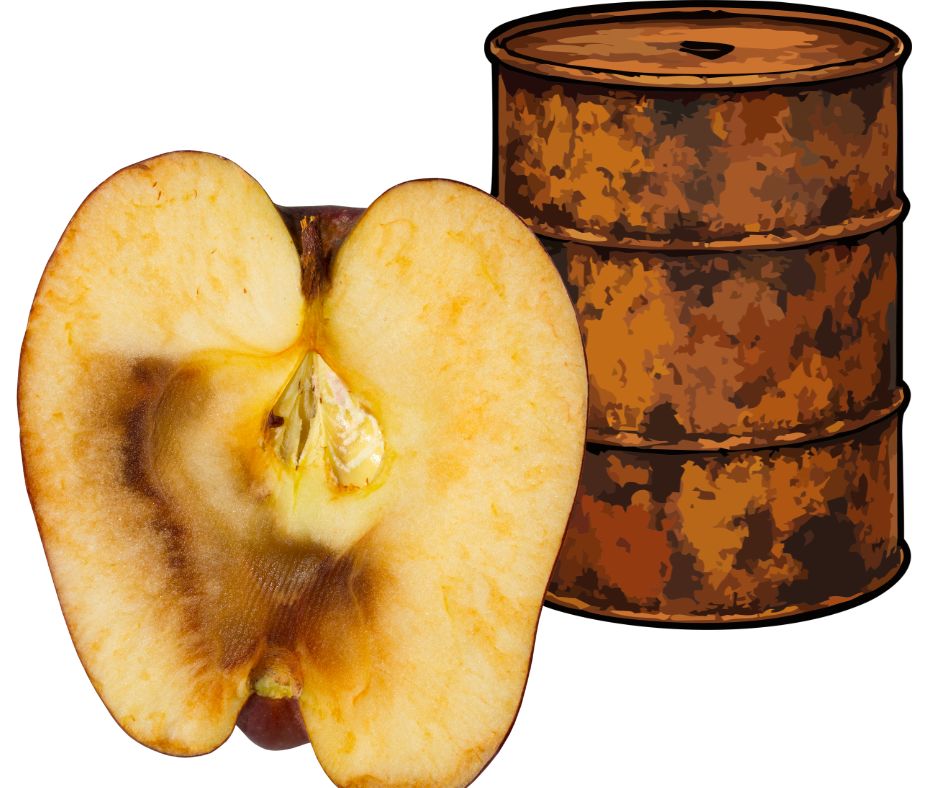
Oxidative stress occurs when the production of reactive molecules is greater than the body’s ability to neutralize them. Look at the picture above. Rusting and aging/browning apples are a way to picture oxidative stress, only this is occurring in your body.
Reactive molecules are often referred to as free radicals or reactive oxygen species (ROS). They are not inherently harmful. In fact, they are a normal and necessary part of human physiology.
Your mitochondria generate them during energy production. Your immune system creates them to destroy pathogens. Cells use them as signaling molecules to communicate and adapt.
Problems arise when this tightly regulated system becomes overwhelmed.
When free radical production out-paces antioxidant defenses, these unstable molecules begin interacting with cell membranes, proteins, and DNA. Over time, this causes structural damage and functional disruption at the cellular level. The result is not immediate catastrophe, but a gradual strain that affects how efficiently tissues function and recover.
Oxidative stress, then, is not just the presence of free radicals (they are always present). It involves an imbalance over time, duration, and the body’s capacity to repair any damage that occurred.
Your knee can heal if you bang it on a table a few days in a row, but if you bang it every day on the same table in the same place day after day after day, after a while, it’s not going to heal. The same thing is happening inside the body when auto-antibodies are active and keep injuring your tissues and glands.
Why Oxidative Stress Matters in Autoimmune Disease
Autoimmune disease creates an environment that is particularly vulnerable to oxidative stress.
When the immune system is activated, immune cells release reactive molecules as part of their defensive response. This is supposed to happen and is appropriate in the short term. The issue arises when immune activation becomes chronic, which is what happens in autoimmune disease.
Persistent immune signaling leads to sustained free radical production. Over time, this contributes to oxidative damage in tissues that are already under stress.
Mitochondria become less efficient at producing energy. Cell membranes lose integrity. Proteins involved in hormone signaling and enzyme activity are altered. DNA repair mechanisms are taxed and cellular damage increases.
This matters because oxidative stress does not simply coexist with autoimmune disease. It amplifies it.
Increased oxidative stress feeds inflammatory signaling pathways which stimulate immune activation. This creates a feedback loop that helps explain why autoimmune symptoms can persist or worsen even after a known trigger is removed. You stop gluten, feel better for a bit, then get sick again.

How Oxidative Stress Shows Up Clinically
Most people do not experience oxidative stress as a distinct symptom. Instead, they experience the downstream effects of cellular inefficiency and inflammation.
This often presents as a pattern not just a single complaint.
- Fatigue that continues even with sleep.
- Reduced tolerance for exercise or stress. You exercise or work out today and have to stay in bed for the next 3 days..
- Brain fog that fluctuates but never fully clears up.
- Muscle weakness, those heavy legs.
- Headaches
- Your body is slow to rebound after even minor challenges
For many people, these symptoms appear before laboratory markers show any outside reference ranges. This disconnect can be invalidating, especially for those of us who are told that nothing looks wrong. “You’re fine. I don’t even know why you came in.”
Most conventional doctors don’t understand how to look for trends or what to do when they do see trends UNTIL it’s time for medications. Functional practitioners take note and start helping guide changes to reverse conditions BEFORE meds are even needed.
From a functional perspective, oxidative stress helps explain why someone can feel so, so sick even when standard labs are “normal.” Cellular strain often shows up before things show up on labs.
Measuring Oxidative Stress: Useful but Limited
There is no single lab test that fully captures oxidative stress.
Certain markers can give indirect clues. Elevated inflammatory markers, changes in ferritin, altered glucose metabolism, and elevated homocysteine may reflect increased oxidative burden.
Some specialty labs assess lipid peroxidation or antioxidant capacity more directly. Mitochondrial markers can also be helpful.
However, laboratory test should be interpreted with symptoms, history, and patterns. Oxidative stress is dynamic and context-dependent. A snapshot in time (1 isolated blood draw) rarely tells the whole story.
For practitioners, this reinforces the importance of pattern recognition rather than reliance on any single metric.
What Drives Oxidative Stress
Several factors increase oxidative load, particularly in autoimmune populations.
Blood sugar imbalance is a significant contributor. Rapid changes in glucose generate oxidative stress and stimulate inflammatory signaling.
Chronic stress increases free radical production while simultaneously depleting antioxidant reserves. Environmental toxins, infections, and food sensitivities add even more stress to detoxification and immune pathways.
Gut integrity also plays a key role. Increased intestinal permeability exposes the immune system to antigens that create inflammation and oxidative stress. This gut–immune interaction is a central driver in autoimmune disease.
Ooxidative stress is rarely caused by a single factor. It is cumulative.
Why Supplements Alone Are Not the Answer
When people hear about oxidative stress, the reflexive response is often to reach for antioxidants in supplement form. “Take some vitamin C and quercetin.” While supplementation can be useful in certain contexts, it is not a substitute for addressing the underlying causes of oxidative imbalance.
High-dose antioxidants without foundational support can even blunt beneficial signaling processes. The goal is not to eliminate free radicals entirely, but to restore balance between oxidative challenge and antioxidant capacity.
This is where food becomes central.
How Food Influences Oxidative Balance
Food influences oxidative stress through multiple overlapping mechanisms.
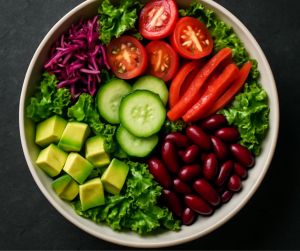
You know that when you add some lemon juice to apple slices or bananas that they don’t turn brown as quickly. That’s because the antioxidants in the lemon juice, prevent the “rusting” and oxidation. That’s how food protects our cells from oxidation, as well.
First, food affects blood sugar regulation. Stable glucose levels reduce oxidative stress and inflammatory signaling. Meals with different forms of fiber, protein, and essential fat create steadier energy and fewer metabolic spikes.
Second, food provides the raw materials needed for antioxidant systems. Minerals like magnesium, zinc, and selenium are essential cofactors for enzymes involved in neutralizing oxidative stress. Amino acids from protein support glutathione production and tissue repair.
Third, plant foods supply phytochemicals that regulate oxidative pathways. These compounds do not simply “scavenge” free radicals. They influence gene expression, mitochondrial function, and immune signaling in ways that isolated nutrients cannot replicate. This is why we can’t supplement our way our of an autoimmune flare.
Finally, food supports gut integrity. A resilient gut lining reduces immune activation and lowers oxidative load at the source.
The Role of Phytochemicals in Cellular Protection
Phytochemicals play a very important role in oxidative balance.
Compounds such as quercetin, anthocyanins, lutein, and zeaxanthin influence oxidative stress by supporting antioxidant enzyme systems, stabilizing cell membranes, and modulating inflammatory pathways. Many of these compounds are metabolized by gut microbes into bioactive forms that support immune regulation.
This is why diversity matters. Different plants provide different phytochemicals, and those chemicals interact with the microbiome in unique ways. Over time, this diversity strengthens the body’s resilience to oxidative stress.

Signs Oxidative Stress Is Improving
When oxidative balance begins to restore, changes are usually gradual but meaningful.
Energy becomes more predictable. Recovery after illness or flares is faster and easier. Mental clarity improves. Sleep feels deeper and more restorative. Sensitivity to food or stress decreases. The body feels less reactive and more adaptable.
These shifts reflect improved cellular efficiency rather than symptom suppression.
A Broader Perspective on Healing
Symptoms shouldn’t scare us. They are telling us to pay attention. They’re giving us a heads up that we need to act now to stay be healthy. Oxidative stress is information.
It tells us that the body has been operating under sustained pressure (chronic stress) and needs support to restore balance. The body is not broken. It is adaptive. When the internal environment becomes more supportive, repair processes resume naturally.
Food is one of the most powerful tools available, because it works upstream. It influences metabolism, immune signaling, gut integrity, and cellular repair simultaneously. Through consistent nourishing, healing meals.
A Gentle Invitation to Go Deeper
If this info helped clarify the role oxidative stress plays in autoimmune disease and chronic fatigue, I would love to support you further inside The Culinary Healing Circle.
Inside the Circle, we translate nutrition science into real-world meals and routines that support immune regulation, gut repair, blood sugar balance, and cellular recovery. We focus on nourishing the body, not perfection. On building resilience rather than pushing through depletion.
You can learn more at www.culinaryhealingcircle.com
Your body already knows how to restore balance. Sometimes it simply needs the right signals, given consistently, to do what it does best.

 Wholistic Jen
Leave a comment