
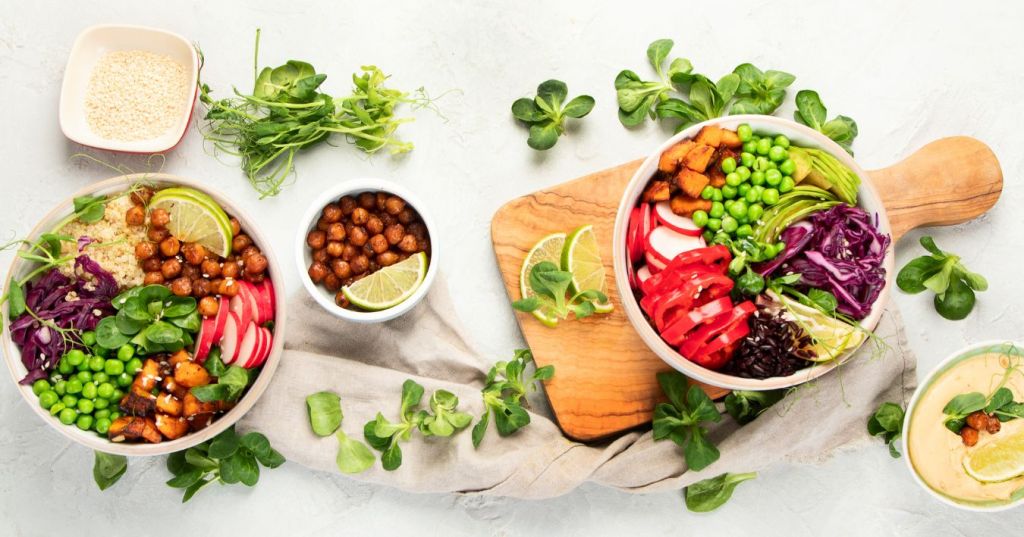
Buddha bowls, poke bowls, and grain bowls for busy days
By Jennifer Whitmire, MS, MEd, MH, CHES, NEP
Some days I love planning meals, and some days… I absolutely do not.
I like to plan my meals out for the week to make the grocery list, but a few days later, I’ll go to cook dinner and think, I just don’t feel like making that tonight. Even when we plan and consider nutrition and want to eat healthy, there are nights when the idea of following a recipe feels like too much.
That’s exactly why my fall-back is what I call build-your-own bowls. You may call them Buddha bowls, poke bowls, bibimbap, or grain bowls. Whatever the name, the idea is the same: combine greens or grains, add a protein, add colorful vegetables, and finish with a sauce and toppings. (When I travel, I look for restaurants that let you create your own bowl).
You end up with a delicious, filling meal that was super easy to create without a recipe.
Not too long ago we went to a restaurant in Greenville, South Carolina that used this same concept. You could choose from dozens of ingredients and build your bowl exactly how you wanted it.
I remember thinking I could eat there morning, noon, and night for weeks and never have the same meal twice.
I’ve thought about opening a school that had a restaurant like that inside, but for now, we don’t need a restaurant to eat this way.
We can do it at home with whatever we already have in the fridge.
What Is a Buddha Bowl?
A Buddha bowl is simply a bowl built around whole foods. It usually includes a base of greens or grains, a source of protein, a variety of vegetables, and a flavorful sauce and topping.
There is no specific recipe. We just need balance. Instead of centering the meal around one main dish, everything is layered in one bowl, so you get fiber, protein, healthy fats, and a wide range of nutrients in the same meal.
Meals created around beans, vegetables, and greens naturally include the fiber the microbiome needs to thrive. I talk more about why this matters in Your Mysterious Microbiome.
You may also see these bowls called grain bowls, power bowls, nourish bowls, poke bowls, or bibimbap, depending on the cuisine that inspires them. While the ingredients vary, the principle stays the same: build a meal from whole foods that complement each other.
What I love about this style of eating is the flexibility. You can use whatever vegetables you have in the refrigerator, whatever beans or grains are already cooked, and whatever sauce sounds good that day. The bowl changes every time you make it.
That flexibility is one of the reasons these meals work for people trying to eat healthier. It removes the pressure of following a recipe while still making it easy to build a balanced meal.
Combining fiber-rich vegetables, plant protein, and healthy fats helps slow digestion and stabilize blood sugar, which is especially important for people managing inflammation and chronic disease. I explain this connection more deeply in my article on why blood sugar matters in autoimmune disease.
A Lazy Night Dinner That Turned Into the Perfect Bowl
The other night I was feeling lazy and didn’t want to make the meal I had planned, so I did something simple.
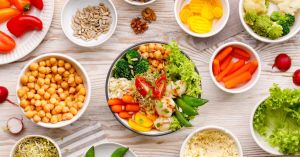
I roasted a bunch of vegetables, tossed green peas over the top for protein, added a splash of coconut aminos, and topped is all with seeds.
That’s it.
The whole dinner was created on two sheet pans, cleanup was easy, and the bowl was packed with color, fiber, and flavor.
Here’s what went into that bowl (You may have seen it on my Instagram feed):
-Napa cabbage for the greens
-Red bell pepper, onion, carrot, broccoli, and cauliflower for the vegetables
-Frozen green peas for protein
-Coconut aminos for a quick sauce
-Pumpkin seeds and sunflower seeds for crunch
I roasted the veggies at 375°F on parchment-lined sheet pans.
After the vegetables softened and started to caramelize, I scattered the peas on top and returned the trays to the oven for a few minutes to warm them through.
Then everything went into one big bowl. I added the seeds, and voila!
Simple, colorful, and delicious.
Why These Bowls Work So Well for Nutrition
Meals created this way naturally include many of the nutrients we need for steady energy and immune health.
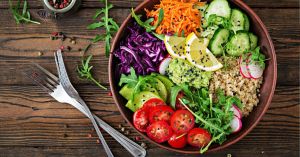
When we combine fiber-rich vegetables, plant proteins, and healthy fats, the meal digests more slowly. Blood sugar stays more stable to help with insulin resistance, the microbiome receives the fiber it needs, and the body gets a wider range of minerals and phytochemicals.
These are meals that support metabolic health and reduce inflammatory load, AND the best part is that there’s no recipe. They just require a framework.
The EASY Formula for Building a Nourishing Bowl
Instead of following recipes, think in terms of layers.
Start with a base.
Some people prefer greens, while others want something heartier like a grain or a wrap. Both work. Spinach, kale, cabbage, bok choy, and lettuce are great options, and they can be raw or lightly sautéed. If you prefer grains, brown rice, quinoa, millet, buckwheat, or wild rice can create a satisfying foundation. Or, sometimes I like Romaine boats, nori sheets, or coconut wraps as my based.
If you use a grain or wrap, just be sure to add some greens.
Next, add a protein.
Legumes like chickpeas, black beans, lentils, and peas work well. Tofu, tempeh, mushrooms, and edamame are also great plant-based options. The goal is to add something that adds staying/sticking power.
After that, pile on the vegetables.
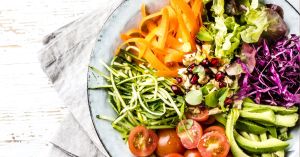
This is my favorite, the rainbow. Roasted vegetables add comfort and warmth, while raw vegetables add brightness and crunch. Bell peppers, sweet potatoes, carrots, broccoli, cauliflower, asparagus, and green beans are all excellent choices.
Then comes the sauce.
A good sauce pulls everything together. Sometimes I use coconut aminos, marinara, or a cheez sauce. Other times I make a quick dressing.
Creamy Ginger Mustard Dressing
When I want a dressing that adds nutrition AND flavor, I usually make something like a quick ginger mustard sauce. It takes about a minute to blend and works beautifully on grain bowls, roasted vegetables, salads, or even as a dip.
This one is creamy from whole foods instead of oil, and the ginger adds a little warmth that pairs well with roasted vegetables.
Ingredients
2 tablespoons Dijon mustard
2 tablespoons apple cider vinegar
1 tablespoon tahini or almond butter
1–2 tablespoons water, to thin
½ teaspoon grated fresh ginger
1 small clove garlic
Pinch sea salt
Instructions
Whisk or blend everything together until smooth. Add water a little at a time until it reaches the consistency you like.
Taste and adjust. Sometimes I add a squeeze of lemon or a pinch of smoked paprika depending on what I’m putting it on.
This dressing works especially well on bowls with roasted vegetables, beans, and greens because the acidity brightens everything and the sesame or almond adds just enough richness to make the bowl feel complete.
Finally, add toppings.
Seeds, nuts, avocado, herbs, or even a spoonful of salsa can add texture and flavor that completes the bowl.
Keep Your Kitchen Stocked for Easy Bowls
The secret to making this style of eating easy is having a few staples on hand.
Leafy greens, beans, a variety of vegetables, and if you eat them, whole grains, give you the opportunity for endless combinations. Seeds, nuts, avocado, and olives add healthy fats, fiber, and minerals. A few sauces or dressings boost the flavor that holds everything together.
Once your pantry and refrigerator are stocked with those ingredients, you can create meals quickly without needing a recipe or a plan.
This is one of the easiest ways to eat well when life is busy.
Why I Love This Way of Eating
Meals like these support many of the things we talk about when it comes to long-term health.
They have fiber for the microbiome, minerals for the nervous system, and phytochemicals that help the body regulate inflammation. They also create meals that look beautiful and are filling.
Most importantly, they make healthy eating flexible.
Forget worrying about a recipe, and build a bowl.
What Would Be in Your Bowl?
If I were ordering from that Greenville restaurant today, I’d probably choose roasted kale, black beans, roasted sweet potatoes, onions, and red bell peppers.
Then I’d finish it with salsa verde and pumpkin seeds.
What would you build?
Want More Meals Like This?
If meals like this feel simple and doable, that’s exactly the point.
Inside The Culinary Healing Circle, this is the kind of food we focus on every week. Not complicated recipes or rigid meal plans, but real meals built from whole foods that support the body.
We talk about how to build plates that stabilize blood sugar, support the microbiome, and reduce inflammatory load. We cook together, experiment with flavors, and learn how to make real food on autopilot instead of overwhelming.
If you want more ideas for meals like these bowls, along with cooking demos, nutrition discussions, and a supportive community, I would love to have you join us.
You can learn more here:
www.culinaryhealingcircle.com
Your body responds to what you feed it every day. Sometimes the simplest meals are the ones that support it the most.
 Wholistic Jen
Leave a comment