

By Jennifer Whitmire, MS, MEd, MH, CHES, NEP
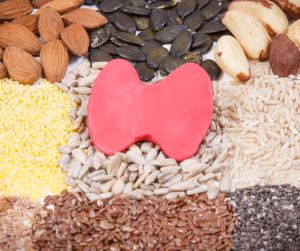
Achieving and maintaining a healthy thyroid is key for your entire body, your energy level, your hormones, your mood, and one key aspect to focus on is nutrition. When your thyroid is out of balance, your body temperature, blood sugar, body weight, energy, and focus can be out of balance, too. Food isn’t the only thing that affects the thyroid, but we must provide the nutrients your thyroid requires ay the very least.
Is Your Blood Sugar In Balance?
Before looking at specific nutrients for thyroid health, blood sugar levels must be in balance for optimal thyroid function. Stable blood sugar is a foundation for overall health, and irregularities in glucose levels can impact thyroid hormones. Maintaining a diet that keeps blood sugar in balance is important.
While our cells rely on glucose for energy, disruptions in blood sugar levels can wreak havoc on various bodily systems, throwing your gut, lungs, brain, adrenals, and detox pathways into disarray. These disturbances pave the way for compromised metabolism and a decline in thyroid function.
Do You Know Your Blood Sugar Numbers?
How much do you know about your blood sugar levels? Most of us just see Fasting Glucose on our annual labs after a physical. Your doctor looks at this to make sure it’s 100 or under and may make a few recommendations once it gets over 100.
It is better to know your A1C and Fasting Insulin, and even better if you can test your blood sugar throughout the day to make sure it is in balance.
To learn more about your blood sugar, go here.
What FOODS Should I eat?
First, eliminate gluten. I’m not saying switch to glutenfree breads, pasta, muffins, crackers, …. Those are processed foods whether or not they contain gluten. These can contribute to blood sugar imbalances and inflammation which affects thyroid health. But, you can enjoy whole food versions of those foods.
Enjoy breads made from nuts and seeds and ingredients that do not spike blood sugar or create inflammation. Most glutenfree products are made from rice flour and potato flour, and both of those flours are equivalent to sugar in your body.
Enjoy pastas made from whole plant foods. Invest in a spiralizer or you can even just use a potato peeler. You can make noodles from zucchini, beets, carrots, sweet potatoes, cucumber, and so many more.
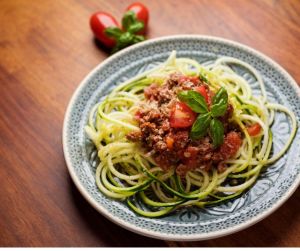
Try this Zucchini White Bean Roll Up
It’s super simple, packed with many of the nutrients included in this article, and It’s like rolled up lasagna. Only this dish is anti-inflammatory and blood sugar friendly.
2 Zucchini
2 cups White Beans (cooked, and drained)
1/4 cup Pesto
Sea Salt & Black Pepper (to taste)
1 cup Tomato Sauce
- Preheat your oven to 350ºF (177ºC).
- Slice the zucchinis in half lengthwise. Using a mandolin, create long, thin slices from the cut-side of each zucchini. If you don’t have a mandolin, use a sharp knife or potato peeler to make thin, flexible slices. You should end up with about 12 strips per zucchini.
- In your food processor or blender, combine the white beans and pesto. Pulse until smooth. Taste and season with sea salt and black pepper as desired.
- Lay the strips flat on your cutting board and spread each strip with about 1 tbsp of the white bean mixture. Roll them up and place into a casserole dish. When all the zucchini roll-ups are in the dish, cover with the tomato sauce.
- Bake uncovered for 30 minutes. Remove from the oven, divide between plates and enjoy!
Eat foods rich in Vitamin A pre-cursors, aka Beta Carotene.
This nutrient is found mostly in orange and yellow foods but also in leafy green vegetables. Another reason to eat the Rainbow! Beta carotene is converted in the body into vitamin A which is needed to regulate TSH and thyroid receptors.
Think of ways to incorporate yellow and orange foods into every day. Sweet potatoes, squashes, carrots, pumpkin, as well as lots of leafy greens.

Eat foods that contain selenium.
Selenium is an essential mineral with powerful antioxidant properties necessary for the conversion of thyroid hormones. Many people take supplemental selenium, but it is easily absorbed from food, and there is such a thing as “Too much of a good thing.” Brazil nuts, mushrooms, sesame seeds, and sunflower seeds, spinach, brown rice, and oatmeal all contain selenium.
Add a Brazil nut to your smoothie, sprinkle sunflower seed on your salad, and add some mushrooms to dinner.

Eat plantfoods that are rich in iron AND get a full iron panel from your doctor to make sure you have the appropriate iron stores. Foods high in iron include lentils, spinach, beans, and leafy greens.
Learn to love sea veggies.
Sea veggies, like nori, seaweed snacks, and seaweed salad all provide loads of minerals including iodine. I’m not a fan of supplementing with iodine but eating sea veggies harvested from clean waters is a fabulous source. When we discuss T3 and T4, the 3 and the 4 tell us how many iodines make up the molecule.
Eat foods rich in the amino acid, phenylalanine.
Phenylalanine converts to tyrosine. Tyrosine is the T in T3 and T4. Pumpkin seeds, hemp seeds, sunflower seeds, lentils and beans, and quinoa and oats all contain phenylalanine.
Also, eat foods rich in tyrosine like almonds, avocado, edamame, green peas, garlic, and spinach.
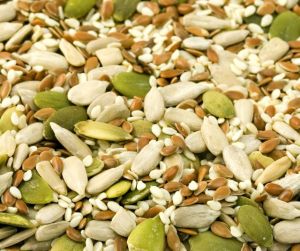
Adopting a thyroid-friendly diet involves paying attention to blood sugar balance and ensuring adequate intake of key nutrients like tyrosine, selenium, and iodine. A well-rounded, whole-foods-based approach not only supports thyroid health but contributes reducing inflammation, as well.
The Jen Twins, Jennifer Whitmire and Jennifer Swank, LOVE working with clients to help them restore thyroid health and blood sugar balance. This is our passion AND purpose. If you would like to connect with us to see if we should work together, please click here and choose a time.
#ThyroidHealth, #BalancedDiet, #NutrientRichFoods, #TyrosineSources, #SeleniumRichDiet, #IodineRichFoods, #MetabolismSupport, #ThyroidFunction, #HealthyEating

 Wholistic Jen
Leave a reply to How Much Does My Food Really Matter? – Wholistic Jen Cancel reply