
By Jennifer Whitmire MS, MEd, MH, CHES, NEP
The thyroid gland is a small organ at the base of the neck that sends hormones out to every cell in the body. Its job is to increase oxygen uptake into cells for increased energy and for metabolism. The thyroid releases two hormones, mostly T4, thyroxine, and a little T3, triiodothyronine. T3 is the active form of thyroid hormones and is also converted from T4 in other tissues.
Thyroid hormones regulate metabolism. This controls the heart, muscle function, growth and repair, digestion, brain development, and bone development and maintenance. It also manages the body temperature, emotional control, and nerve reflexes.
When I was diagnosed with Graves Disease, I HAD NO IDEA that I even had any symptoms. I thought it was a part of my personality to be overly emotional. I cried in interviews, I threw things, and I even had temper tantrums. I was always cold, but I had always been that way. Now that my thyroid is in balance, so is my emotional state. I can sit back and reflect and not react right away.
The thyroid hormones are also important for blood sugar balancing and insulin sensitivity. Thyroid hormones regulate the release of glucose from glycogen stores in the liver and muscle when in danger (or when it senses stress), and in absorption of glucose from the intestines. When the thyroid is out of balance, the insulin is not cleared efficiently, blood sugar stays too high for too long, and more sugar is stored as fat. This leads to insulin resistance which can lead to diabetes.

What is TSH?
Talk to any doctor, and they will tell you that the TSH, thyroid stimulating hormone, is the measure they use to tell if your thyroid is working “normally.”
This hormone is secreted by the pituitary gland to tell the thyroid to speed up and make more thyroid hormone. When the hypothalamus detects that there is not enough circulating thyroid hormone, it releases thyrotropin releasing hormone to tell the pituitary gland to release TSH to get the thyroid to produce more Free T4 and a little Free T3 until a certain level is reached. When TSH is high, it is an indicator that the hypothalamus does not detect enough T4 and is telling the pituitary to keep releasing more TSH. So a dysfunction could be caused from low thyroid hormone, faulty detection by the hypothalamus, or the pituitary is releasing too much TSH. When TSH is low, it is an indicator that the hypothalamus is detecting plenty of T4. Neither of these tell us WHY the TSH is out of range.
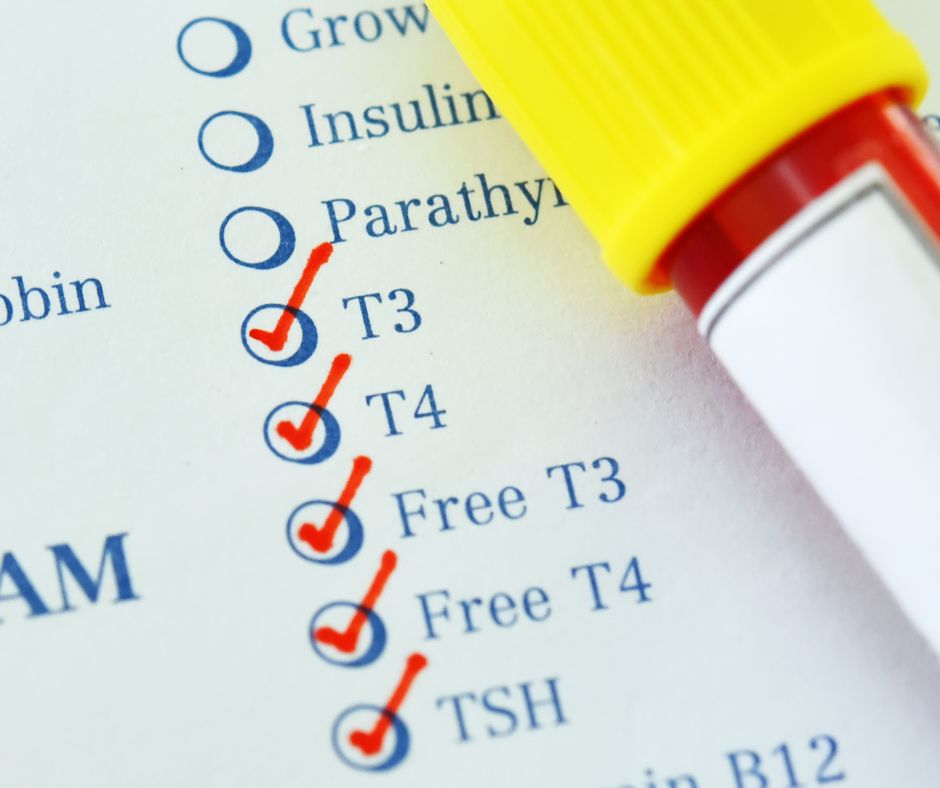
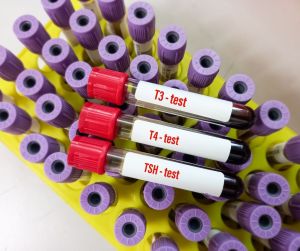
To get a better picture of the thyroid’s health, it is best to get a thyroid panel that includes Free T4, Total T3, RT3 (reverse T3), Free T3, T3 Uptake, TPO antibodies, and Thyroid Peroxidase Antibodies.
A little repeat: Your thyroid releases T4, thyroxine, which is an inactive hormone that converts to T3, triiodothyronine, which enters into your cells.
Every cell has a thyroid receptor. For thyroid hormone to be created and enter the cell, the hypothalamus must tell the pituitary to release TSH to tell the Thyroid to release T4 which is then converted to T3 which must pass through the cell receptor into the cell. You can see that there are few places where things could go wrong.
The thyroid needs iodine and the amino acid, tyrosine, to create the T4. (T4 is 4 iodine molecules attached to a Tyrosine molecule). The thyroid needs to be in good health and must have these nutrients to release the adequate amount of T4. If there are nutrient deficiencies or imbalances, the pituitary gland and hypothalamus create more and more hormones trying to get the thyroid to produce more. There may be nothing wrong with the thyroid. It may only be missing required nutrients.
A few important terms:
The T4, thyroxine, needs to convert to T3, triiodothyronine. T3 is the active form of thyroid hormone and is the accelerator.
TPO, thyroid peroxidase, is an enzyme. When it is elevated, it indicates that antibodies are attacking the thyroid. For some reason the immune system is attacking one of its own. This test is usually used to determine if there is an autoimmune condition.
Thyroglobulin is stored thyroid hormone inside the thyroid. If elevated, it indicates a possible autoimmune condition or thyroid cancer.
Thyroid binding globulin is a protein that carries the T4 hormone to tissues where it can be converted into T3. The thyroid binding globulin is removed freeing the T3, so that is why it is called Free T3.
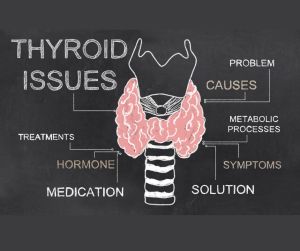
There are several issues that could causes thyroid lab markers to be out of balance. Hypothyroid is when the thyroid is underactive, Hyperthyroid is when the thyroid is overactive, the autoimmune disease Graves is a type of hyperthyroid condition while Hashimoto’s is an autoimmune disease with hypothyroid dysfunction. There could also be thyroglobulin issues, thyroid receptor problems, thyroid under conversion, or cancer.
The thyroid is easily damaged by chemicals and toxins. Fluoride, chlorine, and bromine can easily fit into the cell receptors, so if you are taking in too much of those chemicals through your drinking water, dental products like toothpaste or mouthwash, and baked goods like store-bought bread, your cell receptors may not be able to accept the thyroid hormone.
Stress is a major factor in thyroid dysfunction. When we are under stress, our body releases cortisol. High cortisol damages thyroid receptors, decreases T4 to T3 conversion, and raises blood sugar and insulin. High blood sugar causes an increase in belly fat storage, mood swings, hormonal imbalances, memory issues, impaired metabolism, and a weakened thyroid.
Other chemicals that are often affecting the thyroid are called endocrine disrupters. These are chemicals that mimic the body’s hormones. The body doesn’t recognize them, and they clog the cell receptors. Plastics are the most common endocrine disruptor, but pesticides, herbicides, and waste products create the same problem. Throw out plastic appliances, plastic utensils, and plastic storage containers in your kitchen and NEVER heat up food in a plastic container.
Some medicines cause the signals to be misread, and the glands don’t register that hormones need to be created. Antibiotics, antidepressants, pain meds, antacids, steroids, and more all interfere with signaling.
My TSH was always normal! Even when I had high antibodies.
There could be a problem with conversion. If TSH and T4 are normal, your doctor will tell you that everything is normal and send you on your way, But, the thyroid could be sluggish because not enough T4 is converting to T3. To convert, there needs to be plenty of antioxidants, zinc, iodine, and selenium and cortisol needs to be under control. If you are under stress, cortisol will be too high and that will prevent T4 from converting to T3.
There could be too much thyroid binding globulin. The T3 is all bound and not enough is released to be free to move into the cells. This is often the issue when someone has estrogen dominance or is on birth control.
Something else that may be affecting the thyroid is autoimmune antibodies. The prevalence of autoimmune thyroid dysfunction has been growing over the
past several years. What does this mean? This is an immune response where the body is attacking its own body part. There are a few reasons why this could happen.
Autoimmune diseases
Hashimotos
Hashimoto’s is the most common cause of hypothyroidism, and it is an autoimmune illness where the thyroid is underactive. Everything slows down.
It is usually characterized by low energy, sluggish bowels, dry skin and hair, brain fog, cold hands and feet, low blood pressure, low metabolism, and low body temperature. Everything slows down…the gastrointestinal tract, vitamin production, enzyme production, protein metabolism, liver and gall bladder function, fat metabolism, insulin secretion, neurotransmitters, and sex hormones. You can suspect a sluggish thyroid when you see lab tests that show cholesterol rising, fasting glucose rising, red blood cells decreasing, iron decreasing, and signs of vitamin deficiencies (anemia).
Graves Disease
Graves disease is an autoimmune illness where the thyroid is overactive. Everything speeds up. It is usually characterized by high energy, high anxiety, racing thoughts, feeling warm or hot, huge appetite, irritable, difficulty sleeping, tremors, difficulty gaining weight, and muscle weakness. Oftentimes the eyes are affected and many people with Graves Disease have what is called “Bug Eyes.” These symptoms are listed as “usually,” because while I was irritable, high energy, high anxiety, and had a huge appetite, I did gain weight, and I was always cold.
Autoimmune illnesses are an immune dysfunction. The immune system defends the body against bacteria, molds, viruses, yeasts, and parasites. A poor diet, chemical and toxic exposures, and stress create inflammation and intestinal permeability which is “leaky gut.” This causes wounds or tears in the intestinal tract allowing things to move into the blood stream that do not belong BUT that are also not bacteria, molds, viruses, yeasts, and parasites.
When food particles pass into the blood stream, a warning system is triggered. The immune cells don’t recognize this item and prepares to attack and remove it. Inflammation is created to increase blood flow to the area and warmth to speed up the fighter cells. This continues to happen as more and more particles pass through the digestive tract and enter the system. This is why some people take a Food Sensitivity test that comes back and shows they are sensitive to everything they eat. All of those food particles have passed through and are creating an immune response.
The body CANNOT heal if it is constantly fighting and creating inflammation. You have to get to the root of the inflammation and create a healing environment.
To aid clients with Hashimoto’s or Graves, they must first go completely, 100%, gluten free, and we focus our attention on the immune system. We aim for optimal essential fatty acids, balancing the blood sugar, repairing the gut, and decreasing stress. We get their vitamin D levels checked and make sure they are eating foods high in selenium, iodine, zinc, iron, the B vitamins, and the rainbow to make sure they are getting all of the bioflavonoids.
There could also be thyroid receptor resistance. This is when the thyroid hormone is there, but it cannot get moved into the cell. We have to get to the root. Why is there resistance?
The basic thyroid panel has
Total T4 (Thyroxin)-total T4 in the blood
T3 Uptake-the amount of protein that carries thyroid protein
TSH-thyroid stimulating hormone from the pituitary gland
To evaluate the thyroid when you suspect a dysfunction, look at:
Thyroid Peroxidase is an enzyme that is stimulated by TSH. It attaches tyrosine to iodine to form T4 and T3. TPO Antibodies are commonly looked at when there is a suspected autoimmune condition, TPO antibodies prevent iodine and tyrosine from connecting and T3 and T4 from being created. 80% of T3 is produced in the liver, gut, and kidneys.
Free T3 is probably the most important marker. This is T3 that has released from thyroid binding globulin and has not passed into the cell. It is the active form of the hormone that is available to be taken into the cell.
Reverse T3 is the brakes for the thyroid. It tells whether the T4 is converting to T3 correctly. It sticks in the thyroid receptors and prevents cells from taking in the active T3.

Foods and Herbs that help the thyroid
- Dark green leafy vegetables like kale, collards, cabbages, and sea vegetables like dulse, kelp, and nori
- Low glycemic fruits like berries
Garlic and onions - Sunflower seeds, Brazil nuts, and pumpkin seeds
- Coconut
- Mushrooms like shitake, cordyceps, reishi
- Omega-3 fatty acids like walnuts, chia seeds, hemp seeds, and flax seeds, as well as chlorella and spirulina.
- Foods rich in amino acids like tyrosine, phenylalanine, and arginine like avocados, almonds, beans, nuts, and seeds
- Probiotics like sauerkraut, kimchee, and real yogurt
- Adaptogens like ashwagandha, eleuthero, magnolia root, etc.
Herbs like rosemary, parsley, nettles, sage, and lemon balm
To restore the thyroid:
First, stress and blood sugar need to be managed. If blood sugar is out of balance, all hormones will be out of balance including the thyroid. Stress raises cortisol which raises blood sugar, so stress management is key.
Second, nutrients must be met through a healthful diet. The necessary nutrients must be consumed AND absorbed. The gastrointestinal tract must be healed and in good condition. The thyroid hormones need adequate iodine, tyrosine, and selenium and well as other nutrients that must be absorbed into the blood.
Nutrients needed:
The hypothalamus sends thyroid releasing hormone (TRH) to the pituitary gland to tell it to release thyroid stimulating hormone (TSH). The hypothalamus and pituitary rely on zinc to help with their processes.
The TSH stimulates the thyroid to create thyroid hormones T4 and T3. Thyroid peroxidase (TPO) depends on iron to initiate combining iodine, oxygen, and the amino acid tyrosine to form the T4 and T3. If there is not enough iodine in the blood stream, some chemicals can block the uptake. Fluoride from toothpaste and tap water and bromide from commercial baked goods can prevent the formation of T4 and T3 when iodine is deficient. One way to prevent this from happening is to eat iodine-rich foods. Sprinkle dulse on your foods, wrap raw salads and slaws in nori wraps, learn to love sea weed salads and veggie sushi,….
The body needs selenium to help to convert T4 into T3 to speed up and into Reverse T3 to slow down. 5 ́Deiodinase is the enzyme needed for this conversion. 5 ́Diodinase is inhibited by stress, chronic and acute illnesses, fasting for too long, and steroids. 5 Deiodinase converts T4 into Reverse T3. High RT3 blocks receptors from converting to slow things down.
An anti-inflammatory diet that includes foods rich in leafy greens that are high in iodine, zinc, beta-carotene, selenium, and vitamin C is necessary for a healthy thyroid as well as following a gluten free diet. Gluten creates antithyroid antibodies in most people, so for anyone with a suspected thyroid condition, gluten must be removed until it can be ruled out. Dairy proteins are very similar to gluten proteins and are often recommended to be eliminated as well as other grains like corn.
Mindfulness practices, good quality sleep, optimizing digestion, and balancing blood sugar should all be a priority. Optimizing the health of the liver will aid in removing harmful chemicals and in hormone conversion. This will also help to release stored belly fat and optimize other hormones.
Do you want to learn more about your thyroid numbers and your other lab markers?
Join The Jen Twins on February 22, 2024 for a FREE Masterclass on Zoom.


 Wholistic Jen
Leave a reply to How to Boost Nutrition and Absorption in Autoimmune Thyroid Disease – Wholistic Jen Cancel reply