

By Jennifer Whitmire MS, MEd, MH, CHES, NEP
I remember the first time I realized my diet needed a serious overhaul. I was standing in the grocery store aisle, holding a Lean Cuisine, something I’d eaten for lunch a hundred times before. But this time, I flipped it over and really read the ingredients. What I saw made me pause. The print was tiny and the list covered the entire side of the box. I thought it was just chicken, veggies, rice, and a sauce. Something light and healthy, right?
How could I keep feeding myself and my family things I couldn’t even pronounce? That moment sparked a journey, one that eventually led me to a whole food plant-based lifestyle, not just for myself, but as a guide for others too.
For those of you who don’t know me, I’m 100% whole food plant-based. While many of my clients are not, I help them transition to a more plant-based lifestyle—and some even go fully plant-based. Sometimes this transition happens through culinary coaching, and other times it’s part of a deeper, more comprehensive program with my Jen Twin, Jennifer Swank.
Whole food plant-based eating is gaining more attention these days, but it’s essentially a cleaner, more intentional approach to veganism. Just because a diet is vegan doesn’t mean it’s healthy. But when you focus on whole foods, you’re making a healthy choice.
My Journey to Plant-Based Eating
I became vegan when I started learning more about taking care of my health after being diagnosed with autoimmune disease. I reluctantly learned that dairy was a major trigger for me. I was never big on cheese like some people who can’t get enough mac and cheese, but I had a serious love for chocolate milk. I drank it all the time. My husband couldn’t believe how much milk he had to buy for me. My kids are probably made up of chocolate milk (with a side of sushi and chips and salsa).

Giving up gluten was another huge challenge. (You can read why I gave up gluten here.) I wasn’t a professional baker, but I did learn a thing or two at culinary arts school, and I used those skills to make bread, pizza crust, croissants, bagels, and muffins every week for my family. Looking back, as someone who has studied nutrition since the mid-90s, it’s crazy to think that I thought all that bread and chocolate milk were healthy choices. Now, I know those foods definitely weren’t right for me.
Understanding Autoimmune Diseases and Diet
Many people don’t realize that autoimmune diseases often come in pairs or trios—if you have one, there’s a good chance you have another. And having an autoimmune disease significantly increases your risk of cancer. So for me, giving up dairy and gluten was a no-brainer.
Back in the 90s, when I was studying nutrition, I learned that eating too much meat could harm the kidneys, increase the risk of heart disease, and cause inflammation. I was also taught that we don’t actually need as much protein as we think. This was shocking to me because, at the time, I was a certified personal trainer working in a gym. Even though I was on the administrative side, I was surrounded by the protein craze—everyone at the gym was obsessed with protein, and it’s even a bigger deal today.
What’s more, I was taught that to get enough protein from plants, you had to combine foods like legumes and grains at every meal. For example, peanut butter on toast was considered a perfect protein. So, I thought I was eating healthy with my peanut butter toast, chocolate milk, and banana. But over time, I realized that the “rules” I had learned were outdated and not as helpful as I once believed. If you want to learn more about plantbased protein click here.
Why Ingredients Matter
After being diagnosed with autoimmune disease in 2007, despite thinking I was an expert in nutrition and health, I kept asking, “Why me?” I wondered. “How could this happen to me when I’m doing all the right things?” This led me to dive deep into what I was actually consuming and how it might be affecting my health and the health of my family.
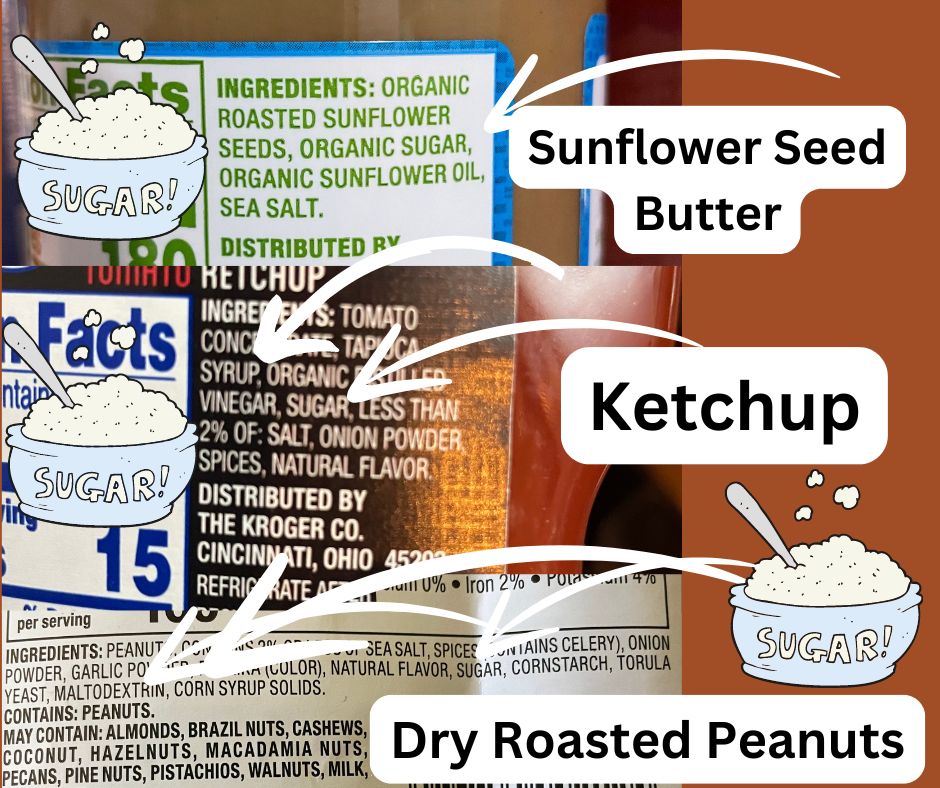
My number one rule: Read the ingredients!
It doesn’t matter what the front of the package says; you have to flip it over and check the actual ingredients. Even today, I sometimes forget, and I miss things. Ingredients can change without warning, so you have to check every time.
What I Eat Now
So, let’s talk about what I eat to support my energy and keep my antibodies down. For those starting out, I highly recommend Dr. Fuhrman’s Eat to Live book. One of his key teachings is to eat a pound of raw vegetables and a pound of cooked vegetables every day; as well as making sure you get greens, beans, onions, mushrooms, berries, and seeds. When I first heard a whole POUND of cooked AND a whole POUND of raw, I thought it was impossible, but I’ve worked up to it. It’s actually easy for me now.
I also read a lot of Dr. Andrew Weil’s work—back in 2000, he said the “5 A Day” rule for fruits and vegetables wasn’t enough and that it should be 12 servings a day. This also sounded crazy and impossible but is easy for me today.
Now, I aim to incorporate as many raw and cooked vegetables as possible throughout the day. I haven’t always been vegan—I started by simply increasing my intake of fruits and vegetables. Eventually, I phased out meat and then quit dairy, focusing on foods that reduce inflammation, like omega-3-rich seeds and rainbow foods.
While studying Nutritional Endocrinology Practitioner Training with Dr Ritamarie Loscalzo, I learned even more about the importance of anti-inflammatory foods and blood sugar balancing foods that are necessary for reversing autoimmune diseases. This is where I met my Jen Twin, and we immediately connected over our similar health journey.
How I Make It Work
Here’s how I get those veggies in:
Breakfast: Chia pudding or soup with beans and greens. I aim for greens three times a day to hit that 12-a-day goal and help get my pound of raw and pound of cooked veggies in. Sometimes I blend greens into my chia pudding in the blender and sometimes, I have a green smoothie on the side.
Lunch: A giant salad. I keep a giant bowl of chopped mixed greens in the fridge, so I just grab a few handfuls and add whatever leftovers I have on top. It’s quick, easy, and a great way to use up what’s in the fridge. This lunch is HUGE.
Dinner: Something with legumes, like lentils, chickpeas, or black beans, and more greens—either raw or cooked, and lots of different vegetables. I always try to get as many different colors on my plate as possible.

When I work with clients, we focus on adding the rainbow to their diet while gradually removing inflammatory foods. Some people can quit certain foods cold turkey (I know, bad pun), but others need to transition slowly.
The key is Progress over Perfection. I’m not perfect, but I do my best to take care of my health and prevent disease and inflammation.
Want to Learn More?
If you’re struggling with autoimmune disease and more and are interested in transitioning to a whole foods plant-based diet or want to tweak your current diet to reduce inflammation and get back your energy, check out our free e-books and The Jen Twins cookbook. We’re here to help you on your journey to better health!

 Wholistic Jen
Leave a reply to How to Stay Gluten-Free and Eat Anti-Inflammatory Without the Stress – Wholistic Jen Cancel reply