

By Jennifer Whitmire, MS, MEd, MH, CHES, NEP
If you have a diagnosis of autoimmune thyroid disease—whether it’s Hashimoto’s or Graves’—you’ve probably heard mixed messages about gluten. Some doctors don’t mention it at all, while others insist it’s a major trigger. So, why do we strongly recommend a gluten-free diet for our clients with thyroid issues? Because science, clinical experience, and thousands of personal success stories point to the same conclusion:
Gluten is a common trigger for immune system dysfunction, inflammation, and thyroid damage.
What’s Really Happening?
The problem with gluten goes deeper than just digestive discomfort. As a matter of fact, you may not have any stomach discomfort. I sure didn’t!
1. Molecular Mimicry
Your Body is attacking the Wrong Target
Gluten contains proteins that look very similar to thyroid tissue. Dr. Alessio Fasano’s research shows that leaky gut is one of the primary factors leading to autoimmune disease (the other two are genetic predisposition and environmental triggers).
When someone with autoimmune thyroid disease eats gluten, the gluten proteins pass through their leaky gut and set off their immune system. This leads to mistakenly attacking their own thyroid, worsening inflammation and accelerating damage. This process, called molecular mimicry, explains why many people with Hashimoto’s or Graves’ experience flares after consuming gluten.
2. Gluten Triggers Gut Permeability (a.k.a. “Leaky Gut”)
It’s a vicious cycle! As mentioned, autoimmune diseases, including thyroid disorders, are strongly linked to increased intestinal permeability. Gluten stimulates the release of zonulin, a protein that loosens the tight junctions in the gut lining. When this happens, undigested food particles, proteins, toxins, and pathogens can slip into the bloodstream where they don’t belong. This triggers immune reactions and worsens thyroid inflammation.
3. Gluten Cross-Reactivity: Your Body May Think It’s Dairy (or Other Foods!)
Many people who go gluten-free still experience symptoms. They may be reacting to other foods that resemble gluten at a molecular level.
Dairy is a common culprit, as casein (a milk protein) can mimic gluten.
Other grains, like corn and oats, may also trigger immune reactions in sensitive individuals. For me, I ate corn and overnight oats all the time. I had no idea they were an issue for me. I couldn’t get my antibodies down, so I eliminated all grains during one of my seasonal resets.
When I tried to add them back (the way we teach you in the reset), I immediately got a headache after eating a little heirloom corn. I thought, “This must be a fluke!” I eliminated it again for a week, tested, and immediately got a headache again. Needless to say, I avoid anything with corn in it these days. (Which is VERY difficult! And a good topic for another post.)
4. Thyroid Antibodies Drop on a Gluten-Free Diet
Studies have shown that people with Hashimoto’s who remove gluten from their diet often see a drop in thyroid antibodies. This means less inflammation, slower disease progression, and in some cases, even a reversal of symptoms.
Sometimes, you have to take it a step further. Find out why I went 100% gluten free, and my antibodies didn’t lower.

But I Don’t Feel Sick After Eating Gluten—Do I Still Need to Avoid It?
Yes. Many people with autoimmune thyroid disease don’t experience immediate digestive symptoms from gluten, but that doesn’t mean it’s not causing damage. The immune system’s response to gluten can be silent and delayed, creating inflammation that affects the thyroid over time.
It can also create inflammation in other areas of the body. Mine was migraines. I never would have put the 2 together. After my doctor (the one who kept telling me that food has nothing to do with my autoimmune disease) retired, the first thing my new doctor said on my very first visit when I told her I have migraines – “Oh! You have to go gluten free!”
Guess what?! I don’t have migraines anymore after 30 years of migraines.
I have now had 4 clients who had surgery scheduled (One for shoulder, one for back, and one for knee, and one for an eye) when they met me who cancelled their surgery after going gluten free. Every one of them noticed a difference in 4 days! 4 Days!!
What Happens When You Remove Gluten?
Our clients who commit to a gluten-free diet often report:
✅ Increased energy
✅ Less brain fog
✅ Reduced joint pain and inflammation
✅ Better digestion and less bloating
✅ A reduction in thyroid antibodies
✅ Better eye sight
Getting Started with Gluten-Free Eating
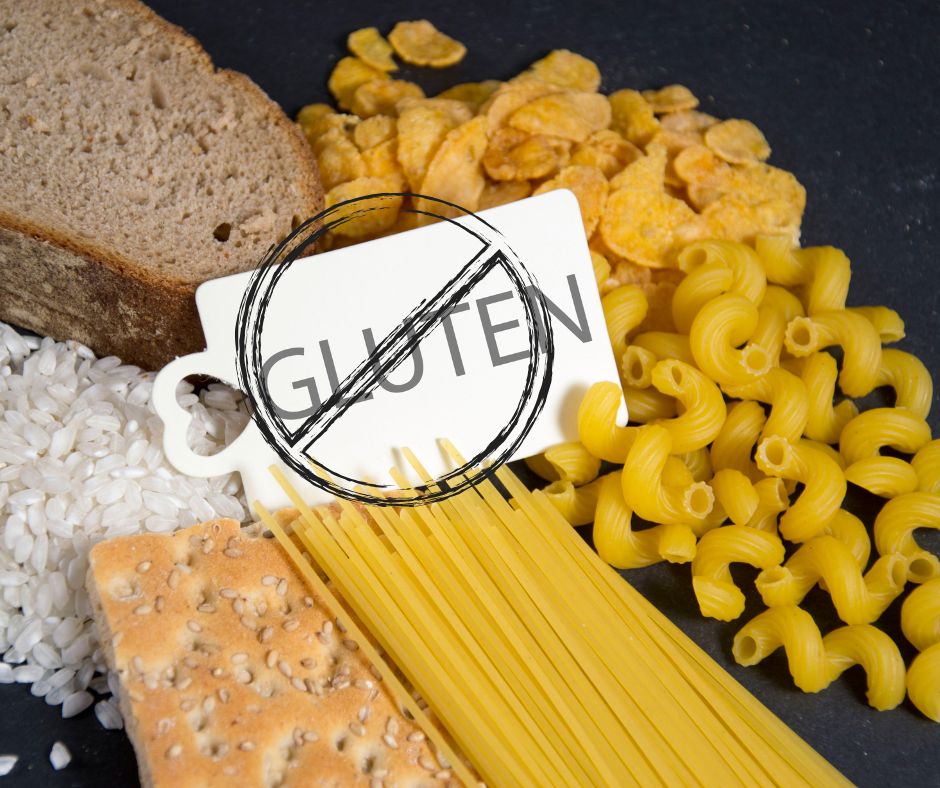
- Remove wheat, barley, and rye – These are the main sources of gluten. Read every single label. No white flour, white bread, sourdough bread, even pasta, couscous, and Ezekiel bread.
- Check for hidden gluten – It’s found in soy sauce, salad dressings, and even some supplements. Want to eat at an Asian restaurant? Ask if they have gluten free soy sauce-traditional soy sauce in Asia does not contain wheat, but here in the U.S. and many other countries, we use wheat to lower the cost.
- Don’t get tricked by gluten free breads – Gluten free flours, breads, pastas, pastries are everywhere! They make it so easy to swap and taste a whole lot better these days than when I first went gluten free; however, these products are still highly processed and highly inflammatory. If you have an autoimmune diagnosis, you already have inflammation. Yes, these foods look, smell, and even taste good and make it so easy to swap, but they will leave you just as inflamed if not MORE!
- Swap in whole food alternatives – Enjoy naturally gluten-free, pseudo-grains like quinoa, buckwheat, and sprouted oat groats (if tolerated). You can try only giving up gluten for 6 months and seeing if you notice a different, or you can do an elimination diet and remove all grains and pseudo grains for 6 months, then add them back 1 at a time to see if you can tell if you’re sensitive.
Use whole food pasta like zoodles, squash noodles, cucumber noodles, beet noodles.
Try flax seeds crackers and breads made from whole foods like cauliflower.
Eat Cauliflower rice or rice made from grated broccoli.
Focus on nutrient-dense foods – A whole food plant-based diet rich in greens, sprouts, seeds, and rainbow vegetables with fiber supports gut healing and immune balance.
The Bottom Line
If you have autoimmune thyroid disease, eliminating gluten isn’t just a trend—it’s the first step toward reducing inflammation and reclaiming your health. It may take a few weeks to notice a difference, but for most, the long-term benefits are undeniable. Your body will thank you!

Going Gluten-Free Is Easier With Support
Many people struggle with going gluten-free, because it feels overwhelming—reading labels, changing habits, and even dealing with social situations. But it doesn’t have to be isolating. That’s why finding a supportive community is key. When you have others on the same journey, sharing recipes, successes, and even struggles, it makes the transition not only easier but enjoyable.

Join Our Gluten-Free Wellness Community!
If you’re following a gluten-free lifestyle for better health—whether it’s for autoimmune healing, reducing inflammation, or improving digestion—you don’t have to do it alone. Our community is a space where you can connect with others, share experiences, get expert guidance, and find inspiration to stay on track. Let’s support each other on this journey to better health!
Science backs this up: social connection reduces stress, improves immune function, and even lowers inflammation—key factors in managing autoimmune disease. When we surround ourselves with others who get it, we’re more likely to stick with healing habits, discover new strategies that actually work, and feel empowered instead of overwhelmed.
Imagine having a space where you can share your wins, get advice, and feel truly understood. A place where you can ask, Is this normal?, and hear from others who have been there. A place where knowledge is power, and encouragement flows freely. That’s exactly why we created The Zen & Zest Zone—a community designed to support you in your health journey with real education, practical guidance, and uplifting conversations.
Inside, we explore the science of healing through food, herbs, and lifestyle shifts while keeping things fun, interactive, and deeply nourishing. Whether you’re looking for expert insights, delicious healing recipes, or just a place to feel heard, The Zen & Zest Zone is here for you.
Ready to feel connected, inspired, and empowered in your journey to better health? Join us inside The Zen & Zest Zone today!

 Wholistic Jen
Leave a reply to The Secret to Blood Sugar Balance While Gluten-Free (Or Grain Free) Vegan? – Wholistic Jen Cancel reply