

By Jennifer Whitmire, MS, MEd, MH, CHES, NEP
You’re sick and tired of trying to figure out what to eat. You’ve tried the elimination diets. You’ve cut out gluten, dairy, soy, maybe all grains. Maybe you’ve even tried the AIP. You’ve read all the blogs, filled your supplement drawer (or WHOLE cabinet, if you’re like me), and you still feel heavy, bloated, foggy, or fatigued.
I’ve been there. I know what it’s like to stand in front of the fridge, hungry and overwhelmed, wondering what’s safe to eat? And is this going to hurt me?
But here’s what I’ve learned, both from my own healing experience and from the hundred+ clients with autoimmune conditions that I’ve worked with: healing doesn’t start after another test, a new diagnosis, or the latest new supplement. It starts in your kitchen.
We’re all nutrition starved! Everyone, not just us. (poor soils, depleted foods, low fiber diets, …)
Your cutting board is more powerful than your medicine cabinet. Cooking at home can get you started on resetting your hormones, calming your immune system, supporting your gut, and feeding you at the cellular level—restaurants, takeout containers, and quick food can’t do that.
Why Eating Out Isn’t Autoimmune Friendly
Eating out can be fun, social, and convenient. But, it comes with a price. Even “clean” or allergy-aware restaurants still use processed oils, mystery ingredients, and bulk foods that are designed to last—not nourish. (They are in the business to make money).
I recently traveled back home and found some really great restaurants that served gluten free and vegan. Were they certified gluten free? No. Did they say all of the ingredients are organic or fresh from a local, regenerative farm? No. Were they loaded with oil? YES. I ate so much oil and salt and probably a lot of sugar, too.
Most commercial kitchens use canola, soybean, corn oil or a blend— omega-6 fats that become highly inflammatory when heated and create oxidative stress and immune dysfunction. These meals are built for flavor and repeat business, not healing.
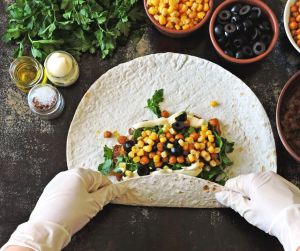
Even the safest-sounding dishes can be contaminated. A gluten-free pizza might share a cutting board with flour-dusted dough. Your “dairy-free” smoothie might be made right after someone else’s dairy-full shake. Even the gloves used to grab your lettuce may have just rolled a wheat tortilla. (I made a server switch gloves and remake my salad, BUT how many times were those glutened gloves touching the lettuce?)
For those of us with autoimmune disease, even microscopic exposures can trigger immune flares, worsen leaky gut, and lead to days (or weeks) of symptoms.
What’s on That Lettuce? Let’s Talk About Vegetable Sprays
One of the biggest surprises for many people trying to eat healthy is how even raw veggies—like that innocent-looking salad—can be a hidden source of chemicals.
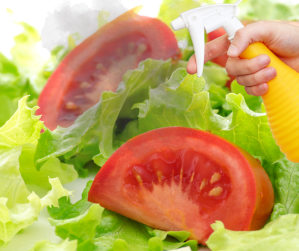
Many restaurants use a spray with a patented “freshness solution” designed to keep greens and even chopped tomatoes looking crisp for up to 14 days.
Fourteen days.
That lettuce might look fresh, but it was harvested, chopped, and treated nearly two weeks ago. And it’s not just old—it’s coated in chemicals.
It blocks enzymes to prevent aging-we are basically eating a fungicide.
Here’s the actual ingredient list of one commonly used “safe” food spray:
- USP Grade Purified Water
- Citric Acid (usually derived from GMO corn and mold)
- Sodium Citrate (typically from GMO corn and mold)
- Salt
- Decyl Glucoside (a surfactant derived from corn)
- Glycerin (can come from vegetable oils, animal fats, or petroleum)
- Potassium Sorbate (a preservative made from crotonaldehyde and ketene)
Let’s unpack that.
- Citric Acid and Sodium Citrate may sound harmless, but when they’re derived from mold and corn, they can be problematic for sensitive immune systems. (I, personally, cannot tolerate corn. Many of you can, but it cross reacts with gluten and cannot be tolerated with some people with Celiac)
- Decyl Glucoside is a detergent often found in baby shampoo.
- Glycerin can come from oil, animal fat, or petroleum, depending on the source.
- Potassium Sorbate is created from two industrial chemicals—crotonaldehyde (a known respiratory irritant) and ketene (a toxic gas).
These chemicals are “generally recognized as safe,” but that’s a government designation for the average person—not someone with autoimmunity or chemical sensitivities.
We are not “Average!”
If your immune system is already overwhelmed, this kind of exposure matters.
So yes, I’ll pass on the salad. I’d rather wash my own home-grown greens at home, thank you.
More Hidden Triggers Lurking in Restaurant Food
Processed oils, additives, and flavor enhancers aren’t the only problem. Here’s what else often hides in restaurant and takeout meals:
- Modified food starch (often from corn, sometimes treated with aluminum)
- MSG and yeast extract (excitotoxins that overstimulate neurons)
- Carrageenan (a thickener linked to gut irritation)
- Preservatives like sodium benzoate (which can form benzene when combined with vitamin C)
Even foods labeled gluten-free or dairy-free can contain gums, binders, and stabilizers that irritate the gut lining, disrupt digestion, and provoke the immune system. Gluten free does not mean Healthy!
After most restaurant meals, your body is in fight mode. You may feel okay after the meal, but hours later or even the next morning you’re bloated, anxious, foggy, or exhausted. That’s not a coincidence. That’s your immune system reacting to the chemical soup hidden in your “healthy” lunch or dinner.
Restaurant Meals Are Often Nutrient-Robbed
Even when it looks healthy, restaurant food is often nutrient depleted. Commercial kitchens buy in bulk. Food gets stored for days. It’s chopped, frozen, boiled, or microwaved—sometimes reheated more than once.
This leads to what I call “empty plate syndrome.” You’re full, but your cells are still hungry.
For those of us trying to heal, this matters. You need B vitamins, vitamin C, vitamin A, magnesium, antioxidants, fiber, polyphenols, and sulfur-rich compounds to rebuild your gut lining, support your mitochondria, and regulate your immune response. These nutrients break down rapidly beginning at harvesting, so how much is left when food sits around or is overcooked?
Blood Sugar Rollercoasters and Autoimmune Flares
Every autoimmune condition gets worse when blood sugar is unstable.
Hidden sugars are everywhere in restaurant food—in sauces, dressings, glazes, marinades, and even those “healthy” grain bowls. Sweet potatoes might be candied or floured. Your veggies might be coated in honey or sugar to caramelize them.
When blood sugar goes up, insulin rises. When it crashes, your body pumps out cortisol and adrenaline to bring it back up.
These hormonal swings increase inflammation, stress the adrenals, and can throw your thyroid, sex hormones, and immune system out of balance. You might feel wired and tired, get headaches, or experience anxiety later—these are blood sugar symptoms, not random.
Need a nap or a snack at 3pm? That is usually blood sugar, too.
Cooking at home puts you in control. You can pair carbs with greens and more fiber to slow absorption. You can skip the sugar, use lower glycemic ingredients, and stabilize your blood sugar in a healthy, healing way.
Why Cooking at Home Repairs Your Microbiome
Most autoimmune symptoms come from a disrupted gut barrier and imbalanced microbiome.
Restaurant meals are usually low in fiber and plant diversity and loaded with emulsifiers and thickeners like:
- Polysorbate 80
- Carboxymethylcellulose (CMC)
- Sodium benzoate
These ingredients have been shown to change the gut flora, damage the intestinal lining, and promote leaky gut. For someone with autoimmunity, that’s fuel to the fire.
At home, you can feed your good gut bugs the way nature intended—with prebiotic-rich veggies like garlic, leeks, onions, artichokes, and asparagus. You can include healing herbs and spices, fermented foods, and cooked veggies that are easy to digest and soothing to the gut lining.
Instead of starving your microbiome, you’re rebuilding it.
Toxin Load and Detox Drain
Eating out doesn’t just challenge your gut—it overloads your liver.
Non-organic produce, meat from animals treated with hormones and antibiotics, takeout containers lined with plastic, and deep-fryer oils reused over and over… it all adds up. And if your detox pathways are sluggish (which is common in autoimmune conditions), this toxic load can build up in your tissues, causing hormones to recirculate and build up, and lead to more inflammation.
At home, you get to choose clean cookware, fresh ingredients, and healing herbs that actually support detox—like parsley, cilantro, garlic, dandelion, and beets.
Your liver thanks you.
Cooking as a Nervous System Reset
Autoimmune disease takes a toll on your mental and emotional health. The flares, the food fears, the constant vigilance… it can feel like you’re never safe in your own body.
Cooking can help bring you back. You can make it fun and a part of your routine. No more hassle!
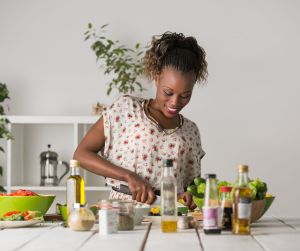
Chopping, sautéing, stirring—it’s rhythmic, grounding, and sensory. It pulls you out of fight-or-flight and into rest-and-digest. You don’t just cook food. You send a signal to your nervous system that you’re safe.
Make cooking a ritual. Get all of your ingredients out. Put on calming music or your favorite podcast. Let your kitchen become a space for nervous system healing—not just meal prep.
Real Healing, One Meal at a Time
You don’t need to cook three perfect meals a day. Start with two home-cooked meals a week. Keep it simple. Think in terms of meal templates, not fancy recipes. Make enough to have leftovers for lunches.
Think of ways you can make a dish and repurpose it the next day into something completely different. Chili today, taco salad tomorrow. Roasted veggies as a side today and on a pizza tomorrow.
Here are some super simple ideas to get you started.
- A soup + a salad
- Roasted veggies + dip
- A smoothie with seeds and berries
- A veggie wrap with kraut and hummus
Batch cook a few staples. Wash your greens. Blend a sauce. Roast a pan of veggies. Make one thing at a time and build from there.
Your body doesn’t need perfection. It needs consistency, safety, and nutrients.
The Kitchen Is Where Healing Begins
- You don’t have to worry about inflammatory triggers
- You can choose foods that stabilize blood sugar and balance hormones
- You can focus on nutrients that heal the gut and rebuild your microbiome
- You can use foods and herbs that open and enhance detoxification pathways
- You can be sure that your meals are nourishing your mitochondria
When you cook at home, you’re not just making meals—you’re rewriting your health story.
Want Support?
If you’re ready to bring healing into your kitchen but need some guidance, structure, and inspiration—come join me in my membership, The Zen & Zest Zone.
This is our space for like-minded women using whole food, plant-based cooking and herbs to restore health, energy, and joy.
Inside you’ll find:
- Seasonal live cooking demos
- Workshops
- A supportive community
- A full library of healing recipes and recordings
You don’t have to do this alone. Let’s heal together—one delicious, healing meal at a time.
 Wholistic Jen
Leave a comment