

By Jennifer Whitmire, MS, MEd, MH, CHES, NEP
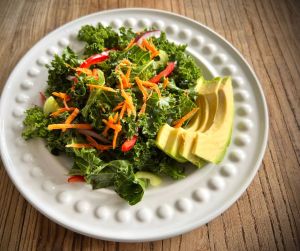
I’ve eaten a giant rainbow salad almost every day for over a decade. Not because I’m trying to be perfect. Not because I’ve got time to Instagram my lunch (though they are gorgeous, AND I do get paid using the Plantee App). I do it because raw vegetables are the foundation of my autoimmune healing—and they can be yours, too.
If you’ve listened to or read about Dr. Joel Fuhrman’s Nutritarian way of eating, you’ve probably heard his recommendation to eat at least one pound of raw vegetables and one pound of cooked vegetables every day. That blew my mind when I first read it! It might sound like a lot, but trust me—it’s doable and transformative.
This way of eating helped me restore my gut, balance my hormones, and get my energy back after years of dealing with mood swings, heavy legs, and fatigue. And now, with everything we know from nutritional science, microbiome research, and epigenetics, this daily raw salad makes more sense than ever.
The Raw Vegetable Advantage: More Than Just Fiber
Yes, raw vegetables are packed with fiber—but they’re so much more than that.
When we eat vegetables raw, we preserve their enzyme content, vitamin C, and heat-sensitive phytonutrients that degrade when we cook them. This is especially important when you depend on your food to calm inflammation, boost your nutrients, and support your immune system.
Some of the benefits of raw veggies include:
- Enzymes that support digestion, absoption, and detox pathways
- Unaltered polyphenols that feed the beneficial gut microbes and protect our cells
- Heat-sensitive vitamins, including folate and vitamin C that are destroyed in cooking
- Unique phytonutrients, like glucosinolates in raw cruciferous vegetables (broccoli, cabbages, etc.), which convert to sulforaphane which is not only anti-inflammatory but repairs DNA
Raw vegetables also provide mechanical stimulation, not just for the gut lining. That slight crunch? It’s like a workout for your jaw AND digestive tract, promoting healthy motility, mucus production needed for a strong immune system and healthy gut lining, and microbial balance.
The more you eat raw, the more your body starts craving it. This is NOT a diet. It allows your body to reset. (I am not telling you to eat 100% raw., AND we still have to remember that we are ALL unique. Some people do NOT do well with raw foods, and we’ll discuss that later). There are benefits to eating some cooked foods, but we need BOTH.

Phytonutrients: Nature’s Anti-Inflammatories
When I talk to clients about vegetables, I always say Eat the Rainbow. Those vibrant pigments in purple cabbage, orange carrots (or purple), red bell peppers, green kale, and white daikon radish are visual signals of active plant compounds that support our health on a cellular level.
Here are just a few examples of what these colors bring to your daily salad:
- Red (Tomatoes, Peppers, Radishes): Lycopene, capsaicin, and anthocyanins—all of these are great for cardiovascular health, lowering CRP (a marker for inflammation – GET IT CHECKED), and improving immune response.
- Orange (Carrots, Sweet Peppers, Pumpkin): Beta-carotene and alpha-carotene which are pre-cursers to vitamin A and support vision, your mucosal lining (healing that leaky gut), hormone production, and immune system.
- Yellow (Golden Beets, Yellow Squash): Lutein and zeaxanthin are great for the the health of the eyes and cellular repair.
- Green (Kale, Arugula, Broccoli Sprouts): Rich in folate, chlorophyll, and sulforaphane precursors that support detox and protect DNA. Chlorophyll is the lifeblood of the plant and is VERY similar to our own blood. They have a very similar chemical make-up-chlorophyll centers on magnesium where our blood centers on iron.
- Purple (Cabbage, Red Onion): Anthocyanins that regulate inflammation and improve vascular function important for the brain, heart, and DNA repair.
- White (Cauliflower, Garlic): Allicin, quercetin, and prebiotic compounds that boost immune function and feed beneficial gut bacteria.
You don’t need to memorize them. Just eat the rainbow and trust that nature knows what she’s doing.
Raw Vegetables and the Microbiome
One of the lesser-known reasons I eat so many raw vegetables? My gut.
Your microbiome—the 100 trillion organisms living in your intestines—thrives on fiber, polyphenols, and resistant starches, which are preserved best in their raw form. The prebiotics in raw onion, garlic, sunchokes, artichoke, and chicory root are some of the best “microbe food” around.
When you eat raw vegetables daily:
- Short-chain fatty acid production increases, especially butyrate, which helps regulate inflammation and repair the gut lining.
- Bacterial diversity improves, especially among keystone species like Akkermansia muciniphila and Faecalibacterium prausnitzii.
- The mucosal lining thickens, feeding the good gut “bugs”, strengthening gut barrier integrity, and reducing leaky gut symptoms.
For anyone wanting to improve autoimmune disease, this is non-negotiable. A diverse and well-fed microbiome helps reduce immune overactivation (flares) and modulate antibody production—especially in autoimmune diseases like Hashimoto’s, lupus, or rheumatoid arthritis.
You don’t need fancy pills—just plants.

What About Goitrogens?
As someone with a broccoli addiction and an autoimmune thyroid diagnosis, I was concerned about raw cruciferous vegetables. Aren’t they goitrogenic?
Yes, they can be, in excess— To reach goitrogenic effects, you would need to eat ½ pound of raw broccoli every day. One woman developed hypothyroidism after eating over 3 pounds of raw cabbage over several months. The key is to also get enough iodine. If you are low in iodine AND eat a lot of raw cruciferous vegetables, you could develop issues.
BUT, you can eat a lot of raw vegetables that are not cruciferous, if this is a concern of yours. But these crucifers also contain some of the most powerful anti-cancer and detoxification-promoting compounds.
Sulforaphane, mentioned earlier, is produced when raw cruciferous veggies are chopped and left to sit for a few minutes before eating. And while it is inactive when cooked, it is re-activated when combined with raw enzymes! So add some broccoli sprouts to your soups or roasted veggies.
In a healthy diet that includes iodine-rich foods (like seaweed or kelp) and a wide variety of other vegetables, raw crucifers can be therapeutic.
If you’re concerned, lightly steaming crucifers for a few minutes (or rotating your greens) is a great way to still reap some of the benefits.
Raw Food Doesn’t Have To Be Cold Food
Eating raw doesn’t have to mean feeling cold or depleted.
In traditional systems like Ayurveda and Chinese Medicine, cold foods are thought to dampen digestive fire. But I’ve found that by combining raw vegetables with warming elements—like ginger, garlic, herbs, spices, and healthy fats—you can balance both energetics and biology.
I like to add:
- Garlic tahini dressing
- A scoop of warm lentils or chickpeas
- Pumpkin seeds or walnuts
- Sauerkraut or kimchi
- Warming herbs like cayenne, turmeric, cumin, or cardamom
You can also gently warm up to 115 F (or less than 118 F) to keep from destroying the enzymes, so I will make a soup or other dish and set in the dehydrator at 110 F to gently warm my meals.
It’s all about balance and intuition. I use my leftovers, rotate what I have, and build my salads like I would build any filling, nourishing meal.
My Go-To Daily Rainbow Salad
If you’re wondering what a raw veggie-based meal looks like in real life, here’s a peek into how I build my salads (no measuring, no weighing, just building from abundance):
- Base: 2–3 kinds of leafy greens (romaine, kale, arugula, red leaf lettuce, and/or chopped spinach) Cheat and use a Mesclun mix.
- Crunchy Raw Veggies: Cucumber, celery, radish, bell pepper, purple cabbage, shredded carrots, broccoli slaw
- Leftovers: Roasted sweet potato, cooked beans or lentils, steamed greens, or sautéed mushrooms (Yes, you can add some cooked – remember Dr Fuhrman says a pound of raw AND a pound of cooked)
- Healthy Fats: Avocado, olives, hemp seeds, sunflower seeds, or a nut-or seed-based dressing
- Probiotic Kick: A spoonful of sauerkraut, fermented carrots, or pickled red onions
- Fresh Herbs: Cilantro, basil, parsley, green onion—whatever’s in season
- Dressing: Usually homemade from tahini, lemon, garlic, apple cider vinegar, and a little miso or mustard
Some days it’s huge and messy, some days it’s elegant and simple—but every day, it’s a rainbow.

What the Research Says
A few science-backed reasons to eat more raw veggies:
- Cancer prevention: Raw cruciferous vegetables are associated with lower risk of colorectal, breast, and lung cancers thanks to isothiocyanates like sulforaphane and indole-3-carbinol.
- Lower inflammation: High intake of raw vegetables is linked to decreased inflammatory markers, including IL-6 and TNF-alpha. (Have you looked into your genetics? As someone with an autoimmune past who researches nutrition and epigenetics, many of us have genetic variations in these inflammatory markers. We need to do whatever we can to keep these under control).
- Cardiovascular health: Raw vegetable consumption is strongly associated with lower blood pressure and improved arterial flexibility.
- Blood sugar regulation: Raw vegetables slow glucose absorption, support insulin sensitivity, and help keep blood sugar stable—critical for autoimmune regulation.
- Better digestion: The mechanical and prebiotic action of raw vegetables improves motility, supports detox, and reduces constipation—another very common autoimmune symptom.
How to Get Started
If eating a full pound of raw veggies sounds overwhelming, start small.
- Add a handful of greens to your lunch or dinner.
- Shred carrots, cabbage, or zucchini into your soups, wraps, or bowls.
- Make one meal per day veggie-forward—a big salad, veggie wraps, or a crudité snack plate with hummus.
- Try fermented raw veggies like kimchi, kraut, or pickled beets to get raw + probiotic benefits in one bite.
Make it yours. This is your chance to feed your body foods that are alive, vibrant, and nutrient-dense.
Raw Vegetables Are My Daily Act of Love
Eating raw vegetables every day allows us to connect. To our body. To the seasons. To your intuition. To the Earth.
It’s about taking something whole, unprocessed, and full of life—and saying, “Yes. This will heal me.”
That’s what I do every time I build my rainbow salad. I’m not looking for perfection. I’m building my health, one colorful bite at a time.
So whether you’re just getting started or have been doing this for years, let your salad be a daily act of love—for your immune system, your microbiome, your hormones, and your whole healing journey.

Ready to Take the Next Step?
If you’re loving the idea of using food to support your energy, gut health, and hormone balance—you’re going to love what’s coming next.
The Culinary Healing Circle is opening soon! This membership is for women like you who are ready to turn kitchen confusion into confident healing with real food, practical support, and a warm, like-minded community.
Inside the Circle, you’ll learn how to:
- Make blood sugar-friendly, hormone-supportive meals (like that daily rainbow salad!)
- Feel calm and confident about what to eat for your autoimmune and thyroid health
- Get live coaching, expert food demos, seasonal challenges, and more
Learn more and Join us Today!
👉 Join The Culinary Healing Circle
Let’s keep your healing journey growing—one raw bite at a time. 🌿


Leave a comment