

By Jennifer Whitmire, MS, MEd, MH, CHES, NEP
There was a time when I believed and trusted that system knew best. I have a masters in health science, remember? My background is in health education for the very system that ended up betraying me.
When I was diagnosed with Graves’ disease, I was terrified. After years of fighting to protect my thyroid, my doctor looked me in the eye and said I’d die if I didn’t have radioactive iodine. I didn’t know any better, so I agreed.
And just like that, a part of my body that had been working so hard to keep me alive was destroyed.
Afterward, I learned the truth: it was a lie. There were other options. My body wasn’t broken beyond repair, it was trying to heal. But by the time I found an integrative doctor and learned the truth, it was too late to save my thyroid.
That day lit a fire in me.
My mission is to save body parts!
No one should ever lose a body part, because they haven’t been told the truth about how powerful the body, and nature, really is.
So I went to The School of Natural Healing. I studied herbal medicine, nutrition, and how the body regenerates when it’s given the right tools. I learned that herbs are not just “remedies.” They are intelligent, living foods. They speak the body’s language. They remind the body how to heal.

Why Herbs Belong in the Kitchen, Not Just in Capsules
Everywhere I look, I see people chasing bottles! “What should I take?” Supplements, powders, tinctures, … Everyone is hoping for a miracle. And while those have their place, healing doesn’t come from a supplement. You have to find out WHY you need the supplement to begin with.
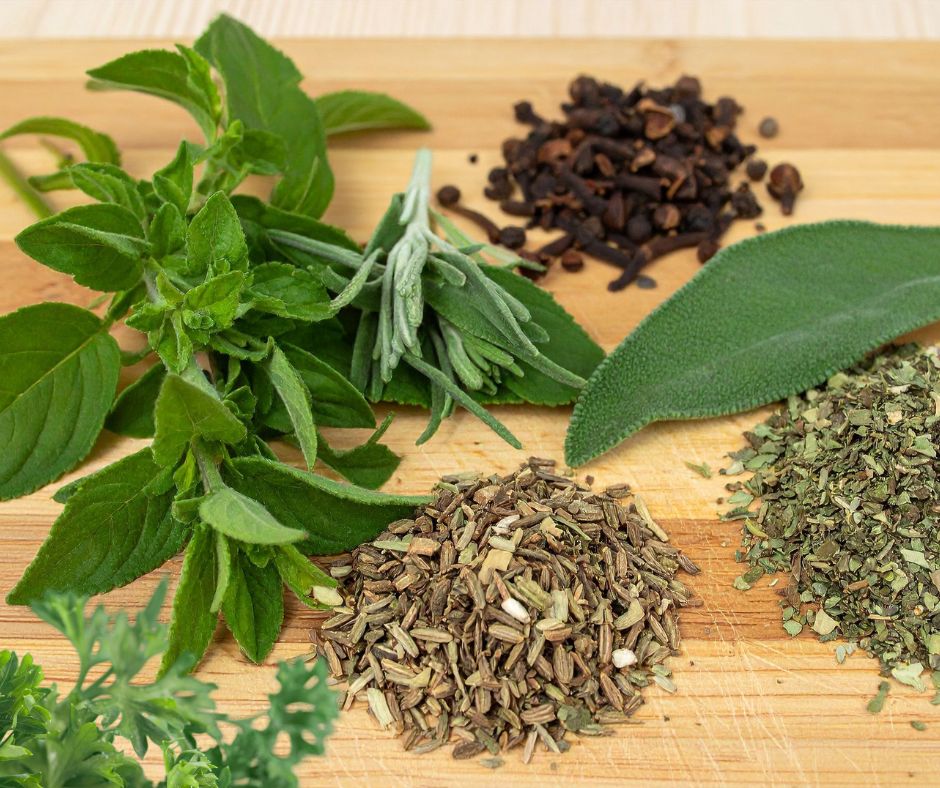
The plants you cook with every day, garlic, ginger, rosemary, thyme, cayenne, oregano, basil, turmeric, …. These hold more healing chemistry than most prescriptions. The body recognizes them, because they’ve been part of human evolution since the beginning. They don’t force the body to do something unnatural. They remind it what balance feels like.
You don’t have to “boost” your immune system. You have to feed it, trust it, and stop working against it.
The simplest way to start? Turn your kitchen into your apothecary.
The Truth About Immunity
Most people aren’t getting sick, because their bodies are failing. They’re getting sick, because they’re disconnected from real food, from quality rest, from time in nature, and from their own intuition.
I’m just as guilty as everyone else. I had a practitioner a few years ago ask me how I feel after I eat oats or quinoa or buckwheat. I don’t know? How am I supposed to feel? I’d never been asked that before, and I didn’t know I was supposed to listen to my body and its cues.
We’ve been taught to silence symptoms instead of listening to them. Just push those feelings and symptoms aside. Keep pushing forward, push through the pain. We’re taught to reach for pills instead of parsley, to numb instead of nourish.
The body doesn’t give up on you. Even when you’ve been lied to, overmedicated, or dismissed, it still wakes up every morning and tries to repair what it can. That’s what blows my mind.
The body wants to heal. It just needs your support.
And herbs are one of the most beautiful ways to rebuild that partnership.

Herbs: Nature’s Immune Whisperers
When you start using herbs in your meals, you’re not just seasoning food, you’re sending messages to your immune system.
Here’s what some of my favorite everyday herbs do to cells:
- Garlic handles invaders. Its sulfur compounds and prebiotic fibers help beneficial gut bacteria thrive and keep pathogens under control. It acts as an antibiotic and antiviral but only kills the bad ones.
- Thyme allows us to breathe easy. Its thymol oils calm inflammation in the respiratory tract and strengthen your lungs.
- Oregano is the fierce protector. Its carvacrol and rosmarinic acid defend the gut wall and balance immune activity.
- Rosemary enhances clarity and circulation. It helps oxygenate tissues and soothe inflammation at the cellular level.
- Sage clears stagnation and supports the mouth, throat, and lymphatic system.
- Ginger warms, moves, and energizes your defenses.
- Turmeric restores balance. It teaches the body when to calm down and when to fight.
These herbs regulate your immune response, strengthen your gut barrier, and feed your microbiome, the 70% of your immune system living in your gut.
This is what I call functional flavor for your functional food. Every pinch has a purpose.
The Minerals and Phytonutrients Inside Herbs
Herbs can do so much for us and not just because of their flavor. They’re some of the most concentrated sources of micronutrients and phytochemicals in our diet.
The mineral density in herbs can be ten, even twenty times higher than most of our vegetables. Season with them generously! You’re building up the raw materials your immune system needs to function.
Minerals in Your Kitchen
Parsley, basil, cilantro, and dill are rich in magnesium, calcium, and potassium. These are minerals that stabilize blood pressure, calm the nervous system, and balance adrenal and thyroid activity.
Rosemary and sage contain iron and manganese needed for oxygen transport and mitochondrial energy production.
Thyme and oregano contain zinc, one of the most critical cofactors for immune cell activation and viral protection.
Nettle, horsetail, and dandelion leaf (if you use them in soups or teas) add silica and boron that strengthen connective tissue, bone, and the gut lining itself.
When your mineral stores are full, inflammation calms down naturally. Your immune system can start to feel safe and doesn’t have to over-react to every perceived threat.

Phytonutrients That Influence Immunity
This is my favorite part, BUT I do tend to like the nerdy stuff. Each herb also carries a distinct class of protective plant compounds:
Polyphenols (rosemary’s rosmarinic acid, oregano’s carvacrol, thyme’s thymol) are natural antioxidants that protect cell membranes from oxidative stress.
Terpenes like cineole (eucalyptus, rosemary, bay, myrtle, thyme, and tea tree) and menthol (in the mint family) improve circulation through the sinuses and lungs, and help swipe pathogens before they can settle in.
Flavonoids such as apigenin in parsley and luteolin in celery calm mast-cell activity. This helps to ease histamine reactions.
Sulfur compounds in garlic and onion up-regulate your body’s own detox enzymes (glutathione peroxidase and catalase).
Curcuminoids in turmeric and gingerols in ginger down-regulate NF-κB. This is your body’s “inflammation switch.”
Herbs are not “medicines,” meaning they don’t act like pharmaceuticals. Instead of masking symptoms, they teach your genes to self-correct. They enhance antioxidant capacity, improve cell signaling, and restore balance where it’s been lost.
These tiny flavor boosters help your body with repair, resilience, and my goal…regeneration.
The Gut–Immune Connection (and Why Herbs Heal Both)
If you’ve followed me for a while, you know how much I love talking about the gut. It’s not just your digestion and poop; it does so many things for us, defends us, absorbs nutrients, helps create vitamins, ….
When your gut lining is healthy, it lets in nutrients and keeps out what doesn’t belong. But when it’s inflamed or leaky, things slip through that don’t belong. Your immune system panics.
This is a great time to use herbs functionally. Their polyphenols and prebiotic compounds help restore gut balance. They feed good bacteria, reduce inflammatory triggers, and build up the gut’s natural armor, so your immune system doesn’t have to overreact.
Everyday Immune Tonics You Can Eat
These are four of ways to turn common ingredients into immune-loving tonics. They’re simple and nourishing. This is just the kind of kitchen medicine I wish I’d known years ago before my diagnosis.
Immune-Boosting Broth
1 onion
1 bulb garlic
2″ ginger
a few sprigs thyme, oregano & rosemary
4–5 shiitake mushrooms
8 cups water
(plus optional carrot, celery, parsley stems).
- Bring everything to a boil, then reduce to simmer and cover 45–60 minutes.
- Strain and sip for 3-4* days. Keeping it stored in the fridge.
*If you have issues with histamines, use what you want for today and freeze leftovers.
It’s warm, grounding from the root vegetables, and loaded with minerals and immune-modulating and gut-loving polysaccharides from mushrooms and herbs.
Garlic–Ginger Immune Dressing
1 clove garlic
1 Tablespoon grated ginger
¼ cup lemon juice
3 Tablespoon tahini
1 teaspoon turmeric
pinch black pepper, water to thin.
- Blend everything together.
- Drizzle over everything from salads, roasted veggies, to quinoa bowls.
This combination boosts circulation, enhances detox pathways, and helps anti-inflammatory signals all at once.
Herbal Fire Cider (My Food Version)
½ cup chopped onion
4 garlic cloves
2 Tablespoon grated ginger
2 Tablespoon horseradish
1 Tablespoon turmeric (or fresh)
1 rosemary sprig
2 cups raw apple cider vinegar+
Add jalapeño if you like heat.
- Combine in a jar and make sure all of the ingredients are covered with the vinegar by an inch. Seal it.
- Let it infuse for 2-4 weeks, shaking daily.
- Strain and refrigerate.
Use a tablespoon in soups or salad dressings.
This is fabulous! It helps with circulation and the immune system, plus it’s spicy! It wakes up everything.
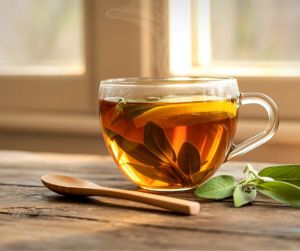
Sage & Thyme Tea
1 Tablespoon dried sage
1 Tablespoon dried thyme
2 cups water
- Steep in hot water for 10 minutes.
- Add lemon or a pinch of cayenne if you’d like.
Sip and breathe this tea throughout the day for colds, coughs, and flu-like symptoms.
How to Use Herbs Daily
Here are some ways you can make herbs part of your routine.
- Chop once, use all week—keep a jar of garlic, onion, and herbs ready to toss into meals. (Keep them in sealed glass jars in the fridge.) If you have issues with histamines, I’m sorry, but skip this option. You will do much better chopping these as you need them.
- Grow herbs in pots where you can see them and get to them easily. They’ll remind you to use them. If you have to walk too far or do any extra effort, you’re more likely not to use them.
- Add herbs early in cooking for depth, and again at the end for freshness. And be generous! Herbs don’t last long, so use them generously and replenish your stash often.
- By as fresh as possible. Even dried herbs should look like they have life in them. If you are purchasing a dried herb like thyme, oregano, or rosemary, those are green herbs. They should still have some green color when they are dried.
The more you use them, the more your body recognizes them, and the more your body remembers how to heal.
The Mindset That Heals
Here’s something I’ve learned after coaching hundreds of clients: not everyone heals, even when they know what to do. And it’s not because their bodies can’t, it’s because they’ve stopped believing they can.
You have to decide that your health is worth protecting. You have to stop defining yourself by your illness and start identifying with your potential.
Herbs and food are powerful, but they’re not magic without mindset. Healing begins when you choose to partner with your body instead of punishing it.
That’s the key to regeneration.
Let Food Be the Medicine That Saves You
I lost my thyroid to radiation, but I didn’t lose my fight. And I don’t want you to lose anything else, not your energy, not your confidence, not your hope, because someone told you your body can’t recover.
It can, and it wants to. You just have to give it the tools.
When you use herbs and food as medicine, you’re reclaiming your power. You’re remembering that healing doesn’t come from a system that sees you as a symptom. You are supporting your body and the earth that feeds it.
Every time you chop garlic or steep sage, you’re saying: I trust my body to heal.
Ready to Bring the Herbal Kitchen to Life?
If this message resonates with you, if you’re ready to learn how to turn your kitchen into your most powerful healing tool, join me inside The Culinary Healing Circle.
It’s where we cook, learn, and heal together.
- Two live food demos each month.
- A masterclass on functional nutrition and herbs.
- A community of women who are tired of being dismissed and are ready to take back their health.
- Open Coaching and Q&A
- Book Club
- Weekly Qi Gong
Because you can reverse disease. You can protect your body.
You just need the right mindset, the right foods, and a little herbal wisdom.

 Wholistic Jen
Leave a comment