
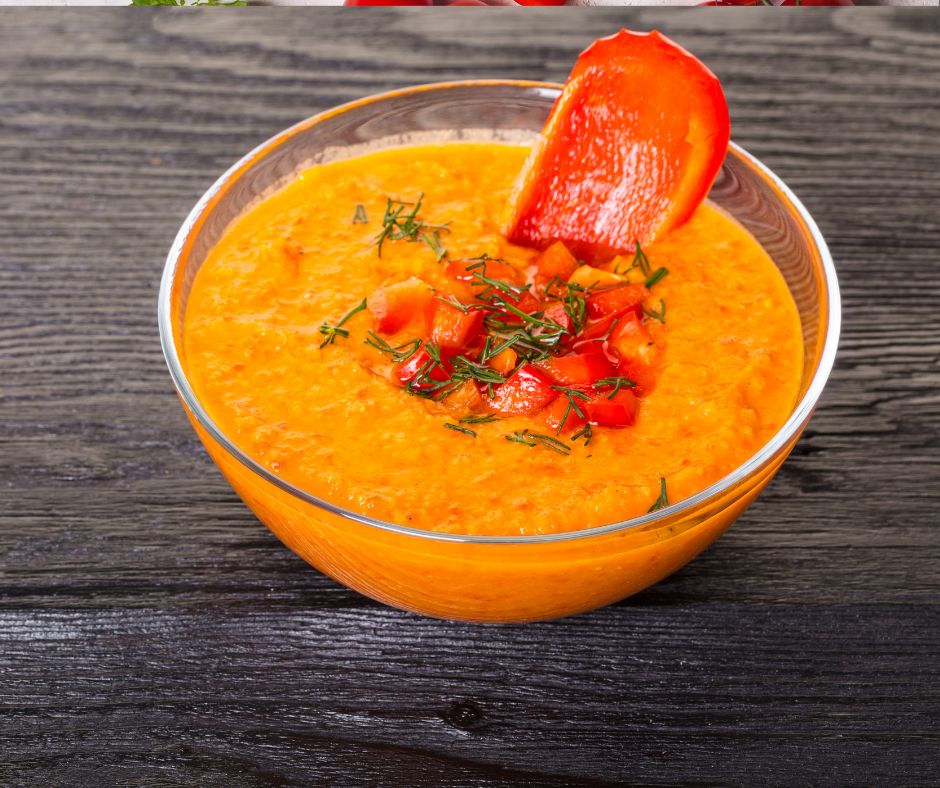
A Lighter, Veggie-Packed Hummus Without Added Oil
By Jennifer Whitmire, MS, MEd, CHES, NEP
Earlier this week, we talked about what happens when you chop, blend, or cook a tomato. We also talked about something that gets misunderstood in the nutrition world.
Processing food isn’t always a bad thing. (Ultra processed ≠ processed)
Chop a vegetable, and you’ve processed it. Cook chickpeas, roast a red pepper, and put everything into a blender, and you’ve processed it again and again.
That’s what we’re doing with today’s recipe, and it’s actually a good thing.
We’re roasting red pepper and zucchini, then blending them with chickpeas, lemon, garlic, spices, and just enough tahini (or sunbutter) to make a creamy hummus that’s packed with vegetables without being loaded with added fat.
Why Add Zucchini in Hummus?
Traditional hummus is a nutritious food, but depending on the recipe, it can also contain a lot of tahini and added oil.
You know me. I like to add as many nutrients to every recipe, so what else can I put in there? This time, it’s zucchini.
Roasted zucchini adds moisture, volume, and another whole vegetable to the hummus. It also allows us to use chickpeas as part of the dip instead of making them the entire dip.
For someone watching their glucose response or wearing a CGM, that can be useful. We’re not turning chickpeas into a carbohydrate-free food, but we are making a dip with a mixture of non-starchy vegetables, legumes, fiber, protein, and a small amount of whole-food fat, which should help with glucose reponse.
This is also a great way to use zucchini when the garden, farmers market, or your neighbor suddenly decides you need six of them. (he he he, our CSA members can relate!)
Red Peppers Add More Than Color
This week’s article focused on tomatoes and lycopene, but tomatoes aren’t the only red food worth mentioning.
Red bell peppers contain carotenoids with vitamin C and many other plant compounds. One of the big lessons from Understand the Rainbow is that foods of the same color don’t necessarily contain the same phytonutrients.
A tomato and a red bell pepper are both red, but their phytochemical profiles aren’t the same. That’s why I want you to eat a variety within the rainbow, too. Choose different shades of red, yellow, green, ….
Yes, We’re Processing Our Food
Look at what happens before this hummus reaches the table. We chop the vegetables and roast them. We cook the chickpeas, unless we’re using canned chickpeas that someone has conveniently cooked for us, then we blend everything together. That’s a lot of processing.
It’s still a bowl of whole plant foods.
This is why the word “processed” doesn’t tell me whether a food is something I want to eat. I want to know what happened to the food, what was added, what was removed, and what I’m actually eating when all that processing is finished. (Remember, my #1 Rule is Read the Ingredients! Every time.)
In this case, the end product is still vegetables, chickpeas, tahini, lemon, garlic, herbs, and spices.
Sounds pretty good to me.
Creamy Roasted Red Pepper & Zucchini Hummus
Ingredients
- 1 large red bell pepper, seeded and quartered
- 1 medium zucchini, cut into thick slices
- 1 ½ cups cooked chickpeas OR 1 (15-oz) can chickpeas, drained and rinsed
- 1 Tablespoon tahini
- 1 lemon, juiced
- 1 small garlic clove
- ½ teaspoon ground cumin
- ½ teaspoon smoked paprika
- ¼ teaspoon sea salt, optional
- Pinch of cayenne or chipotle powder, optional
- 1–3 Tablespoons water, if needed
- Fresh parsley or cilantro, optional
Directions
Preheat the oven to 425°F.
Place the red pepper and zucchini on a parchment-lined baking sheet. Roast for approximately 20–25 minutes, turning once, until the vegetables are tender and beginning to brown around the edges.
Allow the vegetables to cool for a few minutes.
Add the roasted red pepper, zucchini, chickpeas, tahini, lemon juice, garlic, cumin, smoked paprika, salt, and cayenne or chipotle, if using, to a food processor or high-speed blender.
Blend until smooth and creamy. The roasted vegetables will add moisture, so don’t add water immediately. If you want a thinner consistency, add water one tablespoon at a time until it’s just right.
Taste it! This is the important part.
Does it need more lemon? More cumin? More smoked paprika? A little heat? Adjust it until you actually want to keep dipping vegetables into it.
Transfer to a bowl and top with chopped parsley or cilantro, if desired.
What Should I Eat With It?
Here’s where you can really have fun with the rainbow. Cut up different colored veggies to dip:
- Mini bell pepper strips
- Carrots
- Cucumber
- Broccoli
- Cauliflower
- Jicama
- Purple cabbage wedges
- Radishes
- Celery
- Snap peas
You don’t need every color every time you eat hummus. Grab whatever vegetables are already in the refrigerator.
You can also use the hummus as a spread in a lettuce wrap, spoon it onto a big salad, add it to a vegetable bowl, or thin it with a little lemon juice and water to make a creamy dressing to pour over roasted veggies.
A Quick Blood Sugar Note
Chickpeas contain carbs, so portion-size is important if you’re paying close attention to your glucose.
Adding zucchini and red pepper gives us more vegetable volume without adding more chickpeas. Pairing the hummus with non-starchy vegetables instead of crackers or chips can also create a very different meal or snack.
Your glucose meter or CGM will tell you how you are handling the hummus, so pay attention to your response.
You may find that chickpeas work very well for you. (I actually tolerate beans well). Or, you may do better with a smaller serving. You may notice that what you eat with the hummus changes your response, too.
Don’t Be Afraid To Process Your Food
Yes, I said it.
Chop your vegetables, roast them, blend them, mash them, ferment them, and/or cook them. Food processing has been happening in kitchens for a very long time.
What I want you to think about is how the food was processed and what you’re left with when it’s done.Today, we’re left with chickpeas, zucchini, red pepper, tahini, lemon, garlic, and spices transformed into something creamy enough to make a plate of vegetables disappear.


Leave a comment