


By Jennifer Whitmire, MS, MEd, MH, CHES, NEP
I knew early on that I wanted to teach people how to take care of their body, but I didn’t know what that would look like. Health coaches didn’t exist 25 years ago, and I didn’t want to teach a health class or work in a gym or hospital. I didn’t get into this field, because I wanted to follow trends. I got into it, because I wanted to understand how the body really works.
I studied nutrition through graduate programs, textbooks, and continuing education classes. I trusted evidence. I trusted pathways and peer-reviewed papers. I memorized anatomy, physiology, and metabolic equations. And I applied it in my life and with my family.
I had years of education and experience backing me up, but even with all that training, something still wasn’t right.
When I received my scary diagnosis, I didn’t understand. I was the expert here. I was doing everything right. There had to be a mistake. I had never even heard of Graves disease, and the textbooks didn’t have the answer.
It was my gut, literally and figuratively, that led me somewhere new. Somewhere more personal, more powerful, and more true to me.
The Science Didn’t Match My Experience
I didn’t have a dramatic crash. I wasn’t sick in the way most people define it. I wasn’t laid out on the couch or dealing with terrifying symptoms. I was still working, still teaching, still “functioning,” but my doctor told me I have an incurable illness and will need meds for the rest of my life. I didn’t realize it at the time, but my body was sending quiet signals I could no longer ignore.
My face would flush red-hot and dry when I would go outside and take hours to cool down. I’d be anxious for no reason and my heart would race when I was trying to sleep. My energy spiked and dropped unpredictably. I’d wake up some mornings and couldn’t even get out of the bed, I’d just lay there and cry. I’d fly off the handle over something small then wonder what just happened. I couldn’t regulate. I couldn’t focus. I didn’t feel like me anymore.
My nervous system felt frayed, and according to everything I was taught, I was eating right, exercising right, and following the science. (Epidemiology was my favorite class!)
I started looking for clues. What was I missing?
I’ve always believed in prevention, so I didn’t want to wait for it to get worse. That diagnosis was a wake-up call. My body was falling apart without me even noticing, but it had been nudging me to listen more closely. I should have noticed sooner.
When did the heart palpitations start? When did I get so moody? What am I doing wrong?
It challenged everything I thought I knew about “healthy” food. I had to unlearn what I’d been taught. Not because the science was wrong but because it was incomplete.

What No One Taught Me in Graduate School
In all my years of academic training (20 years of college!), no one ever taught me about toxins, the microbiome, or mental health. Not like I understand it now.
No one connected fiber diversity to liver health and hormone detox. We only talked about fiber as something needed to get people to poop. BUT not too much fiber, or they would get stopped up. No one talked about poop as data.
No one warned me about food packaging or the toxic residue left behind by things like “natural flavors,” emulsifiers, or even the black plastic containers we microwaved our meals in.
No one taught me to slow down enough to notice how food made me feel, not just physically, but emotionally and energetically. I wasn’t taught to eat slowly and mindfully. I wasn’t even taught about the rainbow meals that I tell all my clients to eat now.
We were taught to break down nutrition into neat compartments:
- Carbs, fats, and protein
- Calories in, calories out
- RDA numbers and food pyramids
It was nothing like how people actually live and eat. I knew you needed a small piece of carrot to meet your vitamin A needs for the day, but I didn’t know how to use that information in the real world. I knew what foods you needed to eat to avoid Beriberi. Why?! Who do you know who has experienced that?
I didn’t even know how to cook! (Which is why I went to culinary arts school). And, I wasn’t taught that some people actually struggle to convert the carotenoids in carrots into vitamin A.
Our bodies are unique! Not machines. We are ecosystems inside and out. And each ecosystem needs different things and lots of diversity.
From Nutrition Classes to Wisdom
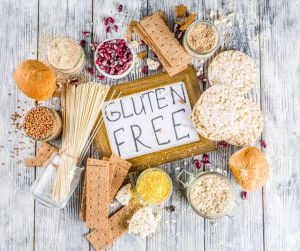
I used to teach people how to swap out foods: gluten for gluten-free, dairy for plant-based milk, corn syrup and artificial sweeteners for real cane and coconut sugar.
I still remember the frozen meals I used to call “healthy,” because they had veggies, protein, and a grain in them even though they were drowning in additives and microwaved in plastic.
I believed whole grain toast with peanut butter and banana was a balanced breakfast. I baked beautiful homemade breads on the weekends. I drank a gallon of whole fat chocolate milk every weekend.
I was reading the ingredients, but I wasn’t reading between the lines.
When I had my car accident and my doctor told me I had to have radioactive iodine or I would die, I knew I had to listen. That’s when everything changed. I began to study food through a new lens: the body’s response, biochemically, energetically, and emotionally.
I had never listened to my body. I have a history of trauma, and trauma teaches you to hold your breath, predict what’s coming next, always be one step ahead. I was never “in the moment.” I don’t remember ever paying attention to how I feel.
I remember a functional medicine doctor asking how certain supplements made me feel. I thought she was crazy. How do you feel something from a supplement? I could take a whole bottle and not feel anything.
The only time I knew a medicine or supplement was wrong for me was when I clearly had an instant reaction. NSAIDS paralyze me, and Synthroid caused me to break out in a big circular rash over my liver.
I had to learn how to start listening to my body in a whole new way and helping my clients do the same.
Poop, Cravings, and Bloat
You won’t find these in a textbook. But they tell you more than any lab marker ever could.
- Your poop reveals a lot about you and your health. It shows how well hydrated you are and how you’re digesting, absorbing, detoxing, and eliminating.
- Your cravings aren’t just about willpower! They’re usually due to dysbiosis, blood sugar swings, or emotional disconnection.
- Your bloat is a signal. It’s your gut saying, “something’s off.” You ate too fast or only eat half that apple next time, or raw cabbage isn’t right for you….
- Your energy after meals can also tell us a lot. You should be energized after lunch and not feel like you need a nap.
These are some real signs of health. And they’re so easy to track.
When you learn how to read your body’s language, you stop fearing food and start using it as a teaching and healing tool.

The Medicine I Was Never Taught
Now, I teach people how to:
- Slow down enough to feel their hunger and fullness cues. Don’t just eat, because the clock says it’s time. Actually, sit down to eat and without your phone or other device. How many flavors are there? What are the smells? What does your food really look like?
- Chew to activate enzymes and engage your vagus nerve. Chew, chew, chew. You don’t have teeth beyond your mouth.
- Notice the subtle effects of food on mood, energy, and digestion. Do you notice any mood changes, anxiety, or even attention issues after a meal?
- Listen to your gut. What is your gut telling you? Why did you choose this food? Was it an emotional response or nutritional response?
Food is no longer something to control but to experience.
Paying closer attention to your meals can bring you more energy, clearer skin, balanced hormones, better sleep, improved labs, and more peace with food.
All from learning to listen, not to me, not to a guru, but to YOU.
Why the Microbiome Changed Everything
Learning about microbiome changed how I see food, health, and healing. This is not a wellness trend. It’s hard science, and it’s the missing piece in so many people’s health.
- Your gut bacteria influence everything from estrogen metabolism to anxiety.
- Most of your immune system lives in your gut.
- Food sensitivities aren’t always permanent, and they shouldn’t be. When you heal your gut, you should be able to add foods back in.
- Variety matters more than perfection. You can’t just focus on what to cut out but what you add in.
Fermented foods, rainbow meals, sprouts greens, herbs, and spices are foundational. And when you stop fearing foods like beans, brassicas, or garlic and learn how to support your gut to enjoy them again, everything shifts.
I Stopped Teaching Food Rules
We don’t need another protocol, more labs, charts, apps, or rules to memorize. We need to learn to trust the body again. Learn what cravings tell you, and pay closer attention to what you’re doing and what you did before the bloating appeared.
Get connected to yourself, again.
This is the type of thing we learn inside my Culinary Healing Circle and in every workshop, recipe, and class I offer.

Ready to Trust Your Gut Again?
If you’re tired of being told what to eat, what to cut, and what to fear…
If you want to rebuild trust with your gut, your food, and your body…
If you’re ready to stop outsourcing your health and start owning your healing…
Join me in the Culinary Healing Circle where we bring the science of the microbiome combined into your everyday kitchen.
You’ll get the recipes, the guidance, the science, and the community to finally feel confident again—without more rules.
👉 Join now at CulinaryHealingCircle.com
Real healing doesn’t come from a textbook. It comes from within.
 Wholistic Jen
Leave a comment