


By Jennifer Whitmire, MS, MEd, MH, CHES, NEP
By the end of December, a lot of people realize their bodies feel different. Even those who normally eat well, stay hydrated, and try to stay balanced notice changes in their digestion, mood, energy, and cravings. It’s not because you’ve “fallen off” or failed. It’s the nature of the season.
The holidays come with richer foods, more sugar, less structure and routine, travel, late nights, emotional demands, and social obligations that stretch the nervous system thin. Even when the choices you’re making aren’t extreme, the environment is.
Your body feels it all over inside and out, and in winter the body doesn’t rebound the way it does in spring or summer.
Most people are never taught that the human body is deeply seasonal. Your digestion slows slightly in winter. Your stress hormones stay more sensitive. Your immune system moves into high alert. Your need for minerals and warm foods increases, and your energy naturally pulls inward. When you add the weight of holiday foods and schedule changes on top of this, it’s completely normal to feel puffy, tired, inflamed, or “not like yourself.”
We just need food that supports the body. This is where whole food, plant-based, low-glycemic eating shines. It brings everything back online. It helps with digestion, minerals, hydration, microbiome diversity, blood sugar balance, and a sense of balance.
Leafy Greens
One of the most immediate needs after the holidays is restoring minerals. Stress, sugar, poor sleep, and inconsistent meals deplete magnesium and potassium rapidly. Dark leafy greens like spinach, kale, chard, Romaine, arugula, and even sea vegetables provide the minerals the body uses to regulate cortisol, rebuild energy production, support thyroid function, and reduce inflammation.
Greens also add “bitter” which wakes up the digestive system. Bitter tastes signal the stomach, liver, pancreas, and gallbladder to prepare for digestion which helps with better nutrient absorption and less bloating.
We don’t have to have massive salads to get the benefit. In fact, winter bodies usually prefer warm greens, wilted into soups, stirred into lentils, blended into a warm smoothie bowl, or tossed with lemon and herbs next to roasted vegetables. Citrus like a squeeze of lemon, apple cider vinegar, fresh herbs, and a touch of miso or tahini add plenty of flavor while supporting digestion and mineral absorption.
Leafy greens are one of the most reliable foods for restoring energy after a season of indulgence, and they work quickly when you eat them consistently.

Warm Broths
Broths are one of the most underrated tools for restoring energy and gut health after holiday foods. Warm liquids hydrate differently than cold water. The heat stimulates circulation, helps the stomach relax, encourages motility, and signals safety to the nervous system. This is something most people desperately need this time of year.
A mineral-rich vegetable broth, mushroom broth, potassium broth, or miso broth is rich in electrolytes, amino acids, and phytonutrients without adding more heaviness. The warmth alone helps restore digestion.
Broths are also incredibly supportive for people healing from autoimmune symptoms, adrenal fatigue, or blood sugar imbalance, because they add nutrition without overstimulating the system.
A simple mug of broth in the afternoon can calm cravings and aid the body better than a second cup of coffee. It supports hydration, digestion, nervous system regulation, and warmth. These are all things that the body depends on.
Citrus
When the body feels heavy, foggy, or overloaded, citrus cuts through it quickly. Oranges, mandarins, grapefruit, lemons, and limes are hydrating and rich in vitamin C, enzymes, and flavonoids that support and strengthen the immune system and adrenal glands. They help with reversing oxidative stress and support liver function.
A squeeze of lemon in your morning water, a bowl of grapefruit over a bed of greens, or roasted vegetables finished with fresh citrus all give the body something it recognizes and responds to. When the system feels stagnant, citrus is energizing and often gives the quickest lift.
Warming Spices
Warming spices help restore stomach acid and enzyme production.
- Ginger helps with healthy motility and reduces bloating. (People tend to be more constipated in winter). It also helps defend us against viruses and bacteria this time of year.
- Cinnamon supports blood sugar balance and warmth.
- Turmeric reduces inflammation.
- Cardamom and fennel soothe the digestive tract and help relieve gas.
Add them to soups, stews, herbal teas, roasted vegetables, oat groats, or warm beverages. Your gut will feel the difference quickly.

Low-Glycemic Plant Proteins
Even if you don’t eat much sugar during the holidays, your blood sugar still can swing from irregular meal timing, stress, and late nights. Clean, low-glycemic plant proteins help re-establish steadiness.
Lentils, chickpeas, black beans, quinoa, tofu, and tempeh regulate appetite, support muscle repair, and help balance mood and energy. They keep digestion stable without feeling heavy, especially when prepared without oil. Pairing these protein-starches with lots of leafy greens like roasted Brussels sprouts, a large, massaged kale salad, or in a stir fry with lots of non-starchy veggies helps keep blood sugar stable.
These proteins pair naturally with winter foods. Think about the foods that are fresh now…roots, greens, citrus, broths, and warming spices. When your meals are balanced, your cravings ease up, you have afternoon energy, and your sleep improves.
Root Vegetables
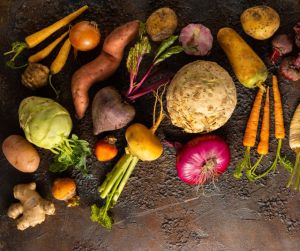
Sweet potatoes, carrots, beets, parsnips, turnips, rutabaga, radishes, … all of these provide slow-release carbohydrates that support the gut and calm the nervous system. They provide the natural sweetness the body craves this time of year.
Their minerals replace what stress depletes. Their fiber helps with microbiome diversity. They’re grounding to the nervous system. When people tell me they feel “scattered” or “ungrounded,” I usually ask whether they’re eating enough roots. (Most of the time, the answer is no. Everyone is afraid of starches).
Roots bring your energy back into your body to ground you, and they’re deeply stabilizing for winter.
Fermented Foods
Heavier meals, travel, sugar, and stress all throw off the microbiome. Fermented foods help increase the beneficial strains to help balance and rebuild.
Raw, unpasteurized sauerkraut, coconut kefir, clean-ingredient kimchi, miso, and cultured vegetables help increase beneficial bacteria, improve digestion, enhance absorption of nutrients like minerals, and support the immune system. Just a spoonful with meals can make digestion easier.
Fermented foods work especially well with an oil-free, whole-food lifestyle, because they add flavor and function without weighing meals down. They support digestion at a time when your gut is more sensitive.
Hydrating Foods
We often don’t feel thirsty as often in winter, but the body still feels the effects. Hydrating foods like citrus, pears, pomegranates, and even cruciferous vegetables with herbal teas and broths fill in the gaps quickly.
Hydration affects everything: digestion, blood sugar, immune function, mental health, and cravings. Keeping warm teas nearby, adding lemon or orange to water, and including hydrating foods in meals helps with the fatigue that creeps in this time of year.
When hydration improves, your energy does too. It’s one of the fastest ways to feel better.

Return to YOU
We don’t need to do anything dramatic right now. Our body needs foods in season. In winter, we need warmth, minerals, and meals that feel grounding. We need steady energy from whole foods, not the spikes and crashes that come from trying to power through the holidays on sugar, caffeine, or convenience foods. It’s not the time for doing more, we need to return to the foods that help the body settle.
The holidays add more stress, stimulation, and unpredictability than our system is used to handling. When we shift back toward warm, whole, plant-based soups, roasted roots, greens, beans, and winter herbs, it helps with digestion, blood sugar, and energy and inflammation actually reverses. We just have to eat in a way that supports repair.
If this message resonates, and you want support staying fueled and grounded this winter, I’d love to have you inside The Culinary Healing Circle.
Inside the Circle, we use food and herbs the way the body understands them. We cook together, learn together, and create routines that support digestion, blood sugar, hormone balance, and resilience.
If your body is asking for warmth, comfort, and ease, you’ll feel right at home.
Join The Culinary Healing Circle
Give your body a season of repair and peace.
 Wholistic Jen
Leave a comment