
By Jennifer Whitmire, MS, MEd, MH, CHES, NEP
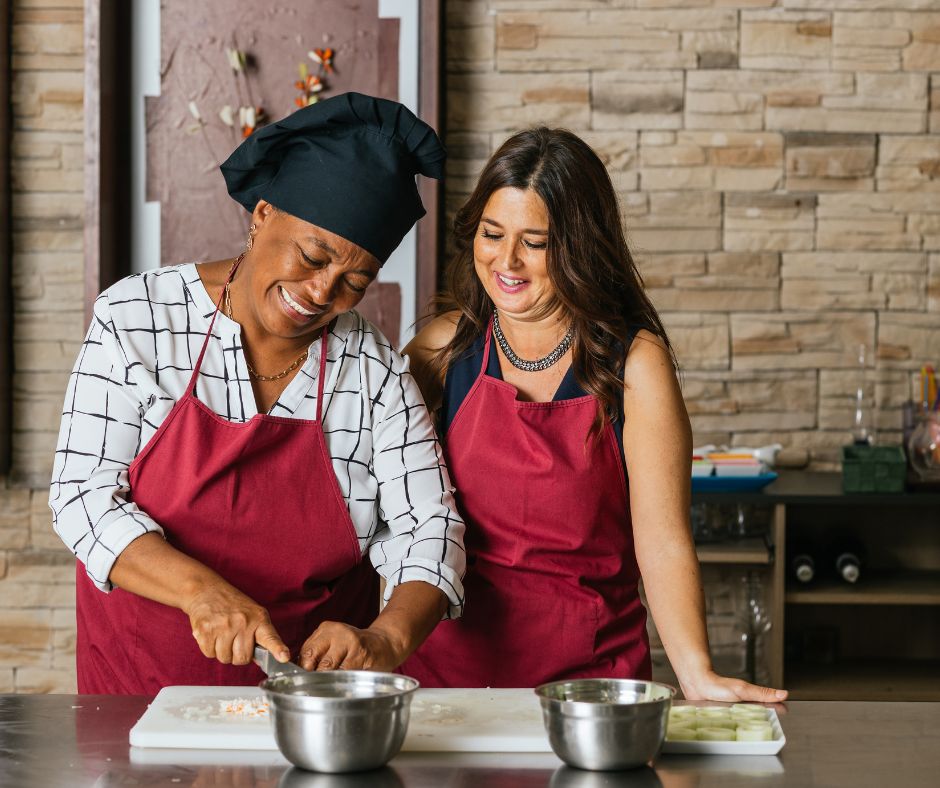
If we were in the kitchen together for 90 minutes, I wouldn’t start with a recipe, and I wouldn’t hand you a plan to follow.
I would start by showing you how to think about food in a way that actually supports you and your body. Once that clicks, everything else becomes easier.
We Would Start With What Happens After You Eat
Before we made anything, I would ask you a simple question.
What happens after you eat?
I don’t want to know what you should eat or what you’ve been told is healthy, but what actually happens in your body after a meal.
Do you feel satisfied and comfortable, or do you feel like you need something else an hour later? Does your energy hold, or does it drop? Do you feel bloated or have the grumbly tummy?
That answer tells me more than books or labels ever will.
Then I’d Show You How to Build a Meal That Holds You
Based on your response, I would walk you through how to create a meal that fits you in real time. We don’t need recipes or cookbooks. There’s no measuring and no overthinking to get started. We’re just using what’s already in your kitchen.
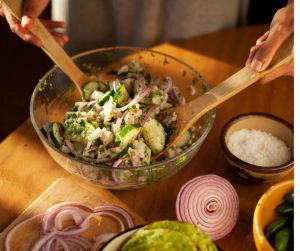
We’d start with something simple. Greens, beans, vegetables, something with texture, something with substance, and something that ties it together.
We don’t need an exact combination, but we do need structure, a plan.
When meals include protein, fiber, and fat, the body responds differently than it does with a high carb meal or a low carb, low fat meal. Energy is more stable, and you’re not constantly trying to catch up later.
This is the same approach I walk through in the easiest healthy meal I make, where meals come together without needing a plan.

Why This Changes How You Feel
As we’re cooking, I would explain what’s happening underneath it. When meals are created with this structure, glucose moves differently, insulin responds differently, and the entire system becomes more stable.
Most people don’t realize how much this affects their energy, inflammation, and how the body feels day to day. I break that down more in why blood sugar matters in autoimmune disease, because it’s one of the most overlooked pieces of the puzzle.
For additional context on how blood sugar impacts metabolism, the American Diabetes Association also outlines how glucose regulation influences overall health beyond diabetes.
Then We’d Look at What You’re Actually Absorbing
At some point, we would shift the conversation to digestion. (You know I have to talk about poop at least once!) You can create a great meal, but if your body isn’t absorbing it well, you’re not going to get the full benefit.
Stomach acid, enzymes, and gut health all depend on what your body is actually able to use. That’s why this always comes back to the gut.
I go deeper into that in Your Mysterious Microbiome, because it affects everything from nutrient absorption to immune function.
There’s also growing research from the National Institutes of Health showing how gut health influences inflammation, metabolism, and long-term health outcomes.

I Wouldn’t Focus on One Nutrient or Superfood
We wouldn’t stand there talking about magnesium or zinc or spirulina on their own. Instead, I would show you how nutrients work together in food.
When you create meals with a variety of plants, you’re getting combinations of nutrients that support the same pathways in the body. That’s very different from trying to piece things together one supplement at a time. We actually need the synergy that come from whole foods and certain foods consumed together.
Small gaps across multiple nutrients can add up over time. For example, do you know what food combinations help you absorb iron? What about how adding this one thing helps you absorb more minerals from your greens?
We’d Keep It Simple Enough to Repeat
Before you left, I would make sure this felt doable, repeatable.
You wouldn’t need a strict plan or a set of rules. You would know how to look at what you have and turn it into something that supports your body.
If it’s not simple enough to do on a normal day, it doesn’t last.
What You’d Leave With
At the end of that 90 minutes, you wouldn’t just have a recipe.
- You would have a different way of thinking about food.
- You would understand why certain meals leave you feeling better than others.
- You would be able to recreate meals without overcomplicating it.
That’s where things actually start to change.
Comment and let me know if you want my help in your kitchen.


Leave a Reply