
By Jennifer Whitmire, MS, MEd, MH, CHES, NEP
One things I hear all the time is some version of this, “I eat breakfast… but I’m starving again an hour later.”
Sometimes it’s a smoothie. Sometimes it’s toast or oatmeal by itself. Sometimes it’s a protein bar eaten in the car while rushing out the door. Most people assume that they are hungry so soon, because they need more willpower, more protein, or fewer carbohydrates.
I don’t think it’s that simple.
I think the structure of the meal is the issue.
Some breakfasts digest so quickly that blood sugar rises rapidly, then insulin goes up, and the body is left trying to stabilize everything. People experience that rise and drop as hunger, cravings, fatigue, shakiness, brain fog, irritability (HANGRY), or the feeling that they “need something sweet.”
Breakfast sets the tone for the rest of the day metabolically.
That doesn’t mean breakfast has to be perfect. It also doesn’t mean everyone needs the exact same foods. What it usually means is that meals created with fiber, protein, healthy fats, and slower-digesting whole foods tend to create a very different response than meals created mostly from refined carbohydrates (boxed cereals) or rapidly absorbed foods.
The body notices the difference.
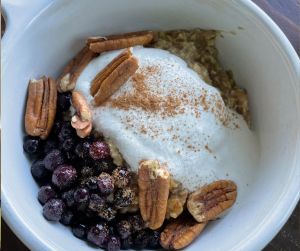
With pecans and cinnamon on top
Why Oatmeal Works Beautifully for Some People and Fails Others
Oatmeal is a good example of how context makes a difference in nutrition.
Some people feel fantastic eating oats, while some people feel hungry shortly afterward and assume oats are the problem. In many cases, the issue is not the oats themselves but the quantity and/or what the meal is missing.
Plain oatmeal digests relatively quickly on its own. When people add sweeteners, dried fruit, flavored creamers, or syrups that don’t add protein, fiber, or fat alongside it, the meal becomes much less stable metabolically.
That creates a completely different physiological response than oats paired with foods that slow absorption and improve satiety.
Fiber changes digestion speed. Healthy fats change digestion speed. Protein changes digestion speed. Whole-food structure makes a big difference.
This is one reason I focus so heavily on food combinations instead of labeling foods as “good” or “bad.”
Hunger Is Not Just About Calories
One of the most interesting things about appetite is that fullness is influenced by much more than just calories.
Blood sugar balance, mineral intake, fiber, nervous system regulation, sleep, hydration, digestion, and even stress hormones all influence hunger signaling. Ultra-processed foods usually contain large amounts of rapidly available calories without providing much satiety or nutrition alongside them. (Makes me think of the Toaster Strudels I ate as a kid-fast carbs with trans fats and no protein, fiber, or healthy fats).
Whole foods act differently in the body.
Meals containing fiber-rich carbohydrates, healthy fats, protein, water-rich foods, and intact food structure create a steadier release of energy. That steadier response is what people experience as feeling “held” by a meal. My morning chia bowl “holds” me until noon or 1 easily.
I think many people have forgotten what true satiety actually feels like because modern food products are designed to keep appetite activated rather than resolved.
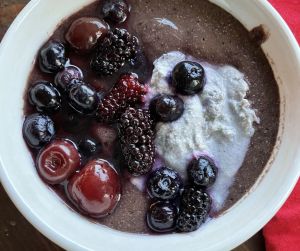
With added cacao powder
What About Minerals
One thing that gets overlooked constantly in nutrition conversations is mineral intake.
Magnesium, potassium, and trace minerals influence blood sugar regulation, muscle function, nervous system balance, stress response, and energy production. Most breakfasts that are marketed as healthy are surprisingly low in minerals and fiber while being very high in rapidly absorbed carbohydrates.
This is one reason I like breakfasts created from ingredients like oats (oat groats are best), chia, hemp hearts, berries, walnuts, flax, and unsweetened dairy free fermented foods. Those ingredients provide a combination of fiber, healthy fats, protein, and minerals that work together.
The body tends to respond very differently to that combination than it does to a bowl of boxed cereal or a highly processed “healthy” breakfast product.
Creamy Hemp & Chia Oat Bowl with Berries and Walnuts
Serves 2
Ingredients
1/2 cup oats (ORGANIC) (NOT quick-cooked)
4 tablespoons chia seeds
3 tablespoons hemp hearts
2 tablespoon ground flaxseed
1 teaspoon cinnamon
1½ cups unsweetened soy milk or other unsweetened plant milk (OR Water)
½ cup unsweetened plant-based yogurt, optional
1 cup berries
2 tablespoons chopped walnuts
1 teaspoon vanilla extract
Optional:
- cacao nibs
- pumpkin seeds
- unsweetened coconut flakes
Instructions
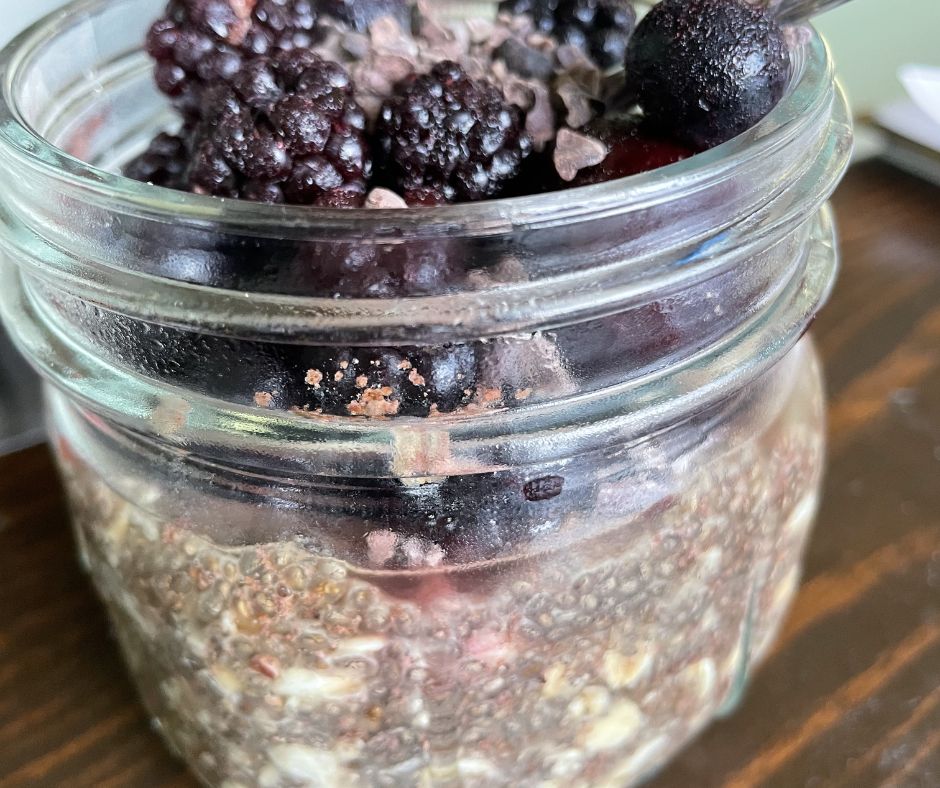
Divide the oats, chia seeds, hemp hearts, flaxseed, cinnamon, vanilla, plant milk (OR water), and ½ the berries and vanilla into 2 bowls or pint jars.
Stir and let sit for 15 minutes. Stir again and add a little water if too thick). It’s ready to top and eat or place in the fridge overnight.
Top with remaining berries, yogurt, walnuts, and any optional toppings you like.
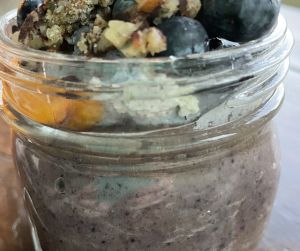
With Sweet Potato yogurt and hemp seeds on top
Why the Type of Oats Matters
The oats provide fiber and slower-digesting carbohydrates, but the type of oat is what is most important.
Oat groats are the least processed form and tend to create the slowest blood sugar response, because the grain structure is still intact. They do take longer to prepare and usually benefit from soaking overnight, but nutritionally they are my favorite option.
Steel-cut oats are the next best choice, because they are still relatively intact and digest more slowly than rolled oats.
Traditional rolled oats are more processed than steel-cut, but they can still work very well when paired with enough fiber, healthy fats, and protein.
Quick-cooking and instant oats are much more heavily processed, because the grain structure has been broken down significantly. They digest very quickly and can behave much more like refined carbohydrates in the body, especially when eaten alone or in flavored packets with added sugars.
This is one reason two people can have completely different experiences eating “oatmeal.” The structure of the grain changes how quickly glucose enters the bloodstream, how long the meal feels satisfying, and how stable energy remains afterward.
The body responds differently to intact foods than it does to highly processed versions of those same foods.
Why This Combination Works So Well
As noted, the oats add fiber and slower-digesting carbohydrates, but they also contain nutrients and compounds that make them very supportive. Oats contain beta-glucans, a type of soluble fiber that has been studied for its role in blood sugar regulation, cholesterol balance, satiety, and gut health. This type of fiber forms a gel-like consistency during digestion that slows absorption and helps create steadier energy.
Oats also contain magnesium, manganese, zinc, iron, and unique antioxidant compounds called avenanthramides that have been studied for their anti-inflammatory and cardiovascular benefits. Because whole and minimally processed oats digest more slowly than refined grains, they tend to feel grounding and sustaining when paired appropriately.
Chia, hemp, walnuts, and flax add healthy fats, minerals, plant protein, and additional fiber that further slow absorption and improve satiety. They also contribute omega-3 fats, magnesium, and compounds that support nervous system function and inflammation balance.
The berries add my favorite, COLOR, polyphenols, and antioxidants while adding flavor. Polyphenols also interact with the microbiome in beneficial ways and help support oxidative balance throughout the body.
Most importantly, this meal contains enough structure to create steadier energy instead of the spike-and-crash pattern many people experience with highly processed breakfasts or a large bowl of oats alone.
That difference affects much more than hunger. It influences cravings, focus, mood, energy regulation, and how stable people feel throughout the morning.
Approximate Macros (per serving)
Calories: ~300–360
Protein: ~12–15 g
Fiber: ~13–17 g
Net Carbs: ~16–22 g
Fat: ~16–21 g
Ways to Increase the Protein
Some cleaner ways to increase the protein in this bowl without completely changing the structure include:
- 2–4 tablespoons lupini flakes
- using an unsweetened, single-ingredient protein powder
- increasing hemp hearts
- stirring in unsweetened soy yogurt
- adding pumpkin seeds
- serving it alongside tofu, tempeh, or another savory protein source
Lupini flakes work especially well, because they’re very high in protein and fiber while remaining relatively low glycemic. They also blend into oatmeal surprisingly well without changing the flavor much.
If someone wants to use protein powder, I would personally keep it very simple. A single-ingredient hemp protein, fava or ming bean protein, or pea protein tends to work much better than flavored powders filled with gums, sweeteners, “natural flavors,” oils, or sugar alcohols. Many of those additives can create digestive issues, bloating, cravings, or appetite dysregulation in sensitive individuals.
The goal is not simply adding more protein but creating a meal that still feels balanced, satisfying, and supportive to the body overall.
The Goal Is Feeling Nourished, Not Just Full
At this point, I think many people are less interested in following nutrition trends and more interested in simply feeling better consistently.
We all want:
- Stable energy.
- Balanced hunger.
- Better focus.
- Fewer cravings.
- Meals that actually feel satisfying afterward.
That usually has much less to do with perfection than people think and much more to do with giving the body enough nutrition and stability to regulate appropriately over time.
Breakfast is simply one place where people often notice that difference first.


Leave a Reply