
By Jennifer Whitmire, MS, MEd, MH, CHES, NEP
I think salads get a bad reputation, because most people have never eaten one that was designed to be a meal.
Many salads are little more than lettuce, a few vegetables (cucumber slices and a couple of cherry tomatoes), and dressing. They may look healthy, but an hour later people are standing in front of the pantry looking for something else, because the meal never provided enough fiber, protein, healthy fats, or staying power.
When people tell me they don’t like salads or that salads don’t fill them up, I usually understand exactly what happened.
They weren’t eating a meal!
A side salad isn’t enough food for ANYONE!
My salads are different.
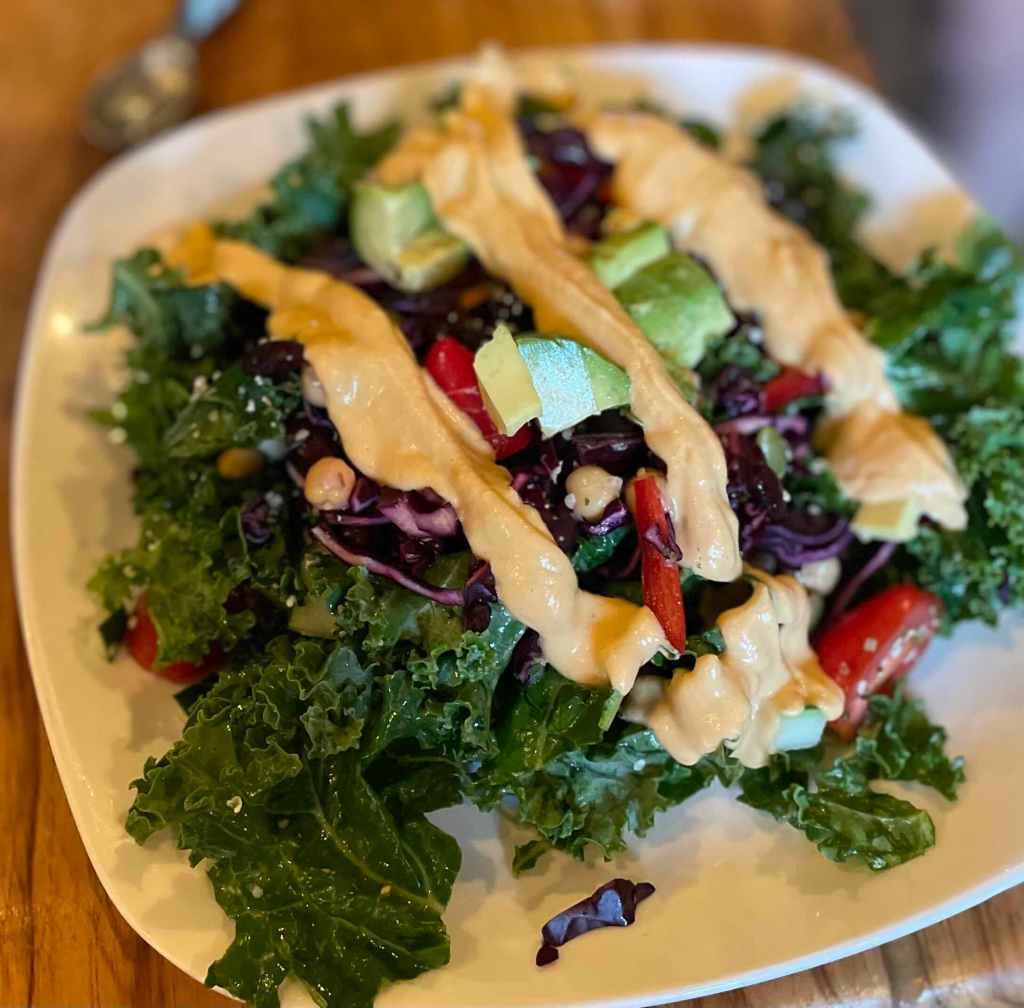
Today’s contains almost all of the GBOMBS (A method with fabulous health results): leafy greens, cruciferous vegetables, beans, seeds, healthy fats, herbs, and a creamy dressing that adds even more fiber and protein. Instead of leaving you hungry an hour later, this will keep people satisfied for hours.
More importantly, this demonstrates a principle I teach constantly: the structure of the meal matters just as much as the ingredients themselves.
Why Most Salads Don’t Work
A bowl of lettuce and vegetables may provide vitamins and minerals, but it is usually missing enough protein, fiber, and healthy fats to create satiety.
The result is people feel virtuous while eating it and hungry not long after. They decide that salads don’t work for them. The problem isn’t the salad.
The problem is how the salad was created.
The structure of the meal matters just as much as the ingredients themselves. In fact, I recently wrote about this concept in Why Some Breakfasts Keep You Full and Others Don’t, where I explain how fiber, healthy fats, and protein work together to create lasting satiety.
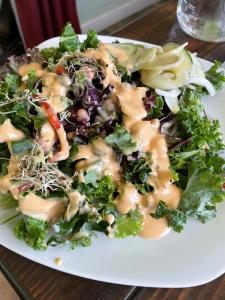
What Makes This Salad Different
One of the things I love about this combination is the diversity. I’m one of those people who LOVES appetizer night, tapas, and small plates.
Research continues to show that a diverse intake of plant foods supports a more diverse microbiome. Different fibers feed different microbes, and the different colors provide different phytochemicals that support everything from immune function to metabolic health.
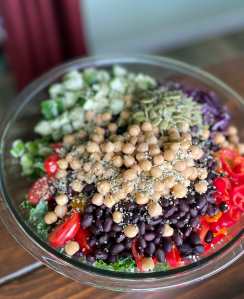
In a single bowl, this salad has 12+ plants:
- kale
- cabbage
- bell peppers
- tomatoes
- cucumber
- avocado
- green onion
- black beans
- chickpeas
- pumpkin seeds
- hemp seeds
- herbs
That’s an impressive amount of plant diversity from one meal.
This salad contains more than ten different plant foods, each contributing unique fibers and phytochemicals.
The Secret Isn’t the Kale
People often focus on the kale, because it’s the ingredient they recognize as “healthy.” The real magic is the combination.
The kale and cabbage have fiber, glucosinolates, carotenoids, vitamin C, folate, and compounds that support detoxification pathways.
The beans and chickpeas also have fiber but with resistant starch, more protein, magnesium, potassium, and staying power.
The avocado adds healthy fats that help with absorption of fat-soluble nutrients while making the meal more comforting and filling.
The pumpkin seeds and hemp seeds add minerals, more protein, and more healthy fats.
The herbs add flavor, but they also contribute unique phytochemicals and antioxidants that many people rarely consume in meaningful amounts.
The body gets the benefits of this meal as a whole.
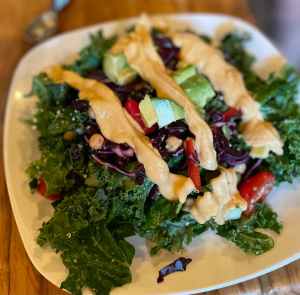
Rainbow Kale & Bean Power Salad
Serves 4–6
Salad
1 bunch kale, chopped
Juice of 1 lemon
Pinch of pink salt
¼ head purple cabbage, shredded
6 mini bell peppers, thinly sliced
Handful of cherry tomatoes, halved
1 avocado, chopped
1 green onion, thinly sliced
1 cucumber, chopped
1 can black beans, drained and rinsed
½ can chickpeas, drained and rinsed
¼ cup pumpkin seeds
2 tablespoons hemp seeds
Fresh tarragon, oregano, and parsley, to taste
Creamy Chickpea Lime Dressing
½ can chickpeas, drained and rinsed
⅓ cup soaked cashews
1 tablespoon apple cider vinegar
Juice of 1 lime
Salt to taste
½ teaspoon cumin
½ teaspoon smoked paprika
Water as needed for blending
Instructions
- Place the chopped kale in a large bowl with the lemon juice and salt. Massage for 1–2 minutes until softened.
- Add the cabbage, peppers, tomatoes, avocado, green onion, cucumber, beans, seeds, and herbs.
- Blend the dressing ingredients until smooth and creamy, adding enough water to reach your desired consistency.
- Pour over the salad and toss well before serving.
Why Meals Like This Make A Difference
One of the biggest nutrition mistakes I see is people trying to improve their health by focusing on individual nutrients.
“I have to get more protein.”
“I need more magnesium.”
“I need fiber.”
The body doesn’t need individual nutrients. It needs nutrients combined with other fiber, fats, and antioxidants, as well as enzymes found in these foods. We are just beginning to understand the synergistic effect of some of these nutrients, so let’s get a head start and start combining them now!
Meals like this naturally combine many of the nutrients, fibers, phytochemicals, healthy fats, and proteins that work together throughout the body. That is one reason whole-food meals outperform supplements and nutrition hacks.
The body evolved to recognize food, real, whole, minimally processed food.
Just in case you need it
Approximate Nutrition (Per Serving, 4 Servings)
Calories: ~425
Protein: ~16–18 g
Fiber: ~16–20 g
Net Carbs: ~18–22 g
Fat: ~18–22 g
Rich in:
- magnesium
- folate
- potassium
- carotenoids
- vitamin C
- plant protein
- prebiotic fiber
Optional Protein Boost:
Blend ¼ cup plain hemp protein powder into the dressing or add ½ cup lupini flakes to the salad for an additional 10–15 grams of protein per serving without substantially increasing net carbohydrates.


Leave a comment