
By Jennifer Whitmire, MS, MEd, MH, CHES, NEP
If you’ve been following along, you know in my last post we dug into Epstein-Barr Virus (EBV) and how it can be involved in autoimmune disease. EBV is a common and powerful trigger for autoimmune disease. I’ve seen it show up again and again in people with Hashimoto’s and Graves’. But … EBV isn’t the only cause.
Even when a virus sets the fire in motion, your thyroid doesn’t get pulled into the flames unless other things are already in play. It could be a compromised gut barrier. In fact, you can’t truly calm thyroid autoimmunity until you address the gut.
What does “leaky gut” actually mean, why does it matter so much for thyroid recovery, and how can food help you repair it?
What is Leaky Gut, Really?
Your gut lining is like the body’s security system. Imagine it as a tightly woven fabric, carefully allowing in what belongs (nutrients, electrolytes, amino acids) and keeping out what doesn’t (toxins, pathogens, undigested proteins).
That fabric is held together by proteins called tight junctions. When those junctions are strong, your gut is selective. But when they loosen, a process triggered by things like gluten, stress, toxins, infections, or certain medications, the mesh cracks open. This is intestinal permeability, better known as leaky gut.
- Gluten is one of the biggest culprits, because it triggers the release of zonulin, a protein that pries the mesh apart.
- Once the barrier is compromised, particles that don’t belong, like food proteins or bacterial fragments, slip through into the bloodstream.
- Your immune system responds on the other side of the mesh like a guard dog, attacking everything in sight (those things don’t belong on this side). And in genetically susceptible people, that “attack” mistakenly extends to your thyroid.
Leaky gut may or may not cause bloating or digestive issues. You may not feel those AT ALL. I never have felt it. But, it can be the spark that keeps antibodies elevated and your thyroid under fire, though.
The Gut–Thyroid Connection
We think of the gut as just a tube, but it’s home to trillions of microbes: bacteria, fungi, viruses, and archaea. These train your immune system among many other things.
When “good” microbes dominate, they produce short-chain fatty acids (SCFAs) like butyrate.
SCFAs:
- Strengthen the gut lining by feeding the very cells (colonocytes) that form the barrier.
- Promote immune tolerance. This is the ability to say, “This is safe, no need to attack.”
- Reduce inflammatory signaling that drives antibody production.
When your microbiome is imbalanced (too many sugar-loving bacteria, too many yeast species, or an overgrowth of pathogens, think parasites, active EBV or Lyme), it’s like everyone goes rogue and panics. Instead of training calm, steady soldiers, it pumps out inflammatory messengers that keep your immune system hyper-vigilant.
This is why so many people with Hashimoto’s or Graves’ test positive for gut dysbiosis right alongside thyroid antibodies. (If you are lucky enough to have a doctor who tests such things).
Foods That Worsen Leaky Gut
Let’s be blunt: there are foods that ALWAYS make permeability worse. If you’ve got thyroid or any autoimmunity, these are your kryptonite.
- Gluten → the #1 trigger for zonulin and cross-reactivity with thyroid tissue. Even “just a little” keeps antibodies up. You can’t just be mostly gluten free! Just a little can set you back months.
- Dairy → often mimics gluten in the immune system. It also creates mucus and gut inflammation. We don’t need any more help creating inflammation.
- Processed grains and refined carbs → spike blood sugar, stress the adrenals, and feed the wrong microbes.
- Sugar → fuels yeast and inflammatory bacteria.
- Industrial oils (canola, soybean, corn) → damage cell membranes and promote oxidative stress. (Almost ALL restaurants use these oils).
Yes, cutting them out can feel impossible at first (trust me, I used to bake bread and croissants weekly, and my favorite drink was chocolate milk). But the payoff is that you feel like getting out of bed. You have clearer skin, steady energy, calmer digestion, and better lab work. This makes it worth it.
Foods That Repair Leaky Gut
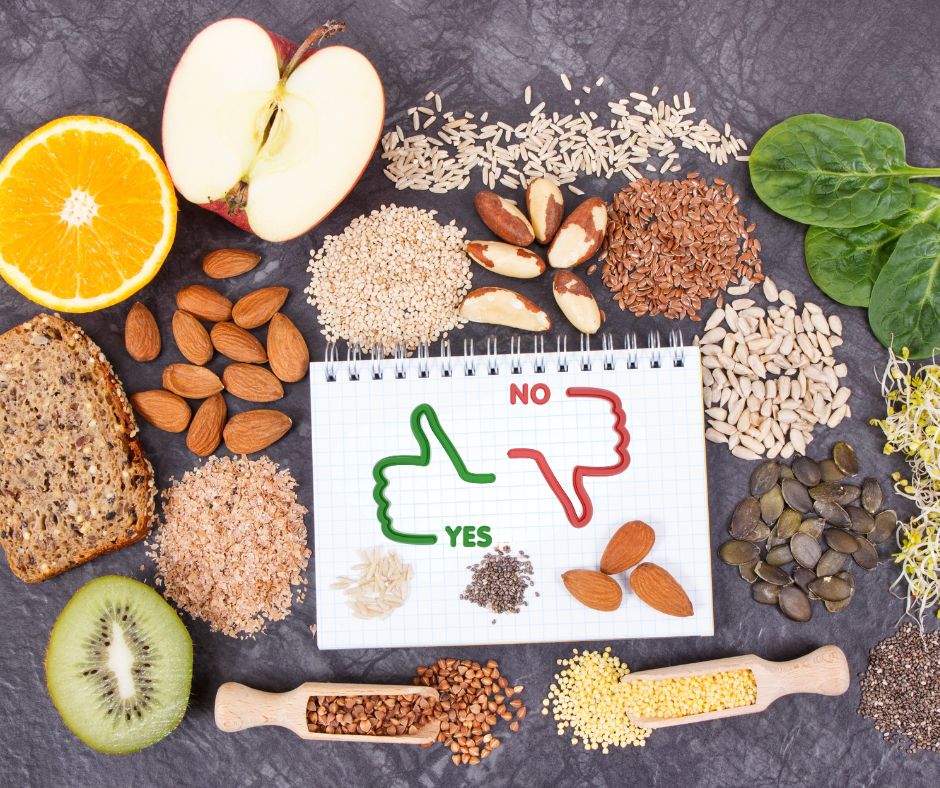
Here’s the part I love: food is medicine. The right foods actively rebuild your gut lining and re-train your immune system.
1. Fiber-Rich Rainbow Vegetables
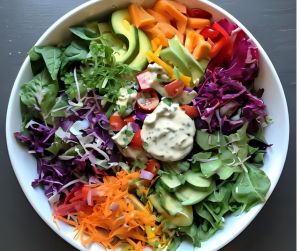
Every color feeds a different set of microbes. They ferment those fibers into SCFAs, which seal the gut and lower inflammation. Think: leafy greens, carrots, cabbage, radishes, beets, squash, onions, garlic, asparagus.
2. Fermented Food
Raw sauerkraut, raw kimchi, homemade coconut yogurt, kefir (dairy-free). Just a spoonful daily delivers probiotics and organic acids that rebalance gut bacteria. Start low and go slow. Maybe you can only tolerate a teaspoon today.
3. Omega-3s
Chia, flax, walnuts, and hemp seeds reduce inflammation and restore healthy cell membranes in the gut lining. Some of us have genetics that prevent us from converting these, so we have to take fish oil. It’s a good idea to get someone to check your genetics (I can help with that! Just ask).
4. Polyphenol-Rich Foods
Berries, pomegranates, green tea, turmeric, rosemary, oregano. These act like fertilizer for beneficial microbes and calm oxidative stress. Add in brightly colored foods and don’t forget colorful and fragrant herbs.
5. Mineral & Amino Acid Support
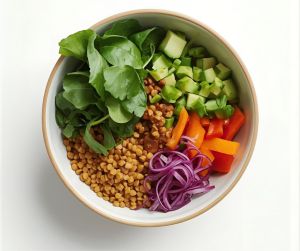
Zinc from pumpkin seeds, sesame, and lentils is critical for gut repair.
Glutamine is found in cabbage, parsley, spinach, and beans. It is important for intestinal cells and restoring barrier integrity. Use caution when supplementing with L-Glutamine! It can increase anxiety in some of us. I ALWAYS prefer food first.

Don’t Forget the Prebiotics
When we talk about gut healing, most people jump straight to probiotics. But probiotics can’t thrive without their food source. That’s where prebiotics come in.
Prebiotics are non-digestible fibers that your gut microbes ferment into short-chain fatty acids As mentioned earlier, these SCFAs (like butyrate) directly repair the gut lining, reduce inflammation, and promote immune tolerance. One of the most studied groups of prebiotics are fructooligosaccharides (FOS) and inulin.
FOS are chains of fructose molecules found naturally in many plants. They resist digestion in your stomach and small intestine but get broken down by your bacteria where you need them to do their work. This fermentation process strengthens the gut barrier and supports a balanced immune response.
Top food sources of prebiotics:
* Chicory root
* Jerusalem artichokes
* Onions
* Garlic
* Leeks
* Asparagus
* Bananas (green are best)
These foods don’t just feed one type of bacteria. They selectively encourage the growth of beneficial species like Bifidobacterium and Faecalibacterium, both of which are linked to lower inflammation and stronger gut integrity.
If you’ve been struggling with bloating or are sensitive to high-FODMAP foods, you may need to start slowly with prebiotics and build up as your gut heals. But for most people, adding even small amounts of these foods daily can make a noticeable difference.
Lifestyle That Helps the Gut Heal
Food is the foundation, but lifestyle can make or break gut repair.
- Sleep: Your gut lining regenerates overnight. Chronic sleep loss literally weakens tight junctions. You must get good quality sleep.
- Stress Management: High cortisol thins the gut barrier. Practices like meditation, qi gong, journaling, and breathwork calm the stress response.
- Movement: Exercise boosts microbial diversity and moves lymph. Walking after meals, yoga, and strength training all help.
- Sunlight & Nature: Vitamin D regulates immune tolerance. Fresh air and outdoor exposure balance circadian rhythms, which directly affect gut function.
- Play & Laughter: Yes, laughter. It shifts the nervous system into parasympathetic mode which is the only state in which your gut can truly heal. Join a Laughter Yoga group or watch a comedy or some funny videos.
Putting It Into Practice: A Gut-Repairing Day
Here’s an example of what a simple day could look like:
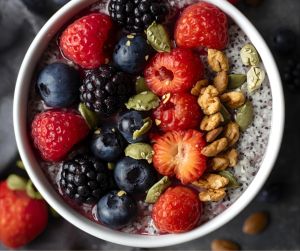
* Breakfast: Berry Chia Pudding with almond milk, walnuts, pumpkin seeds, and fresh berries.
* Lunch: Rainbow salad with mixed, spring greens, red cabbage, shredded carrots, bell peppers, lentils, and a tahini-lemon dressing. Top with a spoonful of sauerkraut.
* Snack: Green tea and cucumber slices with guacamole.
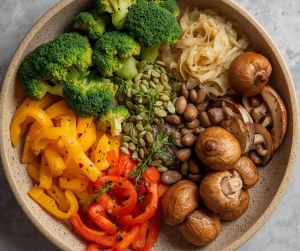
* Dinner: Roasted broccoli, cauliflower, and squash with garlic-cashew-hemp sauce and a side of quinoa or black beans.
* Evening: Tulsi tea and a few minutes of journaling to close the day in calm mode.
It doesn’t need to be complicated. Whole, colorful, fiber-rich foods plus the daily routine of rest, movement, and stress release can set your gut up to repair itself.
Let’s Do This Together!
If you’re living with Hashimoto’s, Graves’, or any autoimmune disease, healing your leaky gut is not negotiable. It’s the missing step too many people overlook while piling on supplements, antivirals, or the latest thyroid protocol.
Your gut is resilient. Every day you choose to keep out the gluten and dairy, pile up on veggies, eat raw fermented foods, and give your body rest, you’re rebuilding your gut lining and calming the storm inside your immune system.
Antibodies can come down. Energy can come back. And you can feel like yourself again.
If you’re ready to start cooking food that actually repairs your gut, lowers antibodies, and supports your thyroid, join me in the Culinary Healing Circle. It’s where I share recipes, food demos, and the science behind why this way of eating works, so you don’t just change your diet, you understand it.
Coming Up Next: In Part 3 of this series, we’ll dig into thyroid antibodies. What do they mean, why do they rise and fall, and how can you influence them with everyday choices in food and lifestyle. If you’ve ever wondered whether your antibodies are just “numbers on a lab test” or something you can actually shift, you won’t want to miss it.
References
1. Fasano A. Zonulin and its regulation of intestinal barrier function: The biological door to inflammation, autoimmunity, and cancer. *Physiol Rev.* 2011;91(1):151–175.
2. Mavrogeni ME, Asadpoor M, Henricks PAJ, Keshavarzian A, Folkerts G, Braber S. Direct Action of Non-Digestible Oligosaccharides against a Leaky Gut. *Nutrients.* 2022;14(21):4699. doi:10.3390/nu14214699
3. Honda K, Littman DR. The microbiome in infectious disease and inflammation. *Annu Rev Immunol.* 2012;30:759–795.
4. Gibson GR, Hutkins R, Sanders ME, et al. Expert consensus document: The International Scientific Association for Probiotics and Prebiotics (ISAPP) consensus statement on the definition and scope of prebiotics. *Nat Rev Gastroenterol Hepatol.* 2017;14(8):491–502.
5. Calder PC. Omega-3 fatty acids and inflammatory processes: From molecules to man. *Biochem Soc Trans.* 2017;45(5):1105–1115.
6. Brown EM, Sadarangani M, Finlay BB. The role of the immune system in governing host–microbe interactions in the intestine. *Nat Immunol.* 2013;14(7):660–667.
7. Lozupone CA, Stombaugh JI, Gordon JI, Jansson JK, Knight R. Diversity, stability, and resilience of the human gut microbiota. *Nature.* 2012;489(7415):220–230.

 Wholistic Jen
Leave a reply to Autoimmune Inflammation Explained: How to Calm Your Body’s Alarm System Naturally – Wholistic Jen Cancel reply