


By Jennifer Whitmire, MS, MEd, MH, CHES, NEP
Healthy eating should not feel this complicated.
Many of us feel completely overwhelmed every time we try to improve our diet. One expert says grains are inflammatory. Another expert says whole grains are essential for longevity. One person warns against fruit because of sugar, while someone else is drinking smoothies and juice all day long claiming it’s the answer to everything.
What about protein? If you spend any time online, you would think the average person is moments away from a catastrophic protein deficiency. Meanwhile, fiber, minerals, phytonutrients, digestion, and food quality are barely part of the conversation.
It’s no wonder people feel confused.
What concerns me most is not simply the conflicting information. It’s what this constant noise is doing to people’s relationship with food and with their own body. Many people no longer know how to eat without second-guessing themselves. They’ve stopped paying attention to how meals actually make them feel, because they’re too busy trying to follow rules.
The body, however, is always responding whether we are paying attention or not.
A “Healthy” Label Doesn’t Mean the Body Responds Well to It
One of the biggest misconceptions I see is the belief that food automatically becomes healthy because of the label on the package.
“Gluten-free.”
“Organic.”
“High-protein.”
“Keto.”
“Plant-based.”
“Low-carb.”
Those labels tell us very little about what’s actually inside the package or how the body will respond to the ingredients inside.
Many ultra-processed foods now wear health halos while still being made from isolated starches, concentrated sweeteners, industrial oils, gums, flavorings, and heavily refined ingredients. The front of the package sounds healthy, but metabolically the food may not behave much differently than the products they are trying to replace.
This is one reason so many people feel frustrated. They genuinely believe they are eating healthier, but they still feel:
- bloated
- exhausted
- inflamed
- hungry shortly after meals
- dependent on caffeine
- stuck in cycles of cravings
In many cases, the issue is not effort or lack of discipline. The issue is that modern nutrition conversations have become disconnected from physiology.
Blood Sugar Affects More Than Most People Realize
Most people associate blood sugar only with diabetes, but glucose regulation influences much more than that.
Every time we eat, the body has to determine:
- how quickly food is absorbed
- how much insulin is needed
- whether energy is stored or used
- how stable blood sugar remains afterward
Meals created mostly from refined carbohydrates or rapidly digested foods (rice flour, tapioca starch, soy isolates, arrowroot, potato starch, …) create a very different response than meals containing fiber, protein, healthy fats, and intact plant foods.
Many people are riding blood sugar spikes and crashes all day long without realizing it.
What they experience instead is:
- fatigue
- shakiness
- brain fog
- anxiety
- cravings
- irritability
- needing more caffeine or sugar to keep going
Those symptoms have become so normalized that people don’t connect them back to food structure at all.
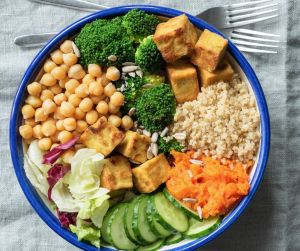
A breakfast planned around sweetened coffee and refined carbohydrates (boxed cereals) creates a completely different hormonal response than one made from slower-digesting foods containing fiber, minerals, and protein (green smoothie bowl with yogurtr). Those repeated daily patterns matter more than occasional meals.
This is one reason I focus so heavily on how meals are created rather than obsessing over single ingredients.
Why Ultra-Processed Foods Rarely Feel Satisfying
One thing I think people underestimate is how engineered modern food has become.
Ultra-processed foods are specifically designed to be hyper-palatable. They combine refined starches, sugars, fats, sodium, and flavor chemistry in ways that stimulate reward pathways while digesting extremely quickly.
The body receives a large amount of rapidly available energy without receiving much fiber, micronutrition, water content, or satiety signaling alongside it. That combination changes appetite regulation over time.
People often blame themselves for lacking willpower without realizing they are eating foods intentionally designed to override normal fullness mechanisms.
Even many products marketed as “health foods” function this way:
- protein bars
- flavored yogurts
- low-carb desserts
- meal replacement shakes
- plant-based convenience foods
- gluten-free snack foods
Many of these foods still rely heavily on refined ingredients and additives while lacking the structure whole foods naturally provide. The body notices that difference even when the marketing doesn’t mention it.

Whole Foods Behave Differently in the Body
This is one reason I continue coming back to meals made from relatively simple ingredients.
Vegetables, legumes, greens, herbs, seeds, intact grains, nuts, and mineral-rich foods still contain the structure the body recognizes.
- Fiber slows absorption.
- Water-rich foods affect fullness.
- Resistant starch feeds beneficial microbes.
- Polyphenols and phytochemicals influence inflammatory pathways and oxidative stress.
- Herbs and bitter compounds support digestion
These are not minor details physiologically, even if modern nutrition conversations rarely discuss them.
Meals made from whole foods tend to create a steadier internal environment over time than meals made from refined or ultra-processed ingredients.
That difference shows up in:
- energy
- digestion
- cravings
- inflammation
- satiety
- metabolic health
The body is constantly adapting to what we repeatedly give it.
Gut Health Makes Nutrition More Nuanced Than Social Media Allows
One of the reasons nutrition advice becomes so confusing is because two people can eat the exact same meal and have completely different responses.
Digestion is not just about the food itself.
Stomach acid, digestive enzymes, bile flow, microbial balance, stress levels, nervous system regulation, and intestinal integrity all influence how someone tolerates and absorbs food.
This is why rigid food ideologies usually fail in real life.
Some people tolerate large salads and raw vegetables, while others feel significantly better with more cooked foods for a period of time.
Some people must increase legumes gradually, because their microbiome is not accustomed to higher fiber intake. Others transition easily.
I think many people are searching for one universal “perfect diet” when physiology simply doesn’t work that way.
I Think Many People Are Undernourished And Overfed
This is another piece of the conversation I think gets overlooked.
Many people are eating enough calories while still lacking nutrients the body needs to regulate properly.
Magnesium, potassium, omega-3 fats, fiber, and plant diversity are frequently low in modern diets, even among people actively trying to eat healthy.
The body cannot maintain optimal function without the raw materials required for:
- neurotransmitter production
- hormone regulation
- detoxification pathways
- immune function
- cellular repair
- metabolic balance
This is one reason whole-food meals create such noticeable changes in how people feel. The body finally receives nutrients it has been missing for years.

What I Pay Attention to Now
Over the years, I have become much less interested in arguing about dietary camps and much more interested in helping people observe patterns.
I pay attention to questions like:
- Does energy feel stable after meals?
- Does digestion feel calm afterward?
- Are cravings improving or worsening?
- Is hunger becoming more predictable?
- Does the meal feel nourishing or depleting a few hours later?
Those questions reveal more than whether a food fits a trending dietary philosophy.
This is also why many of the recipes I share now are created around structure more than strict food rules. Meals like The Lasagna I Crave Now That I Understand What Food Does to the Body or The Foods I Crave When My Body Feels Inflamed are really about creating a different physiological response, not simply recreating comfort food. That distinction changes everything.
Healthy Eating Is Probably Simpler Than We’ve Been Led to Believe
I honestly think many people are exhausted from trying to eat perfectly all the time. Food has become so complicated and so moralized that people are constantly wondering whether they are doing something wrong every time they sit down to eat.
The body usually does not need perfection nearly as much as it needs consistency and nourishment. It responds well to meals created from real food, enough fiber, adequate protein, healthy fats, hydration, mineral-rich foods, and a level of stability that allows the nervous system and metabolism to regulate appropriately over time.
None of those things are particularly trendy, which is probably why they get overlooked so often online. They are also not extreme enough to generate fear or sell dramatic promises. Physiologically, however, those foundational patterns influence energy, blood sugar regulation, digestion, inflammation, immune function, and long-term metabolic health more than most people realize.
The closer people move back toward meals made from recognizable foods instead of highly engineered products, the more clearly they tend to notice the body responding in positive ways. I think many people are craving that simplicity again, even if they do not always realize it consciously.


Leave a Reply