

By Jennifer Whitmire, MS, MEd, MH, CHES, NEP
It is the middle of summer, and I find myself craving tomatoes, zucchini, eggplant, basil, and all of the other beautiful vegetables that seem to be overflowing from the garden and farmers markets this time of year. At the same time, life has been so busy.
When my schedule feels crazy, I don’t want, and don’t have the time, to spend an hour in the kitchen cooking or washing a sink full of dishes. I want dinner to be easy but still delicious.
As I looked through the vegetables I had on hand, I noticed zucchini, eggplant, tomatoes, and a sweet onion. My first thought was ratatouille. My second thought was that I did not have the time, or the energy, to stand over the stove making a traditional version.
How could I turn ratatouille into an easy sheet pan dinner?
I sliced the vegetables into thin rounds and arranged them upright in a baking dish, alternating the colors as I went. The dish was beautiful, before I had even turned on the oven.
Instead of just sprinkling on herbs, I whisked together one of my favorite Italian marinades with apple cider vinegar, fresh lemon juice, lots of minced garlic, Italian herbs, onion powder, sea salt, and freshly ground black pepper. After pouring it over the vegetables, I let everything rest for about an hour while I hopped on a zoom call.
That hour made all the difference.
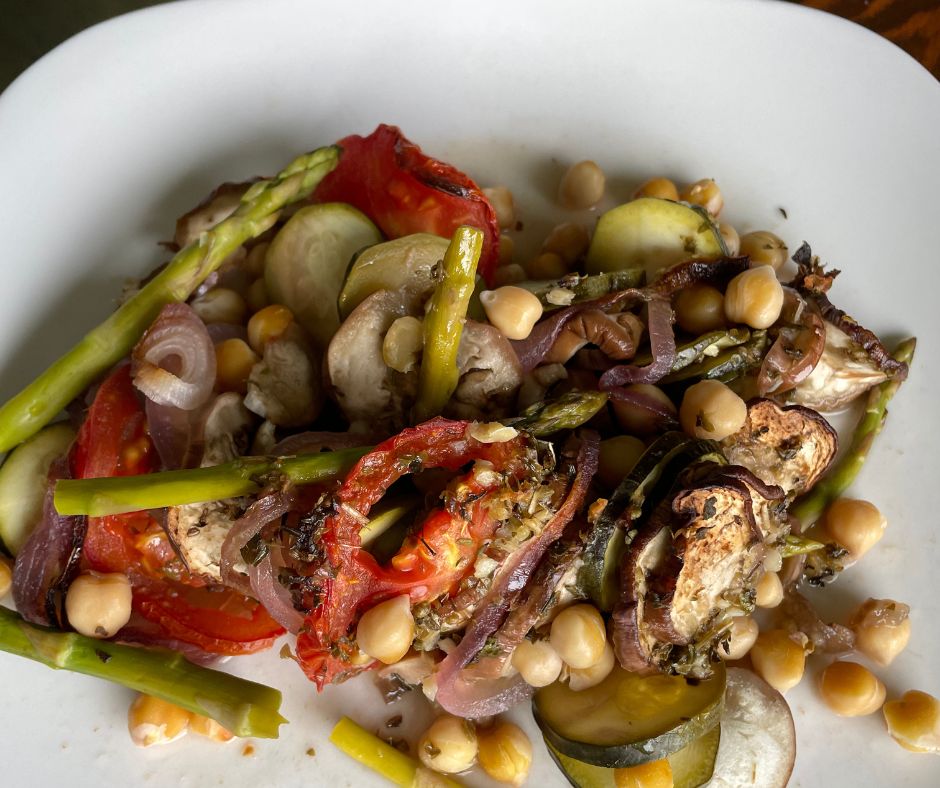
The vegetables absorbed all of those bright Italian flavors, and the garlic and herbs found their way into every layer of the dish. I threw it in the oven, then the tomatoes became rich and jammy, the eggplant was silky, the onions had turned sweet, and the zucchini was perfectly tender.
The vegetables alone; however, were not enough to make this a complete meal.
One of the principles I teach is that vegetables are the foundation of a healthy meal, but they are not the entire meal. A dinner created only around vegetables can leave us hungry again before the evening is over.
For that reason, I opened a can of chickpeas, rinsed and drained them well, trimmed a handful of fresh asparagus, and scattered both over the vegetables during the last few minutes of baking.
That addition transformed a beautiful vegetable dish into a complete meal.
The chickpeas added protein, resistant starch, and more fiber. The asparagus added another layer of color, texture, and phytonutrients. They turned what could have been a side dish into a dinner that was satisfying without being too heavy.
My favorite part of this recipe is that it is a great example of the way I cook almost every day.
I rarely use with a recipe.
I begin with what is in season and on hand. I look at what needs to be used and how I can combine those ingredients into a meal that is colorful and filling.
One of the reasons I enjoy cooking this way is that it naturally increases the variety of plants on my plate.
Different vegetables add different vitamins, minerals, and phytochemicals. They also feed different microbes in the gut. Every time I add another color, another herb, or another type of bean, I am giving my body something unique. That is one of the reasons I tell people to look at the entire meal.
Many people believe they need an entirely new recipe every night, but I have found that a simple framework works much better.

- Start with vegetables that are in season.
- Add a source rich in plant protein.
- Add flavor with herbs, spices, garlic, and a simple Italian marinade.
- Finish the meal with something fresh, bright, or creamy that brings everything together.
Once you understand that framework, dinner becomes much easier. The ingredients change throughout the year, but the process stays fairly consistent.
In the summer, this dish is perfect with zucchini, tomatoes, eggplant, basil, and asparagus.
A few months from now, I might replace those vegetables with Brussels sprouts, mushrooms, cauliflower, winter squash, or fennel. The meal will look different, but the principles will remain the same.
That flexibility is one of the reasons I rarely make the same thing twice. Nature provides incredible variety, and I enjoy letting the season determine what ends up on my table.
If you decide to make this recipe, don’t be afraid to make it your own. Add mushrooms if you have them. Substitute white beans for the chickpeas. Finish it with fresh basil or parsley. If you still have some Chimichurri in the refrigerator from last week’s recipe, don’t be afraid to drizzle a little over the top. I tried it, and it was delicious.
Healthy cooking should be enjoyable, not stressful.
I hope this recipe gives you another way to enjoy the abundance of summer while creating a meal that truly satisfies.

Ratatouille-Inspired Summer Vegetable Bake with Chickpeas & Asparagus
Serves 4–6
Ingredients
Vegetables
- 2 medium zucchini, sliced into ½-inch rounds
- 1 medium eggplant, sliced into ½-inch rounds
- 3–4 ripe tomatoes, sliced into ½-inch rounds
- 1 sweet onion, sliced into thick rounds
- 1 bunch asparagus, trimmed and cut into 2-inch pieces
- 1 (15-ounce) can chickpeas, rinsed and drained
Italian Herb Marinade
- ¼ cup apple cider vinegar
- Juice of 1 lemon
- 4–6 cloves garlic, finely minced
- 2 teaspoons Italian seasoning
- 1 teaspoon dried oregano
- 1 teaspoon dried basil
- ½ teaspoon onion powder
- Pinch of sea salt
- Freshly ground black pepper
- Optional: 1–2 tablespoons chopped fresh basil or parsley
Instructions
Preheat the oven to 400°F.
Arrange the zucchini, eggplant, tomatoes, and onion upright in a 9 × 13-inch baking dish, alternating the vegetables to create a colorful pattern.
In a small bowl or measuring cup, whisk together the apple cider vinegar, lemon juice, garlic, Italian seasoning, oregano, basil, onion powder, sea salt, and black pepper.
Pour the marinade evenly over the vegetables, gently separating the slices as needed so the marinade reaches throughout the dish.
Allow the vegetables to marinate for about one hour at room temperature. If your kitchen is especially warm, refrigerate the dish and remove it about 20 minutes before baking.
Bake for 40–45 minutes, or until the vegetables are becoming tender.
Scatter the chickpeas and asparagus over the vegetables, and return the dish to the oven for another 8–10 minutes, just until the asparagus is crisp-tender and the chickpeas are heated through.
Serve immediately, or top it with fresh basil or parsley.
Notes
This meal is wonderful on its own, but it is also delicious served over cauliflower rice or a bed of fresh greens.
Leftovers reheat well and may even taste better the next day as the flavors continue to develop.
Remember that you don’t have to follow my exact recipe. Once you understand the framework or guidelines, every season brings a chance to create something colorful and tasty.


Leave a Reply