
By Jennifer Whitmire, MS, MEd, CHES, NEP
We’ve talked about why broccoli is green and what happens when you chop, blend, or cook a tomato. Now, let’s move to one of the easiest colors to recognize in the produce department.
Orange.
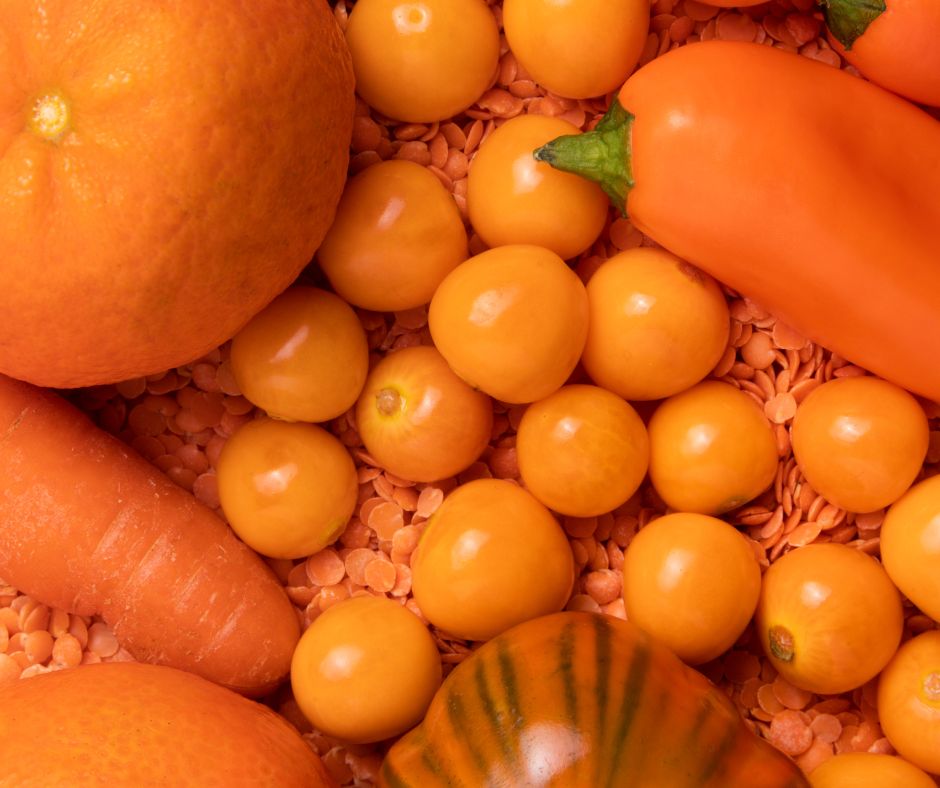
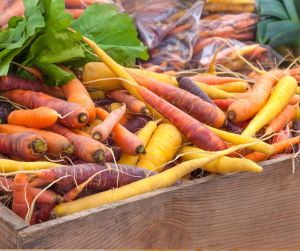
Carrots, pumpkin, sweet potatoes, winter squash, and orange bell peppers pop out in the store, before you get them into your cart.
Why is a carrot orange?
One of the reasons is carotenoids, particularly beta-carotene. You’ve probably heard of beta-carotene. You may even know that it has something to do with vitamin A.
That’s true, but there’s an important step in between. Beta-carotene isn’t vitamin A. Your body has to convert it, first.
First, What Are Carotenoids?
Carotenoids are a large family of pigments. They include many of the yellow, orange, and red colors we see in plants, and beta-carotene is one of them.
Lycopene, which we talked about when we looked at tomatoes, is also a carotenoid.
They’re both carotenoids, but they don’t behave exactly the same way in the body.
Beta-carotene can be converted into vitamin A, but lycopene cannot.
That’s why beta-carotene is called a provitamin A carotenoid. It’s a precursor your body can use to make vitamin A. Eating beta-carotene and eating preformed vitamin A are not the same thing.
From Carrot to Vitamin A
Here’s where biochemistry gets interesting.
After you eat beta-carotene and absorb it, an enzyme called BCMO1 can split the beta-carotene molecule to form retinal. From there, retinal can be converted into other forms of vitamin A that the body can use.
You don’t need to memorize the pathway, but I want you to see it:
Carrot → beta-carotene → BCMO1 → retinal → vitamin A activity
Why do we care?
Vitamin A is needed in vision, immune function, reproduction, cellular differentiation, and the maintenance of epithelial tissues, including tissues lining the respiratory and digestive tracts.
Suddenly, that carrot looks a little more interesting.
Eating Beta-Carotene Isn’t the Same as Using It
Here’s the part that gets lost when we look at a nutrient chart.
A carrot might contain a certain amount of beta-carotene, but that doesn’t mean every bit of beta-carotene in that carrot ends up becoming vitamin A in your body.
First, you have to release it from the food by chewing well.
Then, you have to absorb it by eating in a calm state and having the needed enzymes.
Then, your body has to convert it, and that depends on your BCMO1 status (many people with autoimmune disease have genetic variations in their BCMO1 gene).
Several things can influence those steps, including the food matrix, how the food is prepared, what you eat with it, digestive function, vitamin A status, and individual differences in metabolism.
What’s in the Food, What You Absorb, and What You Use Are Different Things
We’ve now seen this idea several times. With tomatoes, we talked about bioavailability and how processing can influence our access to lycopene.
Now, we’re adding another layer. A food can contain a compound, but your digestive system has to make that compound available for absorption. Your body may then have to convert it into something else, before it can perform a particular function.
What’s in your food, what you absorb, and what your body ultimately does with it are three different things.
Cooking the Carrot Changes Things, Too
Remember what we learned about tomatoes? Processing isn’t bad. The same lesson occurs here.
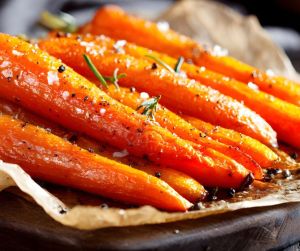
Carotenoids are inside the food matrix. Chopping, pureeing, and cooking can expose plant tissues and make some carotenoids more accessible for absorption.
A raw carrot is nutritious, but a cooked carrot, and a pureed carrot is also nutritious.
They’re not physically identical foods anymore, and that can influence what becomes available during digestion.
This is why I’m much more interested in asking what preparation does to a food than declaring that raw or cooked is always better.
Don’t Forget the Fat
There’s another similarity between beta-carotene and the lycopene we talked about last week. They’re fat-soluble.
Some dietary fat in the meal can help your body absorb carotenoids by assisting with their incorporation into the structures needed for intestinal absorption.
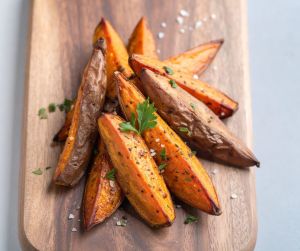
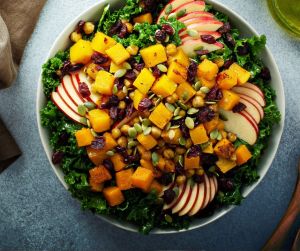
This doesn’t mean you need to pour oil over your carrots. Think about whole foods and the entire meal. Maybe your roasted carrots are served with pumpkin seeds, or your sweet potato is part of a meal containing avocado, or you’re eating your vegetables with a dressing made from seeds or nuts.
A little fat can serve a purpose, and more isn’t necessarily better.
Wait. What About Green Vegetables?
Beta-carotene isn’t limited to orange foods.
Dark leafy greens like spinach and kale contain large amounts of carotenoids, even though they don’t look orange.
Chlorophyll masks the color. Think about leaves in the fall.
During the growing season, chlorophyll is so visually dominant that we see green. As chlorophyll breaks down in the fall, some of the yellow and orange carotenoid pigments that were already there become visible.
The same idea helps explain why a dark green leaf can contain yellow and orange carotenoids that you can’t see.
I love this example, because color gives us clues about what is inside, but it doesn’t tell us everything.
Don’t Reduce Carrots to Beta-Carotene
After everything I just told you about beta-carotene, I’m going to ask you not to think of a carrot as a beta-carotene supplement.
A carrot is still a whole food that contains fiber, potassium, vitamin K, vitamin C, other carotenoids, polyphenols, and more.
A sweet potato is also orange, but is has a different nutritional profile.
Pumpkin and kale are also what we say at home “same but different.”
This is why I want you to eat a diet with a large variety, not just finding the food with the highest amount of one compound and eating it every day.
Optimal nutrition doesn’t work like that.
What Does This Look Like on Your Plate?
Fortunately, you don’t need to calculate beta-carotene conversion before dinner. (LOL! Can you imagine?) Just eat the carrots and winter squashes, roast some pumpkin or sweet potato, and eat your dark, leafy greens.
Use different cooking methods and include them in meals containing a healthy whole-food fat, but don’t get caught up in one nutrient.
Understanding biochemistry is supposed to help us understand why variety, prep method, and the whole meal are what is important.
The next time you pick up a carrot, take another look at that beautiful orange color. It’s giving you a clue about what’s inside.
References & Further Reading
- National Institutes of Health, Office of Dietary Supplements. Vitamin A and Carotenoids: Fact Sheet for Health Professionals. NIH Office of Dietary Supplements: Vitamin A and Carotenoids
- Haskell MJ. The challenge to reach nutritional adequacy for vitamin A: β-carotene bioavailability and conversion—evidence in humans. Am J Clin Nutr. 2012;96(5):1193S–1203S.
- Borel P, et al. Genetic variations involved in interindividual variability in carotenoid status. Mol Nutr Food Res.2012;56(2):228–240.
- Lemmens L, et al. Carotenoid bioaccessibility in fruit- and vegetable-based food products as affected by product (micro)structural characteristics and the presence of lipids: a review. Trends Food Sci Technol. 2014;38(2):125–135.


Leave a Reply