
The Science Inside Your Green Vegetables
By Jennifer Whitmire, MS, MEd, CHES
Last week, I told you that I don’t just want you to eat the rainbow. I want you to understand it. I thought we should start with green, which probably won’t surprise anyone who has followed me for very long. (And, green is my favorite color!)
I’m always telling you to eat your greens. Dark leafy greens, broccoli, cabbage, herbs, sprouts, and other green vegetables show up constantly in my recipes and recommendations. We all know we’re supposed to eat them, but I don’t think knowing that broccoli is “good for you” is enough.
Why is broccoli green? What’s actually in it? Kale is a cruciferous vegetable, so does kale have the same things as broccoli? What happens when you chop broccoli? Does cooking change any of those compounds?
Those are the kinds of questions I want us to explore as we learn to understand the rainbow.
Why Are Green Vegetables Green?
We’ll start with the obvious question. Why is broccoli green?
The answer is chlorophyll. Chlorophyll is the pigment plants use to capture light for photosynthesis, and it’s responsible for most of the green color we see in plants.
Herbalist Dr. John Christopher referred to chlorophyll as the “lifeblood of the plant.” I’ve always loved that description. It isn’t a scientific term, but it captures how important chlorophyll is to plant life. Chlorophyll absorbs light energy that helps photosynthesis, which allows plants to use that energy to produce the carbohydrates they need to grow.
There’s also an interesting structural similarity between chlorophyll and heme, a component of hemoglobin. Both contain a similar ring structure, though chlorophyll contains magnesium at its center while heme contains iron. That similarity is another reason chlorophyll has sometimes been described as the “blood” of plants. They are not the same molecule, and they perform very different jobs, but the structural resemblance is fascinating.
That magnesium at the center of chlorophyll brings up another common assumption. It sometimes gets translated into the idea that green vegetables are good sources of magnesium, because chlorophyll contains magnesium. There is some truth there, but it’s more complicated than that.
Many green vegetables do provide magnesium, but I don’t want you thinking about spinach as a delivery system for one nutrient. That spinach also contains fiber, folate, potassium, carotenoids, vitamin K, polyphenols, and many other compounds. Broccoli, kale, arugula, bok choy, and other green vegetables each have their own combination and amounts of nutrients and phytonutrients.
That’s something I want you to remember as we move through the different colors.
Not All Greens Are the Same
If you eat spinach every day, I’m not going to tell you to stop eating spinach. I would encourage you to eat some other greens, too, or rotate your greens. Spinach today, cabbage tomorrow, romaine the next day, etc….
Arugula, parsley, kale, broccoli, romaine, Brussels sprouts, and Swiss chard may all be green, but they aren’t nutritionally identical.
Dark leafy greens can contain folate, vitamin K, carotenoids, potassium, magnesium, polyphenols, and naturally occurring nitrates. The amounts and combinations depend on the variety, growing and harvesting conditions, storage, and more, which is one of the reasons I keep coming back to the importance of variety.
Those naturally occurring nitrates are important, because they give us another example of what can happen after we eat a food.
Nitrate from vegetables can participate in something called the nitrate-nitrite-nitric oxide pathway. Bacteria in your mouth help convert nitrate to nitrite, and through additional processes in the body, this leads to nitric oxide production. Nitric oxide is important in blood vessel function and blood pressure regulation.
Most of us would look at a handful of arugula and never imagine that our oral microbiome is important to what happens in our circulatory system.
There is a lot going on in that salad!
Broccoli Gets Even More Interesting
Broccoli gives us a completely different lesson, because it belongs to the cruciferous vegetable family. Kale, Brussels sprouts, cabbage, bok choy, cauliflower, arugula, radishes, and mustard greens are crucifers, too.
These vegetables contain compounds called glucosinolates.
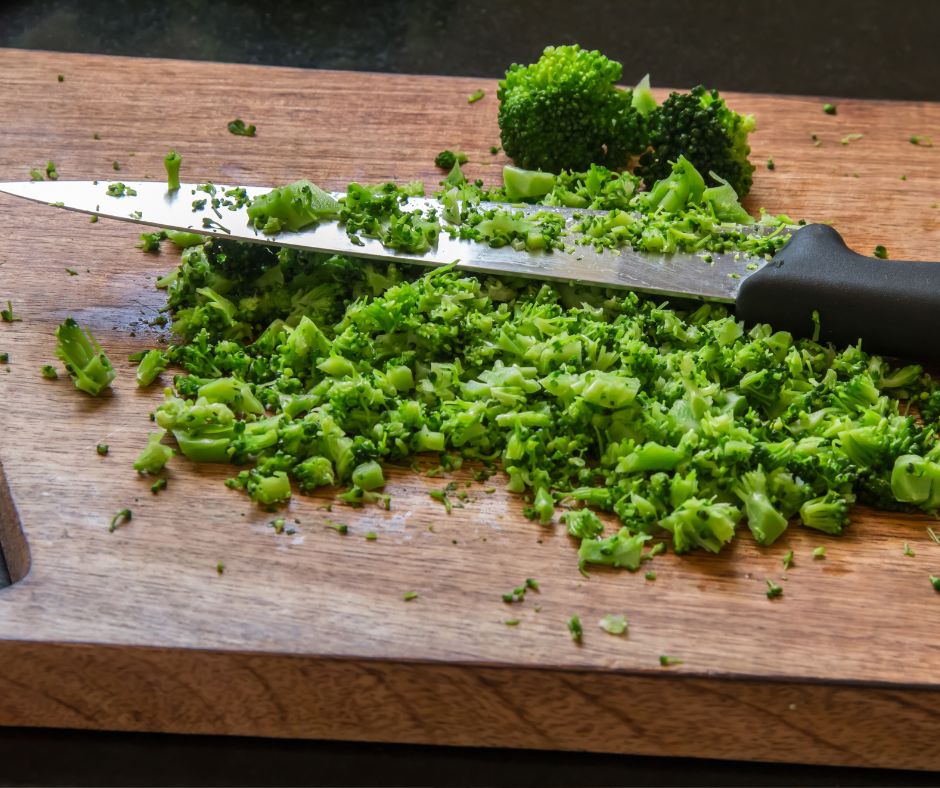
Inside intact broccoli tissue, glucosinolates and an enzyme called myrosinase are separated. When you chop, crush, or chew the broccoli, you damage the plant cells and allow the myrosinase to come into contact with the glucosinolates.
That interaction can produce several breakdown compounds, including isothiocyanates like sulforaphane, which is formed from the glucosinolate glucoraphanin. Broccoli contains glucoraphanin, and broccoli sprouts are especially well known for it.
Why do we care about that conversion? Sulforaphane has been studied for its ability to activate cellular defense pathways, including Nrf2, a transcription factor involved in regulating genes that help the body respond to oxidative stress. Research has also explored sulforaphane’s effects on inflammatory signaling, detoxification enzymes, and other cellular protective processes.
In other words, knowing that broccoli contains glucoraphanin isn’t enough. What happens to that glucoraphanin when we chop, chew, and cook the broccoli can influence how much sulforaphane is actually formed.
We’re talking about something we do in the kitchen without giving it a second thought. You put broccoli on the cutting board and chop it for dinner, and you’re changing the chemistry of the food.
What Happens When We Cook Broccoli?
This brings us to the next question. If myrosinase helps convert glucosinolates into compounds such as isothiocyanates, what happens when we cook the broccoli?
Myrosinase is sensitive to heat, though how much of the enzyme is inactivated depends on temperature, cooking time, and the vegetable. Cooking can also affect the glucosinolates. Boiling can result in some of them moving out of the vegetable and into the cooking water.
Please don’t read that and decide you have to eat all of your broccoli raw.
Raw and cooked vegetables both belong on our plates. Cooking changes food. Sometimes those changes decrease the availability of one compound while increasing the availability of another. Cooking also changes texture and flavor, and it may make certain vegetables easier for some people to digest and much tastier.
There is also more info on glucosinolates. Even if cooking has inactivated the plant’s myrosinase, bacteria in the gut can participate in glucosinolate metabolism. The conversion isn’t necessarily the same as when active plant myrosinase is present, but our microbiome gets involved here, too.
Are you starting to see why I can happily disappear down one of these biochemical rabbit holes?
A Kitchen Trick You Can Actually Use
One of my favorite things about learning this science is finding information we can actually use when we’re cooking.
Mustard seeds are also part of the cruciferous family, and mustard powder contains myrosinase. Research has shown that adding mustard seed powder to cooked broccoli can increase the conversion of glucoraphanin into sulforaphane compared with eating the cooked broccoli by itself.
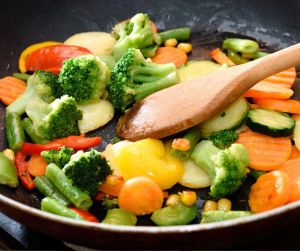
That gives us a super, simple trick. Steam your broccoli and add a little mustard powder after cooking.
You can also combine cooked cruciferous vegetables with raw crucifers such as arugula, radish, cabbage, or broccoli sprouts, which can add active myrosinase.
This is what I’ve been talking about when I say I want you to understand your food. Instead of remembering that broccoli is healthy, you begin to understand what’s in it, what happens when you prepare it, and how you can use that information in your own kitchen.
Please Don’t Start Timing Your Broccoli With a Stopwatch
I know what happens when we start talking about food this way. Someone is going to wonder exactly how many minutes broccoli should be steamed, whether it needs to sit after chopping, how much mustard powder to add, and whether they’ve been cooking broccoli wrong for the last 20-40 years.
You don’t need to turn dinner into a science experiment.
Food chemistry is complicated. Different studies use different varieties of broccoli, temperatures, cooking methods, preparation methods, and measurements. Even the glucosinolate content of the broccoli can vary depending on growing conditions, storage, and the part of the plant you’re eating.
I would prefer for you to use this information to add possibilities.
Eat some crucifers raw and some cooked. Chop them, and chew them well. Put broccoli sprouts on your salad. Throw some arugula into a bowl. Steam your broccoli and try a little mustard powder on it.
Just keep eating your vegetables! We’re trying to understand our food, not make eating more complicated.
There Is a Whole World of Green Beyond Broccoli
Broccoli is a fun example, because its chemistry gives us so much to talk about, but I don’t want broccoli to become the only green vegetable in your refrigerator.
Think about how many different green foods are available to us:
Kale
Collards
Spinach
Swiss chard
Romaine
Arugula
Bok choy
Broccoli
Brussels sprouts
Green cabbage
Artichokes
Asparagus
Celery
Cucumber
Zucchini
Parsley
Kohlrabi
Cilantro
Basil
Dill
Mint
Sprouts
Microgreens
Oregano
If you usually buy spinach, pick up some arugula. If broccoli is always your crucifer, try bok choy or Brussels sprouts. If parsley is something you use as a garnish, try using a handful of it instead like in my Garden Herb Chimichurri with Avocado.
You don’t need to know the biochemical pathway for every compound in every vegetable, before you eat it. I happen to enjoy learning that part, and I’m going to share some of it with you, because understanding the science can change the way we look at our food.
Keep it simple. Eating a variety of plants gives us a wider range of nutrients, phytonutrients, fibers, and other plant compounds than we would get from eating the same few foods over and over.
Take Another Look in Your Produce Drawer
The next time you pull broccoli out of the refrigerator, take another look at it.
That green color is coming from chlorophyll. The broccoli also contains vitamins, minerals, fiber, carotenoids, glucosinolates, and many other compounds. When you chop it, myrosinase comes into contact with glucosinolates and begins changing some of that chemistry. When you cook it, things change again. Your oral and gut microbes eventually become part of the process, too.
All of that is happening in a vegetable we’ve probably eaten hundreds of times without thinking much about it. Once you know a little more about what’s inside your food, there’s one more question to ask, and you already know it’s my favorite,
How can I make this taste really good?
That’s where we’re headed Friday.
References & Further Reading
Barba FJ, Nikmaram N, Roohinejad S, et al. Bioavailability of Glucosinolates and Their Breakdown Products: Impact of Processing. Frontiers in Nutrition. 2016;3:24. Read the study
Oliviero T, Verkerk R, Dekker M. Isothiocyanates from Brassica Vegetables: Effects of Processing, Cooking, Mastication, and Digestion. Molecular Nutrition & Food Research. 2018;62(18):e1701069. Read the study
Minich DM. A Review of the Science of Colorful, Plant-Based Food and Practical Strategies for “Eating the Rainbow.” Journal of Nutrition and Metabolism. 2019;2019:2125070. Read the review


Leave a Reply