
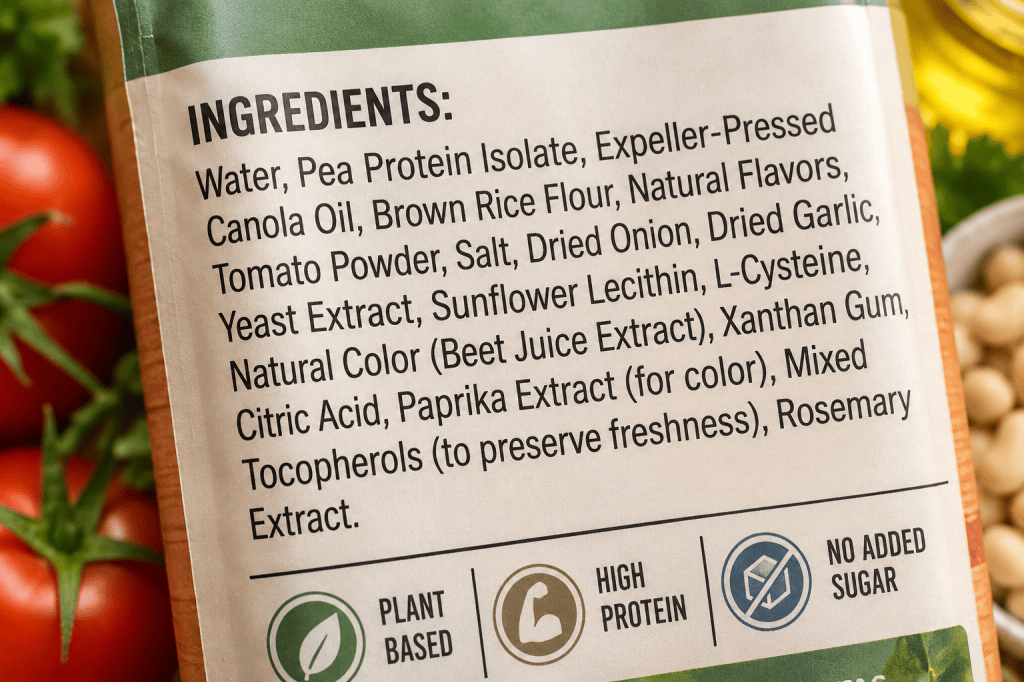
Why the Front of the Package Doesn’t Tell You What You’re Eating
By Jennifer Whitmire, MS, MEd, CHES
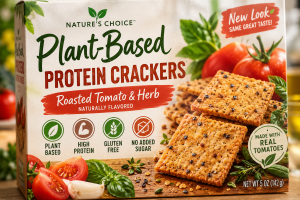
Walk down any grocery store aisle, and you’ll find packages with these key words aiming to grab your attention.
- All Natural.
- Plant-Based.
- High Protein.
- No Added Sugar.
- Made With Whole Grains.
The packaging is beautiful, the colors are inviting, there may even be pics of beautiful farms. The claims sound reassuring, and you probably even recognize the ingredients pictured on the front.
It’s easy to see why someone would put that product in their cart.
The front of a food package is designed to get your attention. The ingredient list is where you can see what you’re actually buying.
That’s why my number one rule is:
Read the Ingredients.
This is not to be confused with the Nutrition Facts label. That is a whole other thing that we’ll discuss later. I don’t think every unfamiliar ingredient is dangerous or every packaged food is unhealthy. I just want all of us to understand what we’re eating, so we can make decisions based on real information instead of marketing.
Once you learn how to read an ingredient list, grocery shopping starts to feel a lot less confusing.
I shared a reel recently about a popular yogurt, and I why I don’t consider it a “Functional Food,” and I cannot believe the feedback! Check it out here.
The Front of the Package Is Marketing
Food manufacturers know that consumers are interested in healthier choices. They also know which words catch our attention.
Think about a breakfast cereal labeled Made With Whole Grains. That statement can be completely accurate. The cereal may contain whole grains; however, it could also contain refined grains, added sugars, flavorings, and other ingredients that could be quite shocking.
What about a protein bar labeled Plant-Based? The protein might come from peas or soybeans, but that doesn’t tell you whether the bar contains whole foods, isolated proteins, added sweeteners, or a combination of ingredients. This is one reason I encourage people to look beyond individual nutrients and understand what whole foods actually provide.
Plant-based describes where certain ingredients originated from, but it doesn’t tell us anything about the nutritional quality of the finished product.
The same principle applies to products labeled natural, organic, gluten-free, or high protein. These descriptions can provide useful information, but none of those terms replaces examining the ingredients. Yes, buy organic when possible, but still read all of the ingredients.

Natural? You Might Be Surprised!
When you see natural flavors or natural colors on a food label, what comes to mind? Vanilla beans, berries, colorful vegetables….
Those are possibilities, but nature provides some ingredients you might never imagine finding in your food!
For example, did you know that some red food coloring comes from insects? Carmine, a pigment derived from cochineal insects, has been used to give certain foods their vibrant red color. You might expect that beautiful red to come from strawberries or beets, but that’s not necessarily the case.
What about the shiny coating on certain candies? That glossy finish may come from shellac, a substance produced by tiny insects called lac bugs.
L-cysteine is an amino acid that is sometimes added to commercial bread dough to relax the gluten, making the dough softer and easier to stretch and shape. Depending on how it’s manufactured, L-cysteine may come from fermentation or animal-derived materials, including feathers.
Castoreum is a substance produced by beavers. It can be used in vanilla, raspberry, or strawberry flavoring.
All of these ingredients have natural origins, yet they’re probably not what most people want to eat or picture when they read natural flavoring.
Are they harmful? Not necessarily. They don’t tell us whether they’re safe, nutritious, or appropriate for our individual needs.
When a package says natural, how much have you really learned about what’s inside?
Natural flavorings may be derived from plants, animals, or fermentation, and their specific sources aren’t always identified on the ingredient list.
My point isn’t to make you suspicious of everything in the grocery store. I want to encourage you to become curious about what you’re actually eating.
That’s why my number one rule will always be
Read the Ingredients.
Every package is not trying to deceive you, but marketing claims only give us a suggestion. We have to flip to the ingredients to find out more.
But, now you know why I avoid products labeled with natural flavoring or natural coloring.
Start With the Ingredient List
Ingredients are generally listed in descending order by weight.
That means the ingredient present in the greatest amount by weight is listed first, followed by the next greatest, and so on.
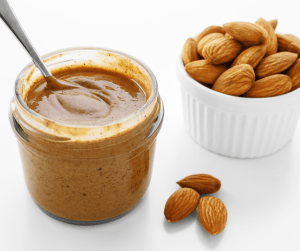
Let’s look at two jars of almond butter.
Jar A
Ingredients: Almonds.
Jar B
Jar B
Ingredients: Almonds, sugar, palm oil, salt.
Both of these jars contain almonds, and both are sold as almond butter, but they’re not the same product.
The first is just ground almonds. The second includes additional ingredients that affect its flavor, texture, and nutritional composition.
Does that mean Jar B is terrible? No.
It means you now have information that helps you decide which product better fits your needs. That’s the whole point of reading ingredients.
You don’t need to memorize hundreds of food additives. Start by identifying the main ingredients and asking whether they are the foods you intended to buy.
You may also see an ingredient list that has cane sugar as the second ingredient, then maple syrup as the 5 ingredient, and then some sort of juice as the 7th ingredient. Whatever the product is, it is HIGH in sugar. Many manufacturers will use multiple types of sweeteners, so sugar isn’t the #1 ingredient, and juices are included in the added sugar on the nutrition facts label.
When Healthy-Sounding Foods Aren’t Quite What They Seem
Let’s look at a few examples.
1. Whole-Grain Bread
You pick up a loaf labeled Multigrain. It looks and sounds nutritious, but multigrain just means the product contains more than one type of grain. It doesn’t even mean those grains are whole.
A bread can contain several different grains and still be made primarily with refined flour, sugar, and oils.
If you’re looking for whole-grain bread, check the ingredient list for whole wheat flour, whole rye, whole oats, etc. It needs the word “whole” before each grain.
For someone who needs to avoid gluten, the same principle applies to gluten-free breads. Gluten-free tells you something about the gluten content, but it doesn’t mean the bread is rich in fiber or minimally processed. As a matter of fact, it is probably very high in refined flours.
The front label tells you what the manufacturer wants to highlight. It is meant to grab your attention. The ingredients list helps you evaluate the product for you and your health.
2. The Plant-Based Burger
You know I’m a strong advocate for eating more plants, but there’s a difference between eating plants and eating products manufactured from plant-derived ingredients.
A homemade burger made with lentils, mushrooms, walnuts, carrots, and zucchini is not the same as a commercial burger made with isolated proteins, refined oils, starches, and flavorings.
Both can be legally labeled plant-based, but nutritionally, I would not choose the second one.
One has more intact fiber, vitamins, minerals, and antioxidants. The other may be convenient and have the “right” texture, or a higher concentration of protein, but does it have real whole foods?
Instead of deciding that one is always good and the other is always bad, look at the ingredients and consider the role the food plays in your daily meal plan. If you are out dining with friends and this is the only thing on the menu you can find that you can eat, and it’s only once or twice a year, that is totally different than buying it week after week.
3. The No-Added-Sugar Snack
This one can be confusing!
A package that says No Added Sugar may still contain naturally occurring sugars from ingredients such as fruit or milk. It may also contain non-sugar sweeteners, depending on the product.
A snack sweetened with date paste or concentrated fruit ingredients may sound more nutritious than one containing ordinary sugar. Sometimes it is a useful alternative, and sometimes it’s just another way of making a very sweet product.
The ingredient list helps you identify the sweetening ingredients, while the Nutrition Facts panel provides additional information about total sugars and added sugars.
These two parts of the label work together.
Don’t stop at the claim about added sugars. Find out what makes the food sweet.
What About Ingredients You Can’t Pronounce?
You’ve probably heard that you should never eat something if you can’t pronounce its ingredients or if you don’t know what it is.
I understand why that advice became popular. It’s memorable, and it encourages people to pay attention, but there are a lot of words that I can’t pronounce that aren’t bad.
This also isn’t a scientifically reliable way to evaluate food.
Ascorbic acid is vitamin C, tocopherols are forms of vitamin E, lecithin is a substance found in foods like soybeans and sunflower seeds and is also used as an emulsifier. Some people even take lecithin as a supplement for liver or brain health.
A long or unfamiliar chemical name also doesn’t mean an ingredient is harmful. Likewise, a familiar name doesn’t mean an ingredient is beneficial.
Sugar is easy to pronounce, and so is salt. LOL!
The ingredient’s identity, amount, purpose, and how it adds to the overall food is what we need to know.
This is where nutrition literacy becomes important. Instead of avoiding unfamiliar words, do a quick google search to help you decide if you want it or not. Learn to recognize what ingredients do.
Some ingredients extend shelf-life, some improve texture, some add sweetness or flavor, and others add nutrients or help ingredients stay mixed together.
You can still choose to prioritize foods with simple ingredient lists without assuming that every additive is dangerous.
Why the Nutrition Facts Panel Doesn’t Tell Us Enough
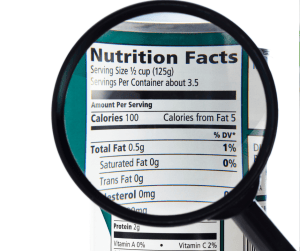
The Nutrition Facts panel is useful. It tells us about calories, serving sizes, protein, carbohydrates, fiber, sodium, and other nutrients (a few key vitamins and minerals), but those numbers don’t tell us everything about the food.
1st, always check the serving size! Some drinks have 2 or even 2 1/2 servings per bottle, and once I saw cookies labeled with 1/2 a cookie as a serving size!
We can have two snacks with the same calorie counts but one can be healthful and the other inflammatory. One is a handful of walnuts. The other is a commercial snack made from refined starches, oils, and flavorings.
They both contain the same amounts of energy, but their food structures, fiber content, fatty acid profiles, and other constituents are very different.
Our bodies don’t just respond to the calories printed on a package.
Food structure, nutrient composition, digestion, and the overall diet make a difference. I’ve explored this in more detail in Food Is More Than Fuel: Every Bite Sends a Message, where I explain why meals with similar calories can produce different physiological responses.
That’s one of the central ideas behind Cooking in Color: Food is more than a collection of numbers.
We need to understand what we’re eating, not just count what’s in it.
Does a Longer Ingredient List Mean a Food Is Unhealthy?
Not necessarily. Think about a jar of vegetable soup containing tomatoes, carrots, celery, onions, garlic, beans, herbs, and spices.
That could be considered a lot of ingredients, but they are all familiar, whole foods.
Now, what if we have a product with only three ingredients: refined flour, sugar, and oil?
A shorter list doesn’t make it a better nutritional choice. The quality and purpose of the ingredients matter more than the number of items listed. This is also why we need to be careful about oversimplifying the conversation around processed foods.
Washing, chopping, freezing, fermenting, and cooking are all forms of food processing. Frozen vegetables, canned beans, plain tofu, and unsweetened plant yogurt can be convenient, nutritious choices even though they are technically processed.
I explored this further in What Happens to a Tomato When You Chop, Blend, or Cook It?, including how processing can sometimes make beneficial plant compounds more accessible.
Has the processing preserved or improved the food’s nutritional value? Or, has the finished product been substantially reformulated with ingredients that change its nutritional characteristics? Can you tell from the finished product, what it was derived from?
You don’t have to prepare everything from scratch to eat well.
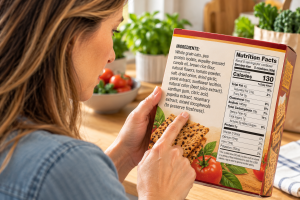
My Grocery Store Rule
Before putting a box, can, or bag into your cart, turn it around.
Read the ingredient list first.
If it passes the ingredient test, look at the Nutrition Facts panel if you need more information about fiber, protein, added sugars, sodium, or other nutrients.
Ask yourself:
- What’s actually in this food? Identify the main ingredients and don’t even bother reading the front-of-package claims.
- What has been added? Notice any sweeteners, oils, sodium-containing ingredients, flavorings, and other additions.
- Does this food help me accomplish what I want? Consider nutrition, convenience, enjoyment, dietary needs, and how often you’ll eat it.
This doesn’t need to become complicated, and you don’t have to stand in the grocery aisle researching every ingredient on your phone.
Over time, you’ll recognize products you enjoy and trust, and you’ll learn which ingredients matter most to you, and shopping will become easier. As I discussed in Why Knowing What to Do Isn’t the Hard Part, lasting habits become easier when we simplify everyday decisions instead of relying on willpower.
But, you still have to check the list every single time! Sometimes the ingredients change without anything else on the package changing to give you a clue. Do to the cost of ingredients or companies being bought out, they may change the formula without changing the packaging.
From Ingredients to the Kitchen
Reading ingredients is only the beginning. Once you understand what’s in a product, you can decide whether to buy it, choose a different version, or make something yourself.
Instead of buying a bottled salad dressing with ingredients you don’t particularly want, you can blend white beans or cashews with lemon juice, mustard, garlic, and herbs into a creamy dressing.
I shared more about why I started making my own dressings in The Salad Dressing That Gets Me to Eat More Vegetables with one of my favorite bean-based dressing recipes.
Instead of buying a heavily sweetened breakfast cereal, you can make a bowl of oats with berries, walnuts, cinnamon, and ground flaxseed or your own granola.
Instead of choosing a vegetable dip because the label says Healthy, you might make a homemade hummus or bean-based dip.
You have choices.
Sometimes the packaged version is exactly what you need, and other times, a homemade alternative is simpler, more economical, or better suited to your needs and preferences.
The more comfortable you become with real ingredients, the easier it becomes to create meals you enjoy.
Confidence Begins With Curiosity
I don’t want you to feel guilty about what’s in your pantry. You don’t know until you know!
Be curious! Pick up something you buy regularly and turn it around. Read the ingredients.
Do you recognize the primary foods? Are there additions you didn’t expect? Is there another version you’d like to try?
You don’t have to change everything today.
- Start with one product in your pantry or fridge.
- Learn something about it.
- Make one informed decision.
When you understand what’s in your food, you’re no longer relying entirely on the promises printed on the package.
You’re get to choose for yourself.
My number one rule is Read the Ingredients. My number two rule is Eat the Rainbow.
The first helps you understand what you’re buying, and the second helps you add more variety and beneficial plant foods to your meals.
You don’t need a diet. These rules move us toward a true, sustainable lifestyle. By just following these rules, we are creating the confidence to fuel ourselves and the people we love with real nutritious meals.
When those ingredients reach your kitchen, there’s one more question I always want you to ask,
How can I make this taste really good? If it doesn’t taste good, you’ll probably never eat it again.
References and Further Reading
- 1. U.S. Food and Drug Administration. How to Understand and Use the Nutrition Facts Label.
- 2. U.S. Food and Drug Administration. Food Labeling: Ingredient Lists.
- 3. U.S. Food and Drug Administration. Use of the Term Natural on Food Labeling.
- 4. Monteiro CA, Cannon G, Levy RB, et al. Ultra-processed foods: What they are and how to identify them. Public Health Nutrition. 2019;22(5):936–941.
- 5. Hall KD, Ayuketah A, Brychta R, et al. Ultra-Processed Diets Cause Excess Calorie Intake and Weight Gain: An Inpatient Randomized Controlled Trial of Ad Libitum Food Intake. Cell Metabolism. 2019;30(1):67–77.e3.


Leave a Reply