
What Lycopene Can Teach Us About Color, Cooking, and Bioavailability
By Jennifer Whitmire, MS, MEd, CHES, NEP
We’ve been talking about eating the rainbow and understanding the WHY we eat the rainbow.
Last week, we looked at green foods and what happens when you chop broccoli. We saw that chopping, chewing, cooking, and even what you put on the broccoli can influence what happens to some of the compounds inside.
This week, let’s look at red.
Let’s start with tomatoes, because they give us a great example of why the idea that raw food is always more nutritious than cooked food is too simple.
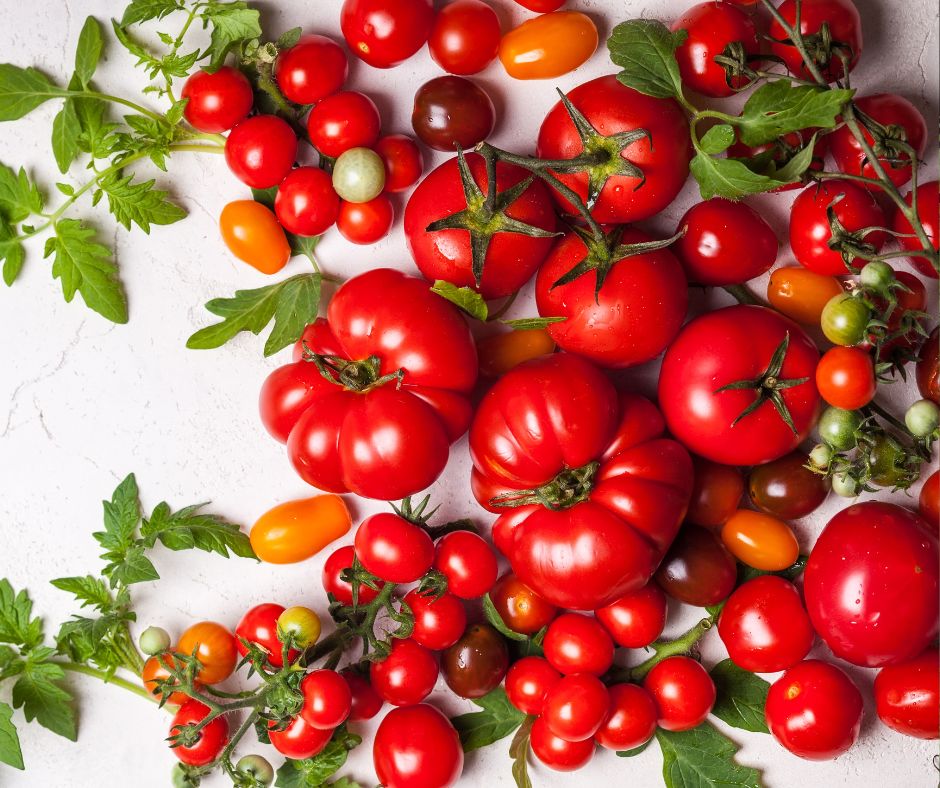
Why Is a Tomato Red?
One of the compounds responsible for the red color of a ripe tomato is lycopene, and lycopene belongs to a family of plant pigments called carotenoids. If you’ve heard that word before, you may immediately think of beta-carotene and carrots. They’re related, but they’re not the same.
Beta-carotene is a pro-vitamin A carotenoid, which means our bodies can convert it into vitamin A. Lycopene cannot be converted into vitamin A.
It also is not a polyphenol (another word we use when talking about colorful foods). We’ve been talking more about polyphenols lately, and this is a good place to start sorting out some of these terms.
Polyphenols are a large family of plant compounds. Carotenoids are a different family. Anthocyanins, the pigments associated with many red, blue, and purple foods, are polyphenols. Lycopene and beta-carotene are carotenoids.
This is why I keep saying that color gives us a hint of what is inside, but it is only part.
Two red foods can be red for very different biochemical reasons.
Why Should We Care About Lycopene?
Lycopene has antioxidant activity, but I don’t want to call it an antioxidant.
We used to talk about antioxidants as though they were tiny firefighters running around the body removing free radicals. Biology is more complicated than that.
Researchers continue to study lycopene in relation to oxidative stress, inflammatory processes, cardiovascular health, and prostate health. The evidence doesn’t mean that eating a tomato prevents a particular disease, and tomatoes contain more than lycopene. It does give us an example of how compounds in whole foods can interact with human biology in ways that go beyond calories, protein, carbohydrates, and fat.
There’s another part of lycopene that I find even more interesting.
Having a nutrient or phytonutrient in a food doesn’t necessarily mean our bodies can easily access it.
What’s in the Food Isn’t Necessarily What You Absorb
We need to discuss bioavailability.
In simple terms, bioavailability describes how much of a compound becomes available for our bodies to absorb and use. Lycopene is tucked inside the physical structure of the tomato. Before we can absorb it, it has to be released from that food matrix.
This is where your kitchen comes in.
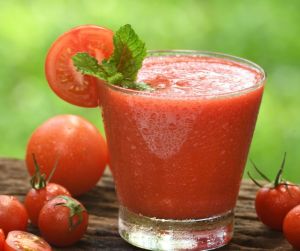
Chopping, crushing, pureeing, and heating tomatoes can disrupt their cellular structure and help release lycopene from the food matrix. Research has consistently found greater lycopene bioavailability from many processed tomato products than from raw tomatoes.
Before the word “processed” makes you nervous, let’s clear something up. Processing isn’t a bad thing. When you chop a tomato, you’ve processed it. When you blend berries, cook beans, freeze vegetables, ferment cabbage, or turn tomatoes into a tomato sauce, you’ve processed food. Humans have been processing foods in our kitchens for a very long time. These methods can change texture, improve digestibility, preserve food, make some compounds more accessible, and make food taste different.
That’s not the same as creating a highly or ultra-processed food made with refined ingredients, additives, flavors, colors, emulsifiers, or other ingredients you probably wouldn’t use to make the food in your own kitchen. We need to look at what was done to it, what was added or removed, and what the final food actually is.
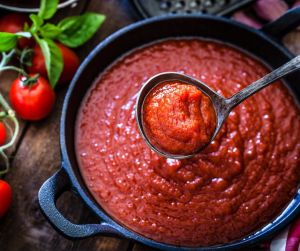
Think about what you’re doing when you make tomato sauce. You chop the tomatoes, maybe you crush or puree them, then you heat them. You’re changing the food matrix. That isn’t necessarily a bad thing.
Wait. Doesn’t Cooking Destroy Nutrients?
Sometimes it does.
Heat can reduce certain heat-sensitive nutrients and plant compounds. Some water-soluble compounds can move into cooking water. Prolonged exposure to heat, light, and oxygen can also degrade certain compounds.
At the same time, cooking can make other compounds more accessible.
Lycopene is an example.
Lycopene can exist in different shapes. Fresh tomatoes contain mostly what scientists call the all-trans form. Cooking and processing can change some of that lycopene into cis forms, which can be easier for our bodies to absorb. You don’t need to remember those names. The important part is that changing the structure of the food can change how available its compounds are to us.
This is why I don’t like blanket rules like, “Raw is always better,” or “Cooking destroys nutrients.” We need a mix of raw and cooked foods.
I think it is more important to know what happens to this food and its compounds when I prepare it this way?
Don’t Forget the Fat
There’s one more important thing to know about lycopene. Lycopene is fat-soluble.
Our digestive system handles fat-soluble compounds differently from water-soluble ones. Having some dietary fat in the meal can help with the absorption of lycopene and other carotenoids. Human studies and reviews have found greater lycopene absorption when tomato foods are consumed with dietary fat.
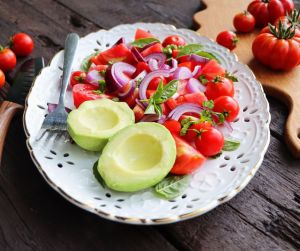
You don’t need to drown your tomato sauce in oil. You could have tomatoes with avocado or put walnuts or seeds on your salad. (I like to make a Lentil Bolognese with some chopped walnuts.) Look over your whole meal and see if there is a healthy fat somewhere already in the meal, the dressing, the toppings, etc.
Once again, the tomato isn’t being eaten alone.
Raw Tomatoes Can Be Healthy, Too
Don’t read this and stop eating fresh tomatoes. I love fresh tomatoes. A ripe, summer tomato straight from the garden tastes really good!
Raw tomatoes are rich in vitamin C, potassium, folate, fiber, carotenoids, polyphenols, and many other compounds, and as suspected, cooking changes that mixture. Some compounds may decrease (vitamin C), while the accessibility of others can increase.
There is no answer to which is healthier, raw tomatoes or cooked tomatoes?
Eat both!
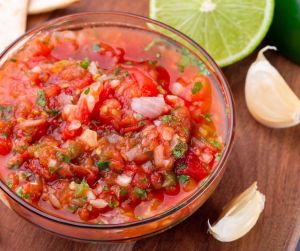
Have fresh tomatoes in a salad or in salsa and cooked tomatoes in a soup or ratatouille.
Different preparation methods give us different experiences, tastes, and nutrients with the same food.
We want diversity, and this is another way to increase that diversity.
This Is Bigger Than Tomatoes
The tomato is just our example. What I want you to take away from this is that nutrition doesn’t stop at the grocery store.
We can know exactly which nutrients and phytonutrients a food contains, but we need to consider what happens next.
Are we going to chop it, blend it, soak it, sprout it, ferment it, cook it, and/or combine it with other foods?
I could open a whole other can of worms here. How well does your digestion function and how are you going to consume it? Are you eating in front of the TV or computer, while driving, during a heated discussion, or in a calm relaxed state where you are chewing slowly. We need to digest it, absorb it, metabolize it, and interact with it through our gut microbes.
The kitchen and eating experience is where a lot of nutrition becomes practical.
This Friday, we’re going to put some of this kitchen science into practice with a Roasted Red Pepper, Tomato, & Walnut Dip. We’ll use tomatoes and red pepper with a whole-food source of fat, and serve it with plenty of colorful vegetables.
Understanding the science means you can use what you know to make choices that work for you, because I want you to know what to do with the tomatoes.
As always, I want you to ask, “How can I make this taste really good?”
References
- Shi J, Le Maguer M. Lycopene in tomatoes: chemical and physical properties affected by food processing. Crit Rev Food Sci Nutr. 2000;40(1):1-42. PubMed
- Moran NE, et al. Lycopene: A Critical Review of Digestion, Absorption, Metabolism, and Excretion. Antioxidants (Basel). 2021;10(3):342. PubMed
- Burton-Freeman BM, Sesso HD. Whole food versus supplement: comparing the clinical evidence of tomato intake and lycopene supplementation on cardiovascular risk factors. Adv Nutr. 2014;5(5):457-485. PMC
- Martínez-Huélamo M, et al. Bioavailability of tomato polyphenols is enhanced by processing and fat addition: evidence from a randomized feeding trial. Mol Nutr Food Res. 2016;60(7):1578-1589. PubMed


Leave a Reply