
How food structure influences the energy your body absorbs
By Jennifer Whitmire, MS, MH, MEd, CHES, NEP
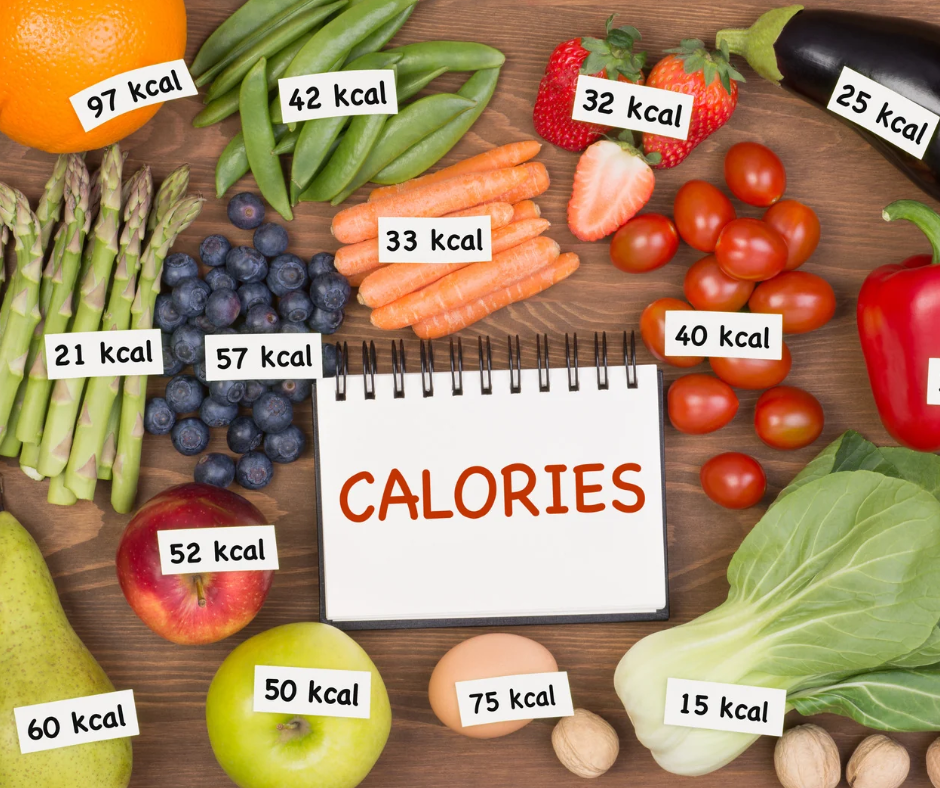
Have you ever wondered how scientists determine the number of calories in our food? I’ve been thinking about this lately, especially when I see products advertised as having only 100 calories, as though that number tells us whether something is a good choice.
We’ve become so accustomed to seeing calories on food labels that we hardly even give it a second thought. We compare products, calculate portions, and sometimes decide whether to eat something based almost entirely on that one number.
How accurately does it reflect what happens when we eat?
The answer is more interesting than you might think.
Where Do Calorie Counts Come From?
A calorie is a measurement of energy. Technically, the calories we see on food labels are kilocalories, but we refer to them as calories.
Food provides energy through carbohydrates, proteins, and fats. For more than a century, nutrition scientists have used a system developed from the work of Wilbur Atwater to estimate how much energy these nutrients provide.
You may know this about macros:
- Carbohydrates provide approximately 4 calories per gram.
- Protein provides approximately 4 calories per gram.
- Fat provides approximately 9 calories per gram.
These values are useful, but they’re averages. They don’t account for every difference in how foods are digested or how much energy we actually absorb.
Here’s where things get interesting.
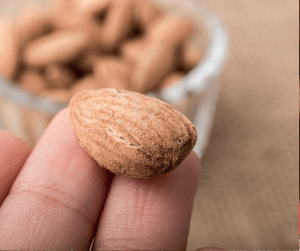
Imagine grabbing a handful of whole almonds and eating them. Now imagine eating the same amount of almonds ground into a smooth almond butter.
The ingredients are identical, whole almonds. The amounts of carbohydrate, protein, and fat haven’t changed. When we look at the physical structure of those almonds, it may influence how much energy your body can extract from them.
Why?
Our digestive system has to get inside the food, before it can absorb many of its nutrients. When you ate the whole almonds, did you chew them until a fluffy almond butter before swallowing, or did some of the almond pieces go through without being completely broken down? You don’t have teeth beyond your mouth.
You Have to Get Through the Cell Walls
Plants have cell walls that help maintain their structure. These walls are made largely of carbohydrates, including cellulose, that human digestive enzymes cannot completely break down.
When we chew almonds, we break them into smaller pieces, but we don’t necessarily rupture every cell. Some of the fat remains trapped inside intact plant cells and passes through the digestive tract without being fully absorbed.
Grinding almonds into butter breaks apart more of those cells, making their contents more accessible to digestive enzymes. (They are pre-chewed). This is one reason two forms of the same food can differ in how much energy becomes available to us.
Researchers at the USDA have investigated this question by measuring the energy people actually absorbed from nuts. In a 2012 study, researchers found that whole almonds provided approximately 20% less metabolizable energy than predicted by the traditional Atwater calculations.
A later study of walnuts found a similar discrepancy. Researchers measured approximately 146 calories of metabolizable energy in a 28-gram serving, compared with the 185 calories predicted by conventional calculations.
We still have to pay attention to portions and remember that nuts are high energy aka high in calories (remember, fat is 9 calories per gram, more than twice that of protein or carbs). This means the physical structure of food can influence how much of that energy becomes available for absorption by our body.
I find this fascinating, because it reminds us that food isn’t just macros and a collection of nutrients. The way those nutrients are packaged within the food matters, too. There are a lot of steps that go from the plant to you actually absorbing all of the different parts.
Scientists call this the food matrix.
What Happens When We Change the Food?
Think about a whole apple, applesauce, and apple juice. All three begin with apples, but they’re not identical by the time we eat or drink them.
A whole apple requires chewing. Its fiber and cellular structure influence how quickly we eat it and how its contents become available during digestion.
Applesauce has already undergone a physical breakdown, although it can retain most of the apple’s fiber.
Have you ever juiced 1 apple? One apple doesn’t make a lot of juice or fill you up. Apple juice contains much less fiber, and it’s easy to drink the equivalent of several apples without feeling as full as you would after eating a whole apple.
The amount of energy, calories, we consume is still important, but so is the form in which that energy arrives.
This is also why I don’t consider food processing a bad thing.
Chopping, blending, cooking, freezing, and fermenting all change foods in different ways. Some changes make nutrients easier to access and absorb, while others remove components such as fiber or alter the way a food affects fullness and digestion.
Cooking carrots, for example, can make some carotenoids more accessible. Grinding nuts changes how readily their fats are released. Refining grains removes portions of the original grain, reducing fiber and most of the nutrients unless they’re added back, but then they are usually in a synthetic form.
These are very different processes, and they don’t all have the same nutritional consequences.
Instead of worrying about the food that has been processed, I think it’s more useful to understand what changed during processing and why it makes a difference.
The Part of Your Food That Feeds Your Microbiome
There’s another reason calorie counts don’t tell us everything, and it involves the trillions of microorganisms living in our digestive tract.
We can’t digest certain dietary fibers with our own enzymes, but some of our gut microbes can ferment them. When they do, they produce substances called short-chain fatty acids, including acetate, propionate, and butyrate.
These compounds participate in several important functions from supporting the cells lining our colon to contributing to normal metabolic regulation. Some of these fermentation products also provide usable energy to the body.
Fiber isn’t always completely calorie-free, even though we can’t digest it the same way we digest starch. The amount of energy recovered depends partly on the type of fiber and how it’s fermented.
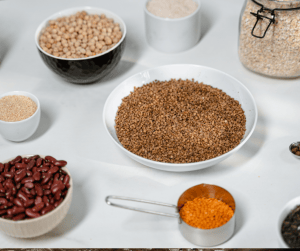
When we eat beans, lentils, vegetables, and other fiber-rich plant foods, we’re doing more than consuming the calories printed on a nutrition label. We’re providing food for our gut microorganisms, which in turn produce compounds that interact with our bodies.
That relationship is one of the reasons I stress eating a variety of whole plant foods aka Eat The Rainbow.
What About Blood Sugar?
If you’ve ever worn a continuous glucose monitor (CGM), you may have noticed that meals with similar calorie counts can produce very different glucose responses.
Consider a breakfast of boxed cereal and juice compared with a bowl of unsweetened soy yogurt, berries, walnuts, and ground flaxseed.
The calories could be similar, depending on the portion sizes, but the combinations of carbohydrates, fiber, protein, and fat are very different. These differences influence digestion and the rate at which glucose enters the bloodstream.
That doesn’t mean every glucose rise is harmful. Blood glucose naturally increases after we eat carbohydrate-containing foods, it is supposed to rise, and our bodies have mechanisms to manage those changes.
What interests me is how much we can learn by looking at the composition of the entire meal instead of focusing on one number.
A bowl of berries eaten without anything else may produce a different response than the same berries eaten with nuts, seeds, dark leafy greens, or a protein-rich food. Blending the berries creates a different response than juicing them, which is different from eating them whole. Individual responses also vary with activity, sleep, medications, and metabolic health.
Calories can’t tell us any of that.
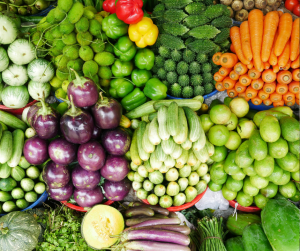
Food Provides More Than Energy
Where do the calories account for the anthocyanins in blueberries, the carotenoids in carrots, or the glucosinolates in broccoli?
These naturally occurring plant compounds add little to the energy value of our food, but researchers are interested in how they interact with biological processes. Some are involved in cellular signaling pathways. Others are converted into compounds that influence normal protective and metabolic functions.
We’re still learning how many of these effects translate into long-term health outcomes in humans, so I don’t want to suggest that eating one particular food will prevent or treat a disease. (cough cough “superfood”)
What we do know is that fruits, vegetables, legumes, nuts, seeds, and other whole, plant foods provide combinations of nutrients and compounds that a calorie count cannot reveal.
This connects directly to what we’ve been exploring in my Cooking in Color series.
The colors of our food give us clues about some of the compounds plants produce, although color doesn’t tell us everything about their nutritional value.
That’s why I encourage you to Eat the Rainbow, but also to understand what you’re eating.
So, Should We Stop Counting Calories?
Not necessarily; though, if you eat predominantly low carb, whole, plant foods, you probably don’t need to count. You will get too full before you over eat. If you eat high fat plant foods, that’s a different story, and if you eat a lot of nut butters, peanut butter, almond butter, cashew butter, coconut butter, … yes, you need to count.
Calories remain an important consideration in meeting our energy needs. They can be useful when someone is trying to change body weight, maintain muscle, recover from illness, or make sure they’re eating enough. Most people my age (50+) have been trying to eat less and exercise more for over 40 years, and guess what? Undereating is not a good thing when you want to heal, gain muscle, and gain bone strength.
Consistently consuming more or less energy than our bodies need can affect body weight and health over time.
I don’t want you to assume that a lower-calorie food is automatically a better choice.
A handful of walnuts may contain more calories than a package of low-fat crackers, but the walnuts also provide unsaturated, heart-healthy fats, fiber, minerals, and plant compounds.
A generous bowl of beans and vegetables may contain more calories than a small frozen meal, but it may also provide substantially more fiber and a different combination of nutrients.
Of course, portion sizes, personal health needs, and the rest of the day’s meals need to be considered, too.
The point isn’t that calories don’t matter. It’s that they are only one measurement, and they don’t tell us everything we need to know about a food.
Bringing This Into Your Kitchen
Last week, we talked about my number one food rule: Read the Ingredients.
Once you know what’s in a food, take another look at its nutritional information. Consider the calories, but don’t stop there. Look at the fiber, protein, added sugars, and other nutrients. Think about how the food was prepared and what it will add to your meal.
When you’re making lunch, for example, instead of trying to create the lowest-calorie salad possible, try building one that will actually satisfy you. The goal is to keep you full and energetic until dinner time.
- Start with a variety of colorful vegetables.
- Add beans or lentils for protein and fiber.
- Include some walnuts, pumpkin seeds, or avocado
- Finish with a flavorful dressing made from ingredients you enjoy.
- Adjust the amounts to suit your appetite and nutritional needs.
You’ll have a meal that provides energy with fiber, vitamins, minerals, and a variety of plant compounds, and more importantly, you’ll have something you look forward to eating.
I don’t want you to spend your life calculating every bite of food. I want you to understand enough about nutrition to make choices confidently, whether you’re shopping, cooking, or eating away from home.
Calories can help us understand how much energy a food contains, but they can’t tell us everything about how that food is digested, absorbed, or used by the body.
The next time you read a nutrition label, look beyond the calorie number and consider the food itself.
There’s a lot more going on than that one number can tell you.
References and Further Reading
1. Novotny JA, Gebauer SK, Baer DJ. Discrepancy between the Atwater factor predicted and empirically measured energy values of almonds in human diets. American Journal of Clinical Nutrition. 2012;96(2):296–301.
2. Baer DJ, Gebauer SK, Novotny JA. Walnuts consumed by healthy adults provide less available energy than predicted by the Atwater factors. Journal of Nutrition. 2016;146(1):9–13.
3. Ellis PR, Kendall CWC, Ren Y, et al. Role of cell walls in the bioaccessibility of lipids in almond seeds. American Journal of Clinical Nutrition. 2004;80(3):604–613.
4. Reynolds A, Mann J, Cummings J, Winter N, Mete E, Te Morenga L. Carbohydrate quality and human health: a series of systematic reviews and meta-analyses. The Lancet. 2019;393(10170):434–445.
5. Slavin JL. Dietary fiber and body weight. Nutrition. 2005;21(3):411–418.
6. Fraga CG, Croft KD, Kennedy DO, Tomás-Barberán FA. The effects of polyphenols and other bioactives on human health. Food & Function. 2019;10:514–528.


Leave a Reply