
Here’s How I Do It

By Jennifer Whitmire, MS, MEd, MH, CHES, NEP
I remember teaching one of my first, in-person cooking classes nearly ten years ago. We had barely finished introducing ourselves when someone raised their hand.
“But … where do you get your protein?”
Everyone laughed, because they had been wondering the same thing and not much has changed.
It doesn’t matter if I’m teaching a retreat, working one-on-one with a client, or simply talking with someone around town or online, it’s still one of the first questions people ask when they find out I eat a whole food, plant-based diet.
I get it. It’s a fair question, and even with my background, I wondered the same thing at the beginning.
Protein is essential. Every cell in our body depends on it. We need it to build and repair muscle, make enzymes and hormones, support our immune system, and maintain healthy bones as we age.
What surprises people is how little time I actually spend worrying about it.
I Stopped Worrying About Protein Years Ago
People are surprised when I tell them that I don’t track protein at every meal or spend my day trying to “hit my numbers.”
That’s because I stopped thinking about protein as something I had to make sure I was adding. Instead, I plan meals around whole foods that naturally contain protein.
When I make breakfast, I already know where I’m getting the protein. The same is true for lunch and dinner.
Once I choose my protein rich food, that makes the foundation. Then, I add colorful fruits and vegetables, healthy fats, herbs, spices, and whatever sounds good that day.
Protein isn’t an afterthought. It’s how I start my meal plan.

Whole Foods Don’t Solve Just One Problem
One of the things I love most about whole foods is that they never provide just one nutrient. They’re not just carbs, and they aren’t just good for the heart, or good for inflammation, or good for blood sugar. They’re good for protecting our whole body.
Let’s talk about beans. Some people think of them as carbohydrates, while others think of them as a protein. They’re really protein carbs, but I think of them as one of the healthiest foods in my kitchen.
Yes, they’re rich in protein, but they’re also loaded with fiber, resistant starch, iron, folate, potassium, magnesium, and thousands of phytochemicals. They fuel our gut microbiome, help keep us full, and support healthy blood sugar. They have also been recognized as one of the keys to longevity in the popular Blue Zones research and other research studies, as well.
That’s a lot from one little bean.
Hemp hearts are also rich in protein, healthy fats, and important minerals.
Pumpkin seeds are high in protein along with zinc and magnesium.
Even the homemade yogurt I make from nuts and seeds is high in protein, healthy fats, fiber, and beneficial probiotics for an extra health boost.
That’s why I don’t think in terms of “protein foods.” I want to focus on foods that fuel my whole body and provide numerous other benefits at the same time. I call these functional foods.
So, Where Does My Protein Come From?
There isn’t one magical food that provides my protein. Every whole food contains some protein, even potatoes! Some just contain a whole lot more than others.
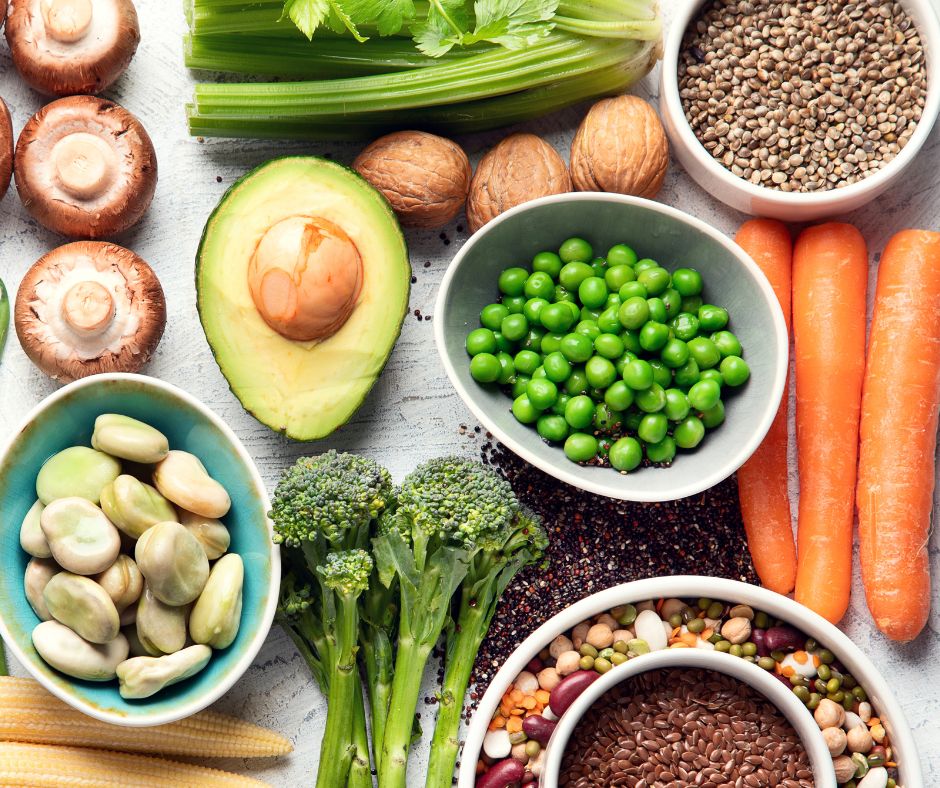
Most of my protein comes from the staples I eat every single day, beans and lentils, homemade nut-and-seed yogurt, nuts and seeds, and occasionally tofu or other minimally processed soy food. I even use soy milk in foods every now and then (real, organic, soy milk with no fillers) to add more protein. (1 cup of soy milk contains 9 grams of protein).
Even leafy greens have protein. No, I’m probably not going to eat enough kale to meet my protein needs all by itself, but paired with beans or lentils, it becomes part of a very satisfying meal.
Instead of eating one large serving of protein at dinner, I spread it throughout the day. Every meal is rich in protein, which keeps me satisfied, helps support my workouts, and makes afternoon snacking much less tempting.
As a matter of fact, once I started planning my protein first, I no longer feel the need to snack.
What About Complete Proteins?
When I was earning my health science master’s degree in the 1990s, we were taught that plant proteins had to be carefully combined at every meal to create a “complete protein.”
That recommendation has changed.
Today we know that eating a variety of protein-rich plant foods throughout the day provides the amino acids our bodies need. We don’t have to pair specific foods together at every meal. Our body is constantly breaking down, recycling, and rebuilding proteins.
I actually think that’s good news, because it encourages something I recommend anyway, “Eat the Rainbow.” Eat a wide variety of colorful plant foods.
If we just focus on eating a wide variety of foods at each meal and include items from non-starchy veggies to healthy fats to roots and legumes, we’re going to meet our needs
…as long as we eat enough calories!
This is something people miss! If you undereat, it is very difficult to meet your nutrition needs. Make sure you eat a variety of different foods AND enough calories.
Variety and eating enough doesn’t just support protein intake. It also increases fiber, vitamins, minerals, and the diverse phytochemicals that help fuel us and our gut microbiome.
Do I Use Protein Powder?
Very rarely. I haven’t even had any in my kitchen for about 6 months.
Yes, I lift heavy weights several days each week, because maintaining muscle and bone strength is important to me. Could protein powder be helpful? Absolutely.
Someone recovering from surgery, training for long distant endurance events, struggling to eat enough, or with unusually high protein needs may find it to be a convenient tool. Protein powder is a highly processed food.
For most people, I’d prefer to see them build a strong foundation with food first. That’s my philosophy with almost everything. Food first.
Supplement when appropriate, and use supplements as just that. Supplements are meant to add to an already healthy diet.
What Thirty Grams of Protein Really Looks Like
One of the questions I get is, “What does thirty grams of protein actually look like?”
Most people picture a huge serving of meat or a protein shake, but as you can see in my instagram or facebook feed, my meals look very different.
- Breakfast is probably be one of my smoothie bowls made with beans, homemade yogurt, hemp hearts, chia seeds, flaxseed, berries, and soy milk.
- Lunch is most likely a colorful salad topped with hummus, pumpkin seeds, and a creamy cannellini bean dressing.
- Dinner might be one of my loaded sweet potatoes filled with black beans and topped with White Bean Cilantro Cream.
If you looked at those meals, your first thought probably wouldn’t be, “Wow, that’s a high-protein meal.” You’d probably notice the color first.
That’s my point! My focus is to eat the rainbow, and the protein just happens to work out just fine.
The Biggest Mistake I See
One of the biggest mistakes I see isn’t that people don’t eat enough protein. They undereat overall. They plan meals around vegetables alone that don’t meet their caloric needs.
A salad made with lettuce, cucumbers, tomatoes, and carrots is beautiful, but it probably won’t keep you satisfied for very long. It needs beans or lentils or seeds. We can add hemp hearts or pumpkin seeds. We could top it with a creamy hemp seed or white bean dressing and some slices of avocado.
We need to make sure that each meal contains a healthy fat and some foods that are higher in protein. Most of our summer vegetables, or fruit-vegetables, like tomatoes, cucumbers, bell peppers, and summer squashes do not contain as much protein as our dark leafy greens and cruciferous veggies, and you would have to eat a very large quantity of those to meet your caloric needs much less your protein needs without adding some healthy, plant-based fat and seeds or legumes.
Focus on these and suddenly you’ve created a meal that’s nutritious and more likely to keep you full until your next meal. Whenever I teach meal planning, I tell people to ask one simple question before anything else:
Where is my protein coming from?
Once you’ve answered that, the rest of the meal comes together naturally.
Protein Matters, But It Isn’t Everything
Sometimes I think we’ve become so focused on protein that we’ve forgotten everything else our bodies need. Yes, I want enough protein, but I also want fiber, foods that feed my gut microbiome, colorful vegetables that provide thousands of different phytochemicals, healthy fats, herbs and spices, and meals that help support healthy blood sugar.
One of the beautiful things about whole foods is that they provide all of these at the same time.
Fiber? It’s in all plant foods.
Fuel the gut? Our microbiota want different types of fiber from different types of plants. Chia seeds, root vegetables, and legumes all provide different forms of fiber that our microbiota love, and when we eat a variety of plants (Eating the rainbow at every meal), it helps even more.
Healthy fats? Avocado, hemp seeds, pumpkin and sesame seeds, olives, all other nuts and seeds help to keep us full and help with absorption of out nutrients. They are not only a healthy fat, but they come packed with fiber.
Herbs and spices add lots of different flavors, but they are also dark leafy greens with loads of anti-inflammatory effects as well as many other medicinal qualities.
Support blood sugar? Choose plant foods that are lower on the glycemic load scale. For those that are higher like tropical fruits, eat them with healthy fats and dark leafy greens.
The Bigger Lesson
After years of eating this way and helping others do the same, I’ve realized that getting enough protein isn’t as complicated as we’ve been told. When we create meals around whole, protein-rich foods, eat a wide variety of colorful plants, and focus on consistency, protein usually takes care of itself.
Forget wondering, “How can I squeeze more protein into my day?”
Focus on, “How can I make another colorful, satisfying meal that fuels me and my body”
For me, that’s a much more fun and sustainable way to eat.
Read Next
 Wholistic Jen
Leave a comment