
By Jennifer Whitmire, MS, MEd, MH, CHES, NEP
We’ve all heard the saying, “You are what you eat.”
I know I heard it growing up, but I never really thought much about it. I assumed it just meant, “Eat healthy.” Then one day, it finally clicked. I don’t remember exactly when it happened, maybe during one of my classes with Dr. Christopher at the School of Natural Healing, but suddenly the lightbulb went off.
Food is broken down into tiny molecules, absorbed into our bloodstream, and then used inside our cells.
I know that sounds obvious, but it had honestly never occurred to me.
My eye cells are constantly being repaired and rebuilt using the raw materials I choose to eat! Do I want them to be made of reheated French fry oil or something a little cleaner like the healthy fats and amino acids from my hemp seeds?
I remember thinking, “Wow… I really am what I eat.”
That wasn’t even the coolest part. What fascinated me even more was learning that food doesn’t just become a part of our body, it also tells our body what to do.
I had always thought of food as something that either gave me energy or filled me up. I never stopped to consider that every meal was also communicating with my body. The nutrients, fiber, healthy fats, and thousands of plant compounds in our food become part of an incredibly complex conversation that’s happening inside of us every second of every day.
Our cells are constantly adapting. They’re repairing damaged tissues, producing energy, building hormones, regulating our immune system, and replacing old, worn-out cells. Every healthy choice we make helps create an environment where those processes can happen more efficiently.
That’s what I mean when I say your cells are paying attention.
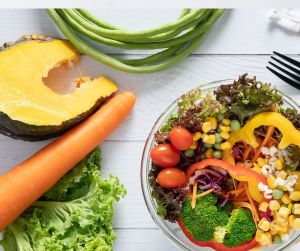
This is why I have my #2 Rule: Eat the Rainbow. I promise I’m not trying to make your grocery list longer. I say this because every bean, every berry, every herb, and every colorful fruit and vegetable adds something a little different to the conversation.
Every Bite Starts a Conversation
Once I started thinking about it, I stopped looking for the next “superfood,” and I started appreciating how beautifully nature designed whole foods to work together.
A bowl of lentils is more than protein. Lentils are full of fiber to feed the gut microbiota, minerals to support healthy body functions, and plant compounds that help protect the cells.
Blueberries are delicious and are well known for supporting brain health, but they also have a unique combination of fiber and phytochemicals.
Walnuts aren’t just healthy fats. They contain omega-3 fats, minerals, fiber, and polyphenols that send their own helpful signals throughout the body.
Herbs add flavor, but they’re also some of the most concentrated sources of beneficial plant compounds we can eat, each contributing its own unique message.
Everything we eat adds something, and together they create something powerful. That’s why I don’t believe there’s one perfect food.
I believe in eating a wide variety of whole, colorful foods, because each one adds something a little different to the messages being sent inside our bodies.
I have clients who are always looking for the next best food. They’re trying to find the one food that’s going to change their health. Who isn’t taking curcumin? What’s the best berry, the best dark leafy green, herb, greens powder, and the best seed?
I get it! I used to wonder, too. As a matter of fact many of the varieties that we grow on our farm are from research we did on finding the most nutritious tomato, the best onion, etc.
Now, I don’t think our bodies work that way. Actually, I know they don’t work that way.
Nature didn’t create one perfect food. We were created during a time of scavenging. You may find millions of blueberries in mid-June and think that’s all you need, but what are you going to eat in September?
There are close to 30,000 different edible plant foods! How many different ones do you eat?
Every single food item has its own unique combination of nutrients and plant compounds. I think that’s one of the reasons eating a variety of whole foods is so powerful.

It’s Not Just The Food
As fascinating as food is, it’s only one part of the conversation. Every day, your body is gathering information from everything you do from a good night’s sleep that tells your body it’s time to repair to a strength-training workout that tells your muscles they’re needed.
That after dinner walk helps your muscles use the glucose from your meal more efficiently. Time outside in the sunshine helps regulate your circadian rhythm, which influences everything from your hormones to your sleep.
Even chronic stress sends messages. When your body senses danger, whether you’re running from a bear or worrying about a deadline (Your body is brilliant, but it doesn’t know the difference!), it restructures its priorities. Repair, digestion, and long-term maintenance take a back seat while the body focuses on getting you through the stress right now.
Your cells are always listening. They’re paying attention to what you eat, how you move, how you sleep, how you breathe, and how you respond to life’s challenges.
None of those choices has to be perfect. Don’t think you have to do “all the things perfectly” to get it “right.”
Just know that they are all a part of the messages your body is receiving about what to do to keep you healthy.
Small Choices Create Big Change
You don’t have to change your entire lifestyle to improve your health. Our bodies don’t work that way. Your cells actually don’t keep score.
They don’t decide you’ve “blown it,” because you had dessert or missed a workout. They’re constantly responding to the patterns you create. The body thrives on what you do consistently. It loves predictability.
When you eat colorful meals, take your daily walk, have a good night’s sleep, or choose to slow down and take a deep breath, those choices add up. They create an environment where your body has more of what it needs to do what it was designed to do.
That’s one of the reasons this work gives me so much hope.
We don’t have to be perfect.
You get a second chance every time you make a choice.

The Bigger Lesson
Today, when I hear someone say, “You are what you eat,” I smile, because it’s catchy and because I finally understand what it means.
We really are made from the foods we eat, and those foods don’t just become part of us, they become part of the messages and signals that are happening inside us every moment of every day.
The next time you’re preparing a meal, don’t just ask yourself, “Is this healthy?” ask yourself,
“How is this going to help my body?”
I think you’ll find that question changes the way you look at your plate, because your cells really are paying attention.


Leave a Reply